
Pilisszentkereszt: Monastery Ruins, Szentkút and the Dera Gorge
Accommodation in Pilisszentkereszt
Pilisszentkereszt offers three distinct themes to consider when planning a trip: the history of the Cistercian abbey, the religious associations of Szentkút and the natural history of the Dera Gorge. Each focus reveals a different side of the village and its surroundings.
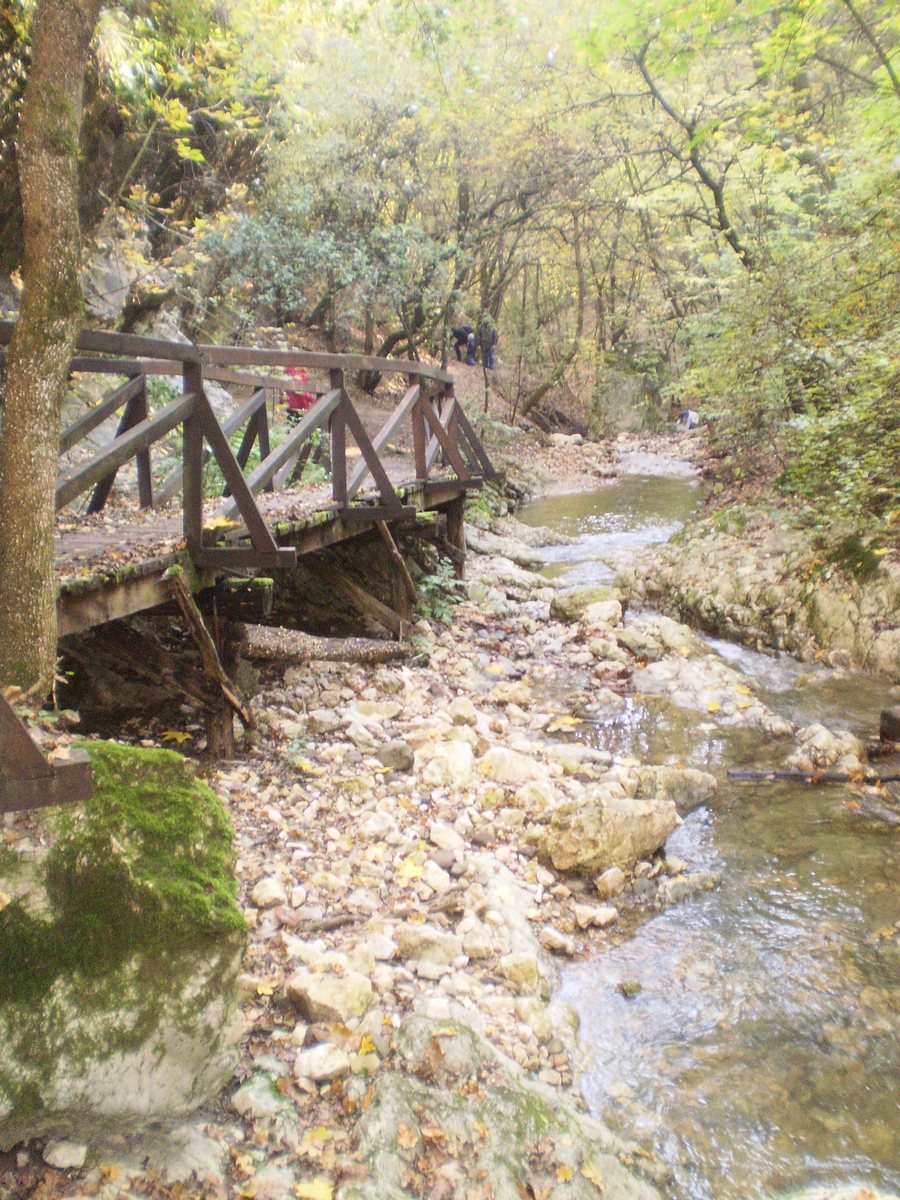 File:A Dera patak szurdokvölgye Pilisszentkereszt mellett.JPG
Photo: Kaboldy at Hungarian Wikipedia via Wikimedia Commons, CC BY-SA 3.0
Monastery history
The ruins of the Cistercian monastery built in the 12th century are considered an important historical memorial site in Hungary. Excavations at the local ruin site uncovered the remains of the Cistercian abbey founded by Béla III in 1184. These two dates complement each other: the 12th century places the monastery in a general historical period, while 1184 gives the specific year the abbey was founded. Visitors interested in local medieval history can explore this theme through the ruins, the archaeological remains and the documented history of the abbey's foundation.
Szentkút and pilgrim routes
Szentkút in Pilisszentkereszt is an important stop on the Mária út and Magyar zarándokút pilgrim routes, as well as on the yellow-marked hiking trail. Religious routes and a marked hiking trail therefore converge here. When planning your trip, you can take these different focuses into account, depending on whether you are interested in pilgrim routes or hiking. A festive Mass is celebrated at Szentkút for the Feast of the Visitation of the Blessed Virgin Mary.
Devotion to Szentkút arose in the 1860s and 1870s; it has not received ecclesiastical recognition. These details add the historical development of the devotion and its religious status to the information about the routes.
Pilisi Klastrom Festival
The Pilisi Klastrom Festival takes place in the monastery garden of the Pilisi Ciszter Apátság, on a historic ruin site that also contains the tomb of Queen Gertrudis. The program features a wide range of contributions relating to traditional Hungarian culture and the cultures of ethnic minorities. The festival's location and program create a cultural focus in its own right, alongside the abbey's history. If the festival is relevant to your trip, check the dates for the edition you wish to attend in advance.
Dera Gorge and trails
The Dera Gorge is located nearby, between Pilisszentkereszt and Csobánka. From a geological and geomorphological perspective, it is considered an important natural area. A geological and botanical nature trail illustrates rock features, the conditions under which they formed and geological processes. The focus is therefore not only on the landscape, but also on the geological processes that shaped it.
The trails described here also differ in their routes: one hiking trail passes through the gorge via wooden bridges, while another runs along the gorge ridge. They offer different ways of exploring the terrain: through the gorge and along its ridge.
When choosing where to stay, you can also consider the locations: the monastery ruins and Szentkút are in Pilisszentkereszt, while the Dera Gorge is nearby, between Pilisszentkereszt and Csobánka. This makes it easy to distinguish the attractions within the village from those in the surrounding area.
Discover more destinations: Visegrád, Csobánka, Tahitótfalu, Dunabogdány, Kisoroszi.
Back to the main travel overview: Szentendre.

