
Dachau Between Landscape and Culture
Accommodation in Dachau District
In Dachau District, trails through the countryside, opportunities to observe nature and a variety of cultural attractions come together. When choosing accommodation, the main focus of your stay can help guide you: would you mainly like to walk or cycle, visit museums, or learn about monastic and town history? The attractions are spread across several locations, including Karlsfeld, Bergkirchen and Günding, Petersberg near Erdweg, Altomünster, Mariabrunn in the municipality of Röhrmoos, as well as Dachau and Markt Indersdorf. Base your search on the places that matter most to your trip, and plan how to get to each destination accordingly.
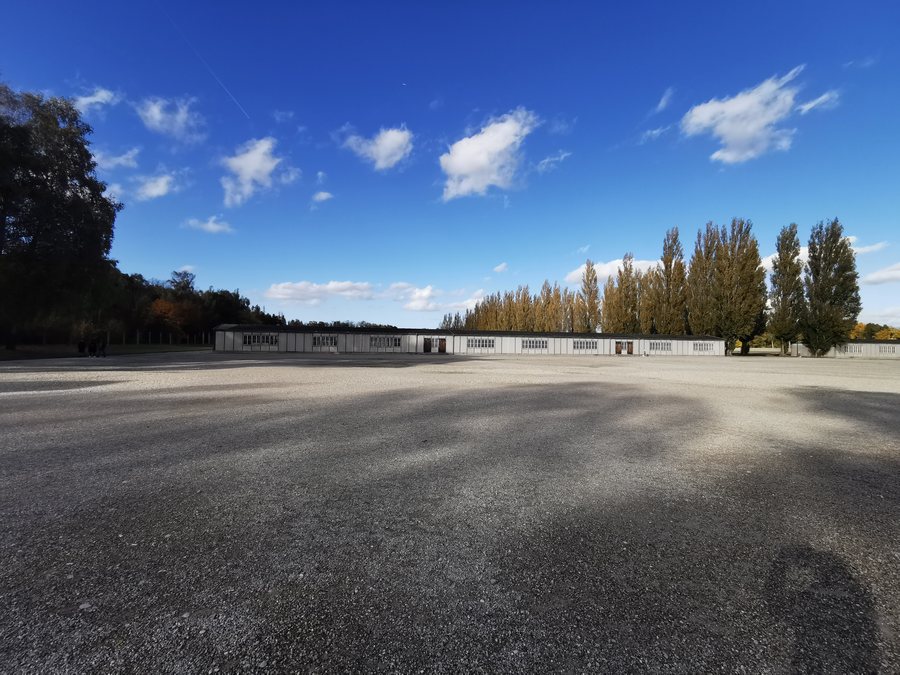 Dachau concentration camp memorial buildings and location 08
Photo: Netha Hussain via Wikimedia Commons, CC0
Trails and Countryside in Dachau District
The Karlsfelder See recreational area is located right next to the built-up area of northern Karlsfeld. It covers 58.2 hectares and is in Dachau District. The lake is used year-round for walking, jogging, cycling and recreation. This offers a different countryside experience from routes that follow a river or lead to a monastery.
The approximately 2.5-kilometre-long “Lebensader Maisach” (Lifeline of the Maisach) runs alongside the Maisach River. The route is accessible to all from Bergkirchen or Günding; this information about the locations relates to the route’s accessibility. In the Amper floodplains, the focus shifts to a different natural feature: with patience and a little luck, you may spot the unusual feeding marks left by beavers that have returned to the area during a walk. This is a possible sighting, not a guarantee.
The cultural routes also differ in focus. The “Art and Culture Around the Monastery Hill” walking trail circles the monastery in Altomünster and passes important sights. For cyclists, the middle section of the “Der 7-Klöster-Weg” (The 7 Monasteries Trail) leads to Altomünster and Petersberg near Erdweg. Altomünster was home to a Birgittine monastery for centuries.
Monastic History, Art and Museums
Petersberg near Erdweg is home to a Romanesque basilica built in 1104 that has been preserved to this day. The sculpture trail there is 200 metres long and runs through Petersberg Forest. A total of ten works of art are displayed at eight stations. The basilica and trail offer two different ways to experience Petersberg: Romanesque architectural history and art in the forest.
The permanent exhibition at the Altomünster Museum covers the history of the Order of Saint Birgitta in Europe and its founder, Saint Birgitta of Sweden. One example is the now-closed Altomünster monastery, which existed for 500 years. Mariabrunn, meanwhile, developed into an important pilgrimage site in the Diocese of Freising from 1662, following a miraculous healing attributed to water from a spring. Today, it is part of the municipality of Röhrmoos.
In Dachau, the District Museum covers, among other topics, settlement patterns, town history, guilds and market rights, crafts and trade, everyday life, festive customs and popular religious culture across three floors. It presents the cultural history of the town and district. The permanent collection at the Dachau Picture Gallery features landscape and genre paintings from the 19th and early 20th centuries. The gallery is associated with the Dachau artists’ colony, considered one of Germany’s most important artists’ colonies in art history, which had a strong influence on the development of modern art in the 20th century.
Dachau’s historic old town is a protected architectural ensemble and invites visitors to stroll and linger. Wittelsbach Castle was once a popular summer residence of the Wittelsbach family. The climb to the castle offers views across the Munich Gravel Plain, the state capital of Munich and all the way to the Alps. Guided tours are held there regularly; dates are announced as they become available. If a tour fits your stay, check the dates in advance.
Memorial Sites and Practical Information
The Path of Remembrance addresses the fate of children who were victims of National Socialism. It also commemorates Markt Indersdorf as a refuge after the Second World War for more than 1,000 young survivors of Nazi persecution. This historical focus differs from the art and monastic themes and may be a deciding factor when planning a visit to Markt Indersdorf.
Bus route 726 runs from Dachau station to the Dachau Concentration Camp Memorial Site in the direction of “Saubachsiedlung”. As timetables can change, check the latest departure times before travelling.
Discover more travel destinations: Schwabhausen, Hebertshausen, Dachau, Bergkirchen, Markt Indersdorf, Mühldorf Am Inn, Traunstein, Weilheim-Schongau.
Back to the main travel overview: Bavaria.

