
Bamberg: Culture, Nature and Culinary Delights
Accommodation in Bamberg
Those looking for accommodation in Bamberg can shape their stay in different ways: with art-historical impressions, regional history, nature experiences or culinary routes. Weissenstein Palace, the Ebrach monastery complex, the Steigerwald treetop trail and the culinary tours in the Bamberg region each offer their own focus. This allows the trip to be planned according to the interests of your companions without grouping all destinations into one shared experience.
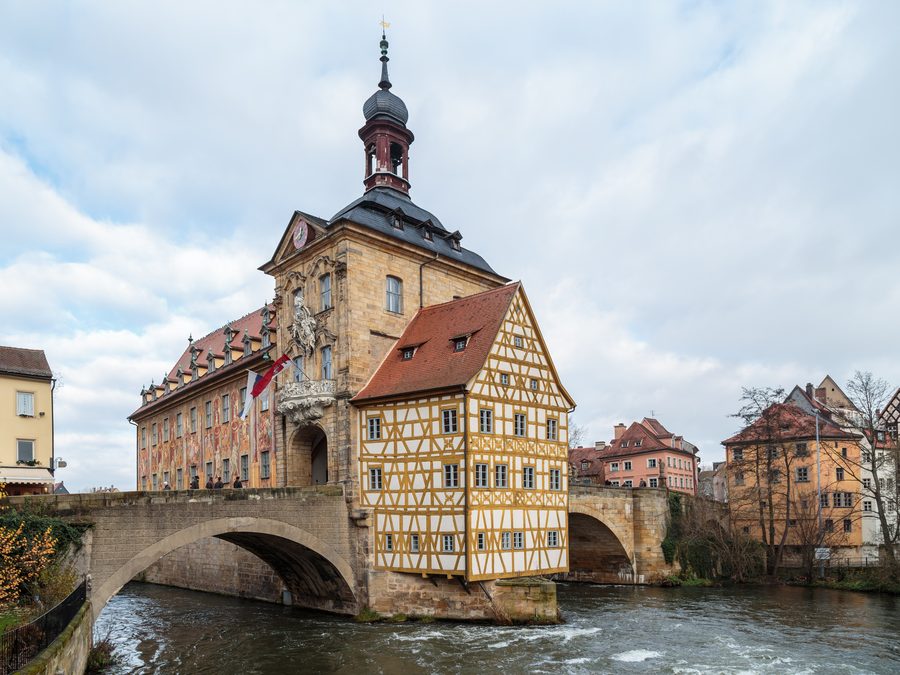 Das Alte Rathaus mit den verbindenden Brücken gehört zu den markanten Bauwerken der Bamberger Altstadt.
Photo: JoachimKohler-HB via Wikimedia Commons, CC BY-SA 4.0
Das Alte Rathaus mit den verbindenden Brücken gehört zu den markanten Bauwerken der Bamberger Altstadt.
Photo: JoachimKohler-HB via Wikimedia Commons, CC BY-SA 4.0
Key facts on the topic
- Weissenstein Palace houses an extensive gallery with works by French, Italian, German and Dutch painters.
- Weissenstein Palace near Pommersfelden is one of Germany’s major Baroque complexes.
- In the 18th century, the Ebrach monastery complex was fundamentally transformed by Leonhard Dientzenhofer into a palace-like Baroque complex.
- The Gothic church in Ebrach, including its rose window, has been preserved; the Ebrach History Museum has been housed in the former Cistercian monastery since 2004.
- Seven culinary tours explore the Bamberg region: three cycling tours and four hiking routes lead to floodplain landscapes, viewpoints, places to stop for refreshments and regional producers.
- The Methuselah Tour around Ebrach leads through the Spitzenberg nature reserve to trees that are up to 250 years old or older and up to 144 centimetres thick.
- In the petting area of the Steigerwald treetop trail, visitors can feed mouflons by hand.
- The Eulenwand near Tiefenellern is one of the climbing areas named in the Bamberg region, while the Franconian Sculpture Trail around Lohndorf combines art and nature experiences.
Culture between Baroque and Regional History
For a culturally oriented stay, Weissenstein Palace and Ebrach offer two different highlights. At Weissenstein Palace, the gallery with its international tradition of painting takes centre stage. The complex itself is considered one of Germany’s major Baroque complexes and complements a gallery visit with architectural impressions.
The Ebrach monastery complex, by contrast, combines Baroque transformation with preserved Gothic elements. In the 18th century, Leonhard Dientzenhofer shaped the palace-like Baroque complex, while the rose window of the Gothic church was preserved. The Ebrach History Museum focuses on the history of the market town and the monastery. Those interested in architectural history and regional development can address these topics separately or combine them when planning their trip.
Nature, Activity and Regional Culinary Delights
The Bamberg region can also be discovered through activities and regional produce. The seven culinary tours comprise three cycling tours and four hiking routes. The destinations or components mentioned include idyllic floodplain landscapes, viewpoints, places to stop for refreshments and regional producers. When choosing suitable accommodation, you can therefore consider whether you would prefer to focus on a cycling tour, a hiking route or culinary stops along the way.
The Methuselah Tour around Ebrach provides a special nature highlight. It leads through the Spitzenberg nature reserve and focuses on trees that are up to 250 years old or older and up to 144 centimetres thick. The Steigerwald treetop trail adds an animal experience: in the petting area, visitors can feed mouflons by hand. The two offerings appeal to different interests and should therefore not be regarded as the same nature experience.
Further Experiences for Trip Planning
For visitors interested in climbing, the Eulenwand near Tiefenellern is one of the named climbing areas in the Bamberg region. The Franconian Sculpture Trail around Lohndorf combines art and nature experiences, offering a different way to explore the landscape. You can also include Ebrach and Heiligenstadt In Upper Franconia as additional destination pages in your orientation.
Further destinations for your trip planning: Miesbach District, Straubing-Bogen, Rhön-Grabfeld, Landsberg Am Lech, Ebersberg District, Main-Spessart.
FAQ
What does Weissenstein Palace offer?
Weissenstein Palace houses an extensive gallery with art-historically significant works by French, Italian, German and Dutch painters. The complex near Pommersfelden is also one of Germany’s major Baroque complexes.
What can be seen at the Ebrach monastery complex?
In the 18th century, the complex was fundamentally transformed by Leonhard Dientzenhofer into a palace-like Baroque complex. The Gothic church, including its rose window, was preserved.
What is the Ebrach History Museum about?
Since 2004, the museum has been housed in the former Cistercian monastery and focuses on the history of the market town and the monastery.
Which culinary tours are available in the Bamberg region?
Seven culinary tours explore the Bamberg region through its cuisine. They include three cycling tours and four hiking routes with floodplain landscapes, viewpoints, places to stop for refreshments and regional producers.
What is the Methuselah Tour?
The Methuselah Tour leads around Ebrach through the Spitzenberg nature reserve. Trees grow there that are up to 250 years old or older and up to 144 centimetres thick.
What other activities are mentioned?
The Eulenwand near Tiefenellern is one of the climbing areas mentioned. The Franconian Sculpture Trail around Lohndorf combines art and nature experiences. At the Steigerwald treetop trail, visitors can feed mouflons by hand in the petting area.
To the higher-level travel overview: Bavaria.

.jpg)