
Wiesensteig on the Albtrauf
Accommodation in Wiesensteig
According to the town, the Bläsiberg ski lifts in Wiesensteig form the largest ski area on the Swabian Alb. If the lifts are the deciding factor for your trip, check in advance whether they will be operating on your travel dates. Wiesensteig lies at the edge of the Albtrauf in a narrow valley; forests and juniper heaths frame the valley slopes, which rise to 850 metres.
Winter attractions and landscape
Skiing may be one focus of your stay, while the valley setting and the landscape on the slopes also shape the character of the town. The elevation of up to 850 metres refers to the valley slopes. It helps to decide in advance what you would like to focus on: skiing, historic buildings, or a tour on foot or by mountain bike. This lets you assess Wiesensteig according to the activities that matter to your trip, without treating its different offerings as interchangeable.
Historic buildings in the town centre
Buildings dating from different centuries stand in the medieval town centre. The collegiate church of St. Cyriakus was built in the Gothic style in 1466 by Provost Johann Graf von Werdenberg and has two towers. Its interior also features different architectural styles: the Baroque chancel contrasts with the Neoclassical nave. For architecture enthusiasts, the building shows how the exterior and the design of the church interior feature different stylistic elements.
Another historic landmark is the market fountain, dating from 1718. Its Corinthian capital bears the town coat of arms, framed by the coats of arms of the Counts of Helfenstein and Fürstenberg. At number 39 on Hauptstraße, the ornate half-timbered building dates from 1669. These dates provide a chronological reference, although the buildings do not belong to the same period.
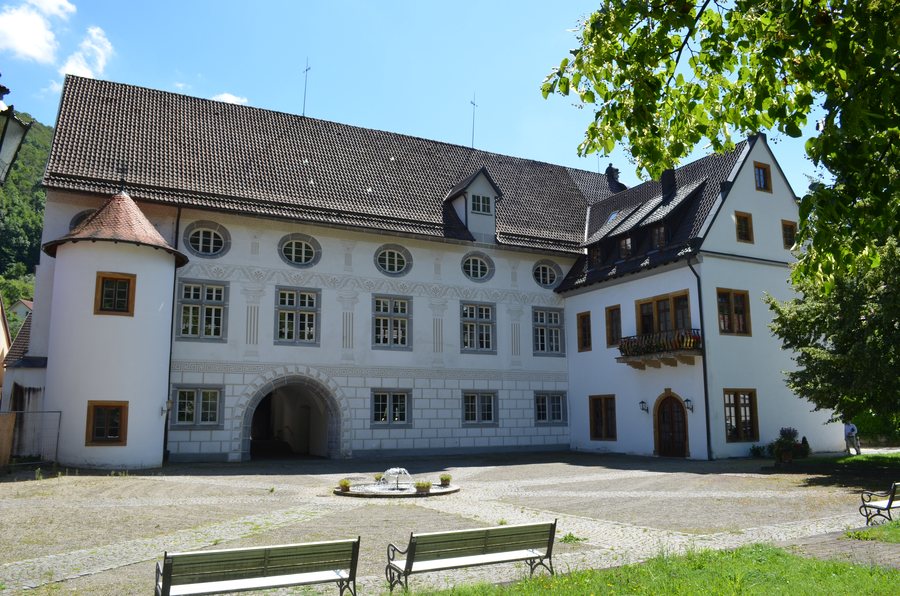
The foundation stone of the Helfensteiners’ residential palace was laid in 1551 by Count Ulrich XVII. The palace served as a residence until the extinction of the counts’ line in 1627. The Old Horse Stable dates from 1562; originally, the building was a granary belonging to the palace. Its present name and original function therefore refer to different chapters of its history. The cemetery chapel adds Renaissance frescoes and Baroque altars to this picture; it was restored in 1969.
Hiking trails and geological insights
There are several different options for exploring on foot. The Löwenpfad Filsursprung-Runde is a named hiking trail in Wiesensteig. The GEOPFAD runs along the Sommerberg to geological windows, where rock from the Upper Jurassic period is visible. While the first route offers orientation as a named hiking trail, the GEOPFAD draws attention specifically to the geological history of the rock.
The Albtraufgängerweg leads to Wiesensteig and through the medieval town centre. Following a well-marked trail, the route offers views over the Wolfsklinge and returns beneath the Papierfelsen to the Papiermühle car park. It thus links the town centre with a described route and viewpoints. When choosing a tour, you can compare this route with the geological focus at the Sommerberg or the Filsursprung-Runde by name.
Two routes are also mentioned for mountain biking: the AlbCrossing mountain bike trail passes by Wiesensteig, among other places. The Wiesensteiger Löwentrail Reußenstein-Runde is a named mountain bike trail. Their names refer to different route options.
Nearby attractions
The Kreuzkapelle stands on the Alb plateau, north of Wiesensteig. A footpath lined with Stations of the Cross leads through a beech forest to the chapel. The Reußenstein castle ruins lie five kilometres northwest of Wiesensteig. They can be reached on foot from the paid Papiermühle car park via Bronnensteige and Feldkopf. The chapel and the castle ruins are two separate nearby destinations, each with a described route.
When planning your trip, you can choose between the ski area described by the town, buildings in the medieval town centre, and named trails through the surrounding landscape. If skiing is your priority, check whether the lifts are currently operating; for hiking or cycling plans, you can distinguish between the routes by their respective themes.
Discover more destinations: Bad Überkingen, Bad Boll, Aichelberg, Gruibingen, Schlat, Donzdorf, Geislingen An Der Steige, Eislingen/Fils
Return to the main travel guide: Göppingen.
Compare hotels and holiday rentals in Wiesensteig by price and availability for your travel dates.
Advertisement · We may receive a commission if you book.
