
Fort Du Plasne: Hotels and Accommodation
Accommodation in Fort Du Plasne
East of Fort Du Plasne lies Lac de Fort-du-Plasne, a natural private lake at an altitude of 885 m. It covers approximately 1.2 hectares. A peat bog area extends northeast of the lake. This peat bog is a wetland and a refuge for rare biodiversity; it is also designated as a Ramsar site.
For a stay in Fort Du Plasne, you would like to find suitable accommodation.
Activities
The Lac de Fort-du-Plasne route is an easy 6.5 km circular hike and takes approximately two hours. It starts and ends at the car park by the church in Fort-du-Plasne. Along a white, well-maintained path, it leads to Lac de Fort-du-Plasne, which is bordered by peat bogs.
La Flânerie d’Audrey offers donkey walks from Fort-du-Plasne, which can be undertaken either with a guide or independently. It also offers animal-assisted mediation for children, adults, older people and people with disabilities.
Culture
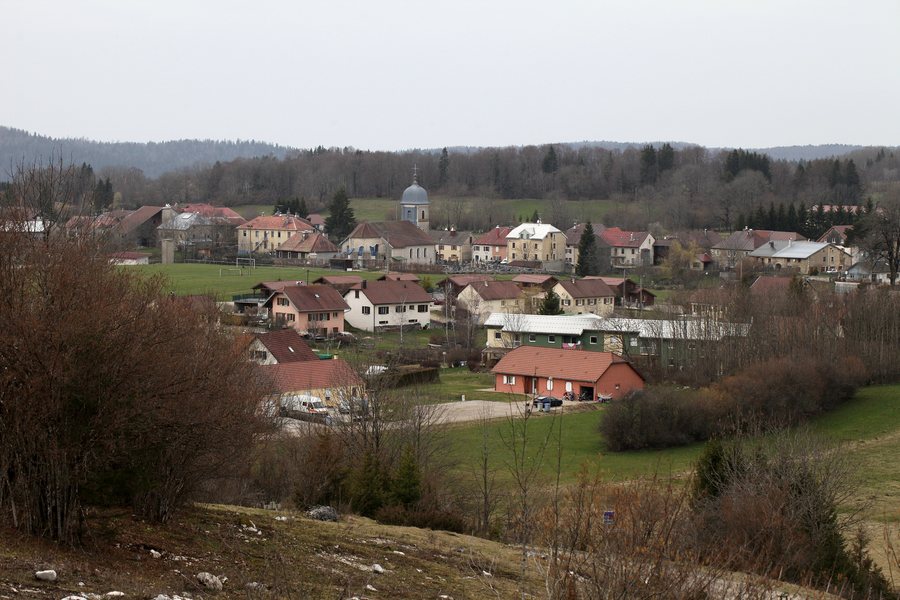
The main construction campaign for the Sainte-Marie-Madeleine parish church in Fort-du-Plasne took place in 1820. In the 19th century, the houses in Fort-du-Plasne were arranged in groups, built of stone and roofed with shingles or tavaillons; they had one storey above the ground floor.
The Chalet du Coin-d'Aval is an authentic former cheese dairy dating from 1825. It is the only surviving evidence of the 40 chalets that existed in Grandvaux in the 19th century. Guided tours of the Chalet du Coin-d'Aval explain the traditional production of the forerunner of Comté.
La Poterie du Lac à la Dame makes everyday items, unique pieces and commissioned works from stoneware and porcelain. Guided tours with commentary through its workshop explain the production process and its individual steps; purchasing is not compulsory.
Other places: Foncine-Le-Haut, Villard-Saint-Sauveur, Grande-Rivière, Morez, Entre-Deux-Monts, Bellefontaine, Lajoux, Villard-Sur-Bienne
To the overarching travel overview: Jura.

