
France: Hotels and Accommodation
Accommodation in France
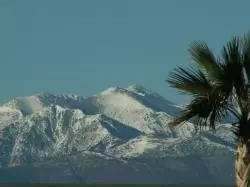 Die französischen Alpen sind bekannt für tolle Möglichkeiten zum Skiurlaub
Photo: RRinnau
Die französischen Alpen sind bekannt für tolle Möglichkeiten zum Skiurlaub
Photo: RRinnau
France has 56 UNESCO World Heritage Sites: 47 are cultural, 7 natural and 2 mixed. For your trip to France, you may want to book a hotel.
Culture
France’s cultural UNESCO heritage includes Mont-Saint-Michel, Versailles, the banks of the Seine in Paris, the Pont du Gard, the Loire Valley and the fortified historic city of Carcassonne. Cultural sightseeing also ranges from royal châteaux and Gothic cathedrals to Roman remains and villages full of character, as well as museums and centres for contemporary art.
Those seeking medieval townscapes will find suitable sightseeing opportunities in places including Saint-Malo, Dinan, Provins, Carcassonne, Sarlat-la-Canéda and Riquewihr. France’s intangible traditions and craft skills listed by UNESCO include the Breton fest-noz, the French gastronomic meal, the making of baguettes, artisanal glassmaking, perfume production in Grasse and Alençon lace.
Measures taken by French museums to improve visitor access include free admission on the first Sunday of the month and the Nuit des musées programme. The Centre des Monuments Nationaux manages around one hundred significant heritage sites in France. Well-known Parisian monuments include the Arc de Triomphe, the Conciergerie, the Panthéon, the Hôtel de la Marine and the Sainte-Chapelle.
The wider regional area of France is also home to the Abbaye Notre-Dame de Bonlieu, the Abbaye de Prebenoit and the Archives départementales de la Creuse.
Nature
France’s natural and mixed UNESCO World Heritage Sites include the Calanques of Porto and the Scandola Nature Reserve, the Chaîne des Puys, the volcanic landscapes of Réunion, the French Austral Lands and Seas, the volcanoes and forests of Martinique, and Pyrénées–Mont Perdu.
France combines the Alpine and Pyrenean mountain ranges with the volcanoes of Auvergne, the cliffs of Brittany and Normandy, the lagoons of the Camargue, and the forests of the Morvan, the Vosges and the Jura. Wetlands include the Brenne, the Brière and the Golfe du Morbihan. Le Puy Haut and Les Pierres Jaunâtres are located in the surrounding area of France.
Across the country there are 11 national parks and 59 regional nature parks. They combine the protection of biodiversity with hiking, cycling and wildlife watching. The national parks receive around 9 million visitors annually and cover almost 10 percent of France’s territory.
National parks offer protected spaces for hiking, swimming, diving, paragliding and winter sports. Their programmes may include guided nature walks, wildlife watching, sports, treasure hunts, film screenings, conferences, outdoor performances, exhibitions and cultural workshops.
Mountain huts in French national parks provide hikers and travellers on the road with overnight accommodation or stopping points. Calanques National Park has a special geographical position: it is the only national park in Europe that is simultaneously terrestrial, marine and peri-urban, combining coastal calanques with rich Mediterranean underwater biodiversity.
Cuisine
The French gastronomic meal has been on UNESCO’s Intangible Cultural Heritage List since 2010. It follows a ceremonial sequence with at least four courses between the aperitif and digestif. Markets, covered market halls, wine bars, neighbourhood bistros and artisan stalls offer practical opportunities to experience French food culture.
Regional French specialities include coq au vin from Burgundy, cassoulet from the south-west and bouillabaisse from the Mediterranean region.
Getting Around
International rail connections make it possible to travel to France from almost 40 departure points in 15 European countries.
Ten EuroVelo routes cross France and connect its major regions with the rest of Europe. In addition, the country has more than 20,000 kilometres of cycle paths and greenways. They link destinations ranging from the châteaux along the Loire and the vineyards of Burgundy to the Alps and the Pyrenees.
France has 8,500 kilometres of navigable waterways, including 6,700 kilometres managed by Voies navigables de France. They provide the basis for canal and river tourism.
Other regions: Aquitaine, Auvergne, Alsace, Franche Comte, Corsica, Languedoc-Roussillon, Lorraine, Midi Pyrenees, Provence-Alpes-Côte D'azur, Rhône-Alpes
