
Allier: Hotels and Accommodation
Accommodation in Allier
In the Allier department, the geographical landscape is introduced with the Allier River: it is considered to be 420 kilometres long and one of the last wild rivers in Europe. The gorges of the Sioule, Bouble and Haut Cher are also considered preserved natural areas with steep slopes and rocky escarpments.
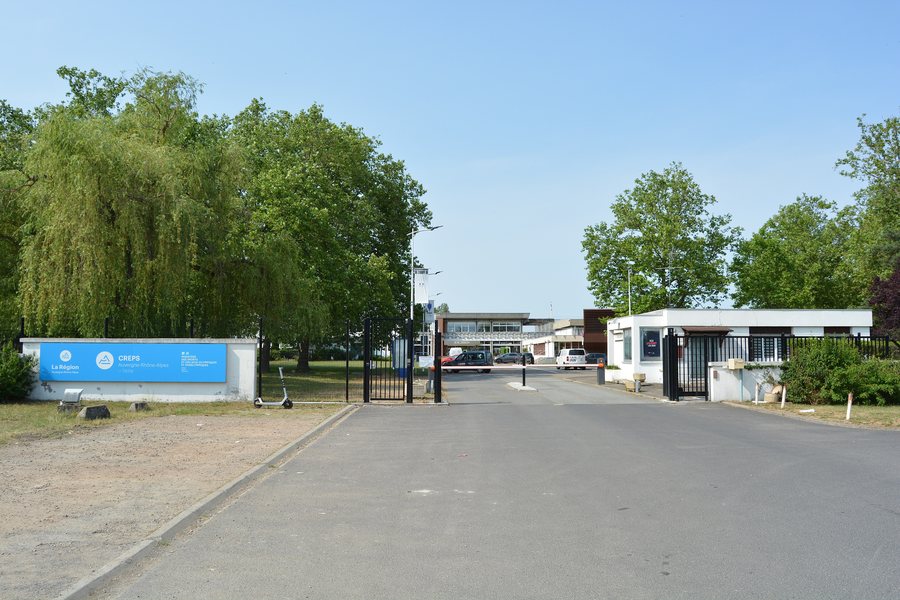 File:Entrée du CREPS Auvergne-Rhône-Alpes — Vichy (Bellerive-sur-Allier) 2023-06-17.JPG
Photo: Tabl-trai via Source, CC BY-SA 4.0
File:Entrée du CREPS Auvergne-Rhône-Alpes — Vichy (Bellerive-sur-Allier) 2023-06-17.JPG
Photo: Tabl-trai via Source, CC BY-SA 4.0
Nature
The peat bogs of the Montagne bourbonnaise are home to a rich variety of flora, including the rare bog rosemary and sundew. Allier has 18 supervised Espaces naturels sensibles; most of them are open for independent exploration.
Les Gorges de la Bouble is a natural area managed by the department in Chantelle and Deneuille-les-Chantelle. The valleys of the Allier and Loire are home to meanders, side arms, gravel and sandy beaches, islands and riparian forests. The gorges are home to rare species and offer opportunities for fishing for trout and grayling.
The Forêt de Tronçais is the largest state-owned forest in the Allier department and is described as Europe’s first oak forest; its trees reach 30 metres in height. Le Vallon du Barbenan is a natural area where a watercourse becomes a mountain stream, forming rapids and cascades; it also features ecological diversity and different habitats. Visitor access to the Forêt de Tronçais is organised around five main entry points.
Activities
The department’s Espaces naturels sensibles support hiking, cycling, mountain biking, climbing, canoeing, paragliding and fishing. The Allier PDIPR is a directory of rural paths intended for hiking and other forms of soft mobility; it supports permanent routes and organised hikes.
Another documented cycling connection is the Route Cœur de France à vélo. It connects Tours and Montluçon over 330 kilometres; 80 per cent of the route is secured.
Culture
The Musée Anne-de-Beaujeu is housed in a pavilion of a ducal palace considered one of France’s earliest architectural and decorative examples of the Renaissance. The museum preserves around 20,000 objects from art, archaeology and natural history.
Vichy is one of eleven European spa towns that belong to the UNESCO World Heritage Site “The Great Spa Towns of Europe”. There are three thermal spa resorts in Bourbonnais in total: Bourbon-l’Archambault, Néris-les-Bains and Vichy.
Charroux is the only village in Allier to bear the “Les Plus Beaux Villages de France” label. Souvigny was one of Cluny’s five daughter foundations and became one of the major pilgrimage destinations of the Western world around the tombs of Saint Mayeul and Saint Odilon. In Moulins, the Tour de l’Horloge, known as the Jacquemart, was completed in 1408.
Le PAL combines an amusement park and a wildlife park across 40 hectares of natural land. Paléopolis is a theme park dedicated to dinosaurs and palaeontology, offering exhibitions and activities for families.
Examples of culinary traditions in Allier include pâté aux pommes de terre and pompe aux grattons. Charolais beef, wines and honey were presented at the Salon de l’Agriculture 2025.
Getting There and Orientation
Moulins-sur-Allier is served by Intercités trains on the Paris-Bercy–Clermont-Ferrand route. Moulins station is approximately 800 metres from the tourist office and the historic centre.
You would like to book a hotel in Allier.
Other places in the Allier department: Saint-Nicolas-Des-Biefs, La Chabanne, Lavoine, Laprugne.
Other regional destinations: Haute-Loire, Puy-De-Dôme, Cantal.
To the higher-level travel overview: Auvergne.

_2023-06-17.JPG)