
Plan a ski holiday: step by step to the right trip
A successful ski holiday does not start with the longest list of pistes, but with a few decisions that suit your ability, travel group and available time. By considering the destination, dates, accommodation and travel arrangements in a sensible order, you can avoid last-minute detours and enjoy your days on the slopes more relaxed. For families, beginners and groups with different ability levels, short distances and a reliable daily routine often matter more than having the largest possible choice of runs.
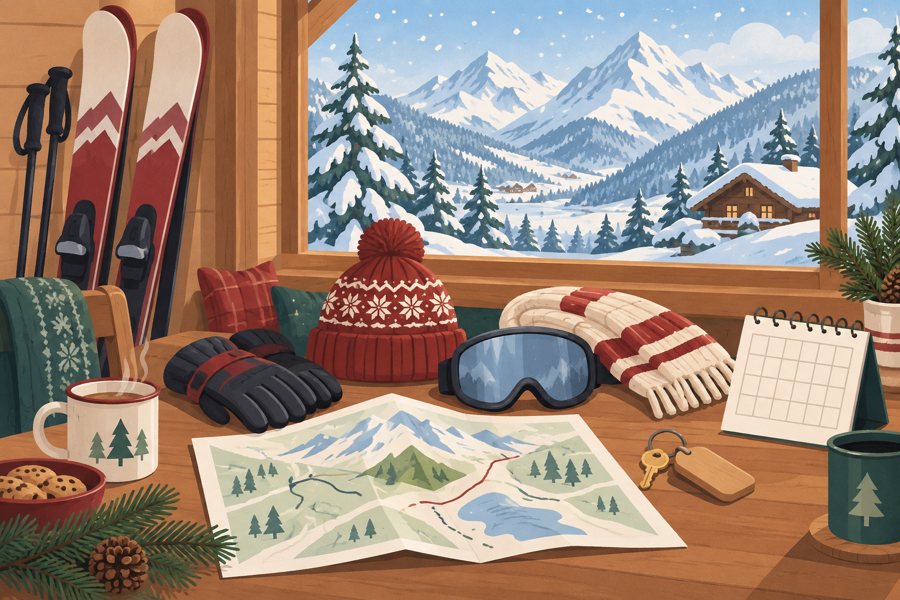 Illustrative, nicht-dokumentarische Darstellung von Skiern, Karte, Kalender und Unterkunftsschlüssel bei der Reiseplanung; keine echten Ortsangaben.
Photo: OpenAI / Max-TD (AI illustration)
Key facts
- Choose the ski area, travel dates and accommodation together, rather than independently.
- For school holidays, Christmas and popular weeks, book accommodation, ski lessons and rental equipment well in advance.
- Beginners benefit from easy slopes, a conveniently located ski school and short distances between their accommodation, rental shop and lift.
- Your total budget should include not only accommodation and travel, but also the lift pass, equipment, lessons, meals and small expenses at your destination.
- Check the weather, piste conditions and travel arrangements again shortly before departure.
- A relaxed arrival day and realistic breaks make the first day of skiing much more enjoyable.
Start with your travel group and destination
First, consider who is travelling and what you want your days in the snow to be like. Couples or sporty groups may prefer a large ski area with longer runs. Families often need an easy-to-navigate starting point, suitable lesson times and accommodation within easy reach of the lift, ski school and shops. For anyone with no previous experience, wide beginner slopes and a gentle start are more important than challenging pistes. The advice for your first ski holiday can help you set realistic expectations.
When choosing a destination, it is worth looking beyond the number of kilometres of pistes. Altitude, the mix of easy and intermediate runs, how easy the area is to navigate and possible alternatives in poor visibility all matter. Compare countries and regions by travel time and holiday style in ski regions for a ski holiday and ski holiday destinations. For example, if you are planning a short weekend trip, an easily accessible ski area may be a better choice than a distant resort that requires more time to reach.
Consider travel dates and snow conditions together
The right dates depend on school holidays, your budget, the atmosphere you are looking for and conditions at your destination. During holiday weeks, accommodation, ski lessons and restaurants are more likely to be busy. Outside these periods, things may be quieter, but some services may have shorter opening hours. Travel dates and the season can help you weigh up school holidays, budget and your daily schedule together.
Reliable snow conditions are not a guarantee that every single piste will be open. Altitude, the location of the runs, snowmaking and local weather all affect conditions. If you are travelling at the beginning or end of the season, check how high the pistes are and what alternatives are available in the resort before booking. In the final days before your trip, current information from the ski area is more useful than general snow statistics. Find out what to look for in snow reliability on a ski holiday. There are additional risks away from marked pistes; the avalanche warning service provides current avalanche information for individual regions.
Plan accommodation and travel together
Where you stay shapes every day of your holiday. Accommodation right by the lift is convenient, but not always essential: a reliable ski bus, a short walk or a ski locker can work just as well. Before booking, check what the journey to the nearest lift, rental shop and ski school meeting point is actually like. A drying room, storage space for boots and clothing, and suitable breakfast times can make everyday life easier, especially after a long day in the snow. Find more criteria in accommodation and meals on a ski holiday.
Your travel arrangements should also suit the length of your stay and the amount of luggage you have. Travelling by car gives you flexibility at your destination, but you will need to plan for winter equipment, parking and the final stretch to your accommodation. Train travel and transfers are convenient when connections are realistic. For flights, the key factor is the journey time from the airport to the resort. Whichever option you choose, avoid cutting it too close and leave extra time for weather, traffic or long waits. For practical advice on travelling by car, train or transfer, see getting to and from the ski area.
Calculate all costs instead of comparing prices alone
The cost of accommodation is only part of the total. Add up accommodation, travel, lift passes, rental equipment, ski lessons, meals and any extra costs such as parking, ski lockers or transfers. An inexpensive room far from the slopes may not be such a good deal if it means long journeys every day. Conversely, centrally located accommodation may cost more but significantly reduce travel and logistical hassles.
For beginners and occasional skiers, renting equipment is often a practical choice, since boots and skis can be fitted or exchanged on site if needed. Multi-day passes, children’s prices and lesson packages are only worthwhile if they suit your plans. For a clear breakdown and answers to questions about individual costs, see lift passes, costs and budget.
Arrange equipment and ski lessons in good time
Your personal essentials include warm layers, waterproof gloves, ski goggles, sun protection and a well-fitting helmet. Many travellers can rent skis, poles and boots; reservations are recommended for busy dates. Comfort and a good fit matter more than the brand. Use the checklist in ski equipment and clothing to help you pack.
Ski lessons build confidence, especially at the beginning, and help prevent your first few days from becoming too tiring. Check the age group, ability level, language of instruction, meeting point and lesson times. Adult beginners do not have to keep up with more experienced travel companions; a separate lesson lets them learn at a suitable pace. Find advice on choosing a course in ski lessons for beginners. For families, it is a good idea to plan lesson times and breaks so that shared meals and relaxed transitions remain possible.
The last few days before departure
Check your booking confirmations, rental shop opening hours, meeting points, the weather and travel conditions again. Keep your ID, insurance card, payment options, chargers and any essential medication handy in your luggage. Leaving the arrival day free of a fixed skiing schedule gives you time to explore the resort and adjust your equipment without rushing.
A realistic daily plan makes all the difference to your enjoyment on the slopes. Start with easy runs, take breaks and adjust your pace and routes to visibility, snow conditions and how you are feeling that day. Find the key rules and advice in slope safety. With this approach to planning, you can stay flexible in changeable weather and enjoy your holiday more.
Frequently asked questions about planning a ski holiday
How far in advance should I book a ski holiday?
For school holidays and popular destinations, it is best to book early. Accommodation, ski lessons and rental equipment may be limited, in particular.
What should beginners look for when choosing a ski area?
Easy slopes, an accessible practice area, a ski school and short distances are usually more important than a very large number of runs.
How much should I budget for a ski holiday?
It depends on the destination, length of stay and time of year. Include every cost: travel, accommodation, lift pass, lessons, equipment and meals.
When should I check the weather and snow conditions?
Before booking, altitude and season can help you choose a destination. Shortly before departure, current piste reports, the weather forecast and travel conditions are key.
