
Choosing Ski Gloves
Ski gloves should keep your hands warm and dry while still allowing a secure grip and enough movement. Material and colour are not the only considerations. The expected temperature, wet or dry snow, your personal sensitivity to cold, the required dexterity and the fit all matter. Try the gloves with the jacket and ski poles you will actually use on holiday.
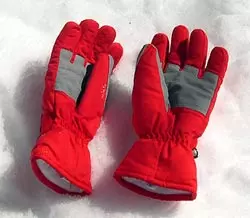 Ski gloves for warmth, weather protection and a secure grip.
Key points
- Mittens are often warmer, while five-finger gloves offer more dexterity.
- For wet snow, explicitly waterproof material is more important than a merely water-repellent finish.
- Gloves that are too tight can compress the insulation and make your fingers cold more quickly.
- There should be a little room between your fingertips and the glove, without your hand swimming inside it.
- A long, well-closing cuff keeps snow away from the sleeve.
- Wet gloves dry slowly in the air and should not be placed directly on a heater.
Match warmth and insulation to the weather
How warm a glove needs to be depends on temperature, wind, moisture and activity. You generate more heat while skiing actively than while waiting at the lift. If your hands get cold quickly or you spend a lot of time waiting with children, stronger insulation, a mitten or a three-finger glove is often helpful. Thinner models are more suitable for mild days and for people who need maximum dexterity.
A removable inner glove can make adjustment and drying easier. However, extra liners must not constrict your hand. If your fingers already feel pressure while standing still or become pale and cold when gripping, the glove is too small or insufficiently insulated. A second pair can be useful during long breaks so that you can put on dry gloves.
Waterproofing and weather protection
Water-repellent does not automatically mean waterproof. In wet snowfall, frequent contact with snow or long days outdoors, the product description should explicitly state that the membrane or construction is waterproof. Also look for sealed seams, a closed cuff and a fastening that keeps snow from entering at the wrist. With proper care, leather can provide long-lasting protection, but leather alone does not remain waterproof simply because it has been treated with leather grease.
The cuff must work with your ski jacket. A short cuff sits under the sleeve and is quick to put on and remove; a long cuff goes over the sleeve and offers more reserve in snowfall or falls. Check that the edge does not press and that you can operate the fastening with your other hand. For children, an easy-to-use fastening is more important than a complicated extra feature.
Five-finger gloves, mittens or three-finger gloves
Five-finger gloves make it easier to open zips, operate bindings and handle small items. Mittens group the fingers together and can retain heat better as a result. Three-finger gloves have a shared area for three fingers with separate sections for the thumb and index finger. They are a compromise when you need both warmth and a good grip. For ski touring, frequent breaks or very cold days, a warm model may be more useful than maximum finger dexterity.
Test the fit and grip
Measure your hand circumference according to the instructions from the specific manufacturer and compare it with the manufacturer's size chart. A general size is only a guide. There should be a little air between your fingertips and the material, but your fingers should not slide forward when you grip. Fasten the glove, hold a ski pole and open a zip. Your hand should close naturally without seams cutting in or folds forming in the palm. Further guidance on sizing and fit is available in the official Hestra guide to size and fit.
Care and drying
After skiing, let damp gloves dry completely in the air. Direct heat from a radiator, oven or hairdryer can damage leather, membranes, adhesives and insulation. Remove inner gloves when the design allows it and follow the care label. Clean the outside gently; leather needs suitable care, while technical materials require different products. Store dry gloves loosely, in a cool place protected from direct sunlight.
FAQ
Are mittens warmer than five-finger gloves?
They can often retain heat better because the fingers are less separated. Whether they suit you better also depends on fit, insulation and how much dexterity you need.
How should ski gloves fit?
Your fingertips should not touch the end, the glove should not press and your hand should not slide inside it when gripping. Test the fit with a ski pole and your jacket.
Are water-repellent gloves waterproof?
No. Water-repellent describes a lower level of protection. For wet snow, look for an explicitly waterproof construction or membrane.
Which gloves are suitable for children?
Choose a warm, well-fitting model with an easy fastening and a long cuff. Check the size before travelling and leave enough room for the fingers to move.
How should ski gloves be dried?
Let them dry slowly at room temperature with good air circulation. Direct heat from a radiator can damage the material, membrane and insulation.
What can I do if my fingers stay cold?
First check the size, insulation and moisture. A glove that is too tight or wet provides little warmth. If necessary, switch to a dry, more insulated model or use a suitable inner glove.
