
Ski holidays with children: plan for a relaxed and safe trip
A ski holiday with children is more relaxed when the day suits the family’s age, ability and energy levels. Success is not about skiing the longest run, but about getting started safely, keeping distances short, taking warm breaks and leaving enough time to rest. Before booking, it is therefore worth considering the ski area, accommodation, lesson times and equipment together.
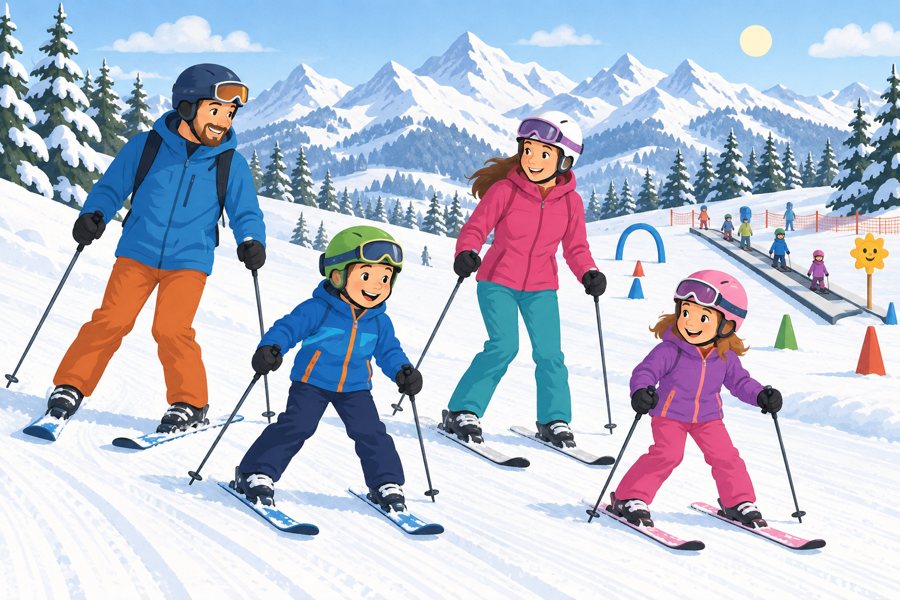 Illustrative, nicht-dokumentarische Darstellung einer Familie auf einem sanften Skihang; kein bestimmter Ort.
Photo: OpenAI / Max-TD (AI illustration)
Quick facts
- Clear practice areas and easy-to-find meeting points help children find their way.
- Whether there is a conveyor lift, a short lift or a designated learning area depends on the ski area.
- Accommodation, rental shops and lesson meeting points should be easy to reach in ski boots, even with tired children.
- Agree in advance with the ski school on group arrangements, meeting points and handover to parents.
- Breaks and an early finish should depend on how everyone is feeling, the weather and the ability to ski safely in control.
- Check current lift-pass, lesson and rental prices, as well as discounts, with each provider.
Choosing the right ski area for families
For children, easy-to-navigate areas are often more helpful than a very large ski area with long distances to cover. Look for easy runs, an easy-to-find practice slope and clear signage. Check with the operator whether there is a conveyor lift, a short lift or a separate learning area. It is also worth planning how the family will get back to the meeting point after a break.
Conditions can change throughout the day. Fog, wind, cold, crowded runs or soft snow may mean choosing a different route. An easy run is not automatically suitable for every child. What matters is their skiing ability, concentration and ability to brake in time. For general guidance on cold exposure, you can consult the CDC/NIOSH information; it does not replace a local assessment or supervision by a qualified professional.
Planning accommodation and getting around with children
Short distances make mornings and the trip after ski lessons easier. Check whether the accommodation, lift access, rental shop and meeting point are genuinely easy to reach, and whether the route is manageable in ski boots, with helmets and tired children. A location label alone tells you little about the daily journey. It is also useful to have somewhere to dry clothes, a quiet place to retreat to, and an easy arrangement for breakfast and dinner.
When choosing accommodation and meals, families should clarify meal times, allergies, storage space and possible extra costs in advance. If you plan to cook, you will need nearby shops and a kitchen that fits your holiday routine. Flexible meal times are particularly helpful at a guesthouse or hotel when children get tired early. For the trip to the slopes, distance is not the only consideration: check whether the ski bus, car or walking route is a reliable option.
Preparing for ski lessons and equipment
A beginner ski lesson should be organised according to age and ability. Ask about the meeting point, lesson duration, group size, supervision and what happens if the weather changes. Children learn more easily when they arrive well-rested, fed and on time. There is no need to add a long family run after the lesson. A short practice on easy terrain may be enough before taking a warm break.
Ski equipment includes well-fitting boots, suitable skis, a helmet, gloves, goggles and appropriate clothing. At the rental shop, children should feel able to say if their boots are pinching or their gloves are getting wet. Bindings must be adjusted by trained staff. Spare gloves, dry socks and an extra layer in the backpack can save the day without needing to carry too much.
Daily routine, breaks and safety
A realistic day plan starts with time to get settled and allows for queues, getting dressed and toilet breaks. Agree on simple meeting points in case the group gets separated. Adults should ski at a pace children can safely control and choose an easier route when visibility is poor. Before the first run, talk together about keeping a safe distance, looking out for others and stopping safely.
Plan breaks before a child starts shivering or crying. Warm drinks, dry clothes and a quiet place can help everyone recover. If a child is tired, cold, in pain or feeling unsure, end the ski day. A voluntary rest day is not a holiday day wasted: sledding, winter walks or a relaxed afternoon can add variety, as long as you check what is available locally and the conditions.
Budget and a backup plan
In addition to accommodation and travel, families should budget for lift passes, lessons, rental equipment, food, parking and any extras. When planning the cost of lift passes and a ski holiday, take children’s prices and different areas of validity into account. Check current prices, discounts and terms with each provider. It is sensible to keep a small reserve in case equipment needs to be exchanged, a transfer has to be arranged or an extra rest day is needed.
For more help preparing for your trip, see the advice on planning a ski holiday, getting there and back and snow reliability. This helps the family stay flexible without tying the holiday to a particular weather forecast or a set number of runs.
FAQ
How long should a child ski on the first day?
It depends on age, experience, weather and concentration. A short, enjoyable session with breaks is usually better than a full day on the slopes. How the child feels and whether they can ski safely in control matter more than the duration.
What matters most in a ski lesson for children?
Suitable age and ability groups, a clearly defined meeting point, clear supervision and well-fitting equipment. Also ask how the ski school handles breaks, changes in the weather and handover to parents.
What should we do if the weather changes?
Check the operator’s latest updates, reduce the distance and speed, and take a break if needed. In cold weather, poor visibility or unsafe terrain, ending the ski day should take priority.
