
Ski Holiday Accommodation and Food
The right accommodation can make the whole ski holiday easier. Short routes, space to dry clothing and reliable breakfast are often more useful than a very large room. Food should fit the rhythm of your days on the mountain.
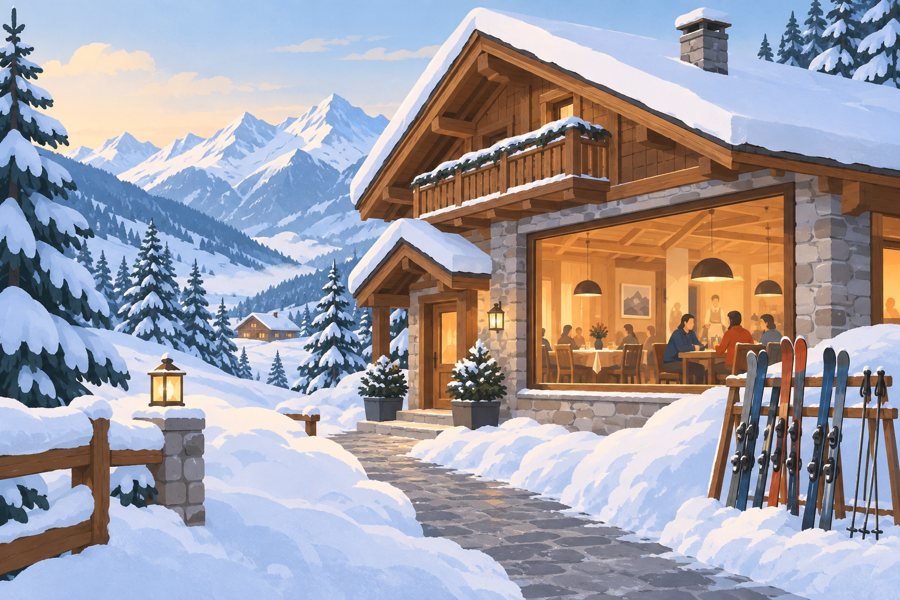 Illustrative, nicht-dokumentarische Darstellung einer gemütlichen Unterkunft mit Skiständer und warmem Gastraum; kein bestimmter Ort.
Photo: OpenAI / Max-TD (AI illustration)
Illustrative, nicht-dokumentarische Darstellung einer gemütlichen Unterkunft mit Skiständer und warmem Gastraum; kein bestimmter Ort.
Photo: OpenAI / Max-TD (AI illustration)
Quick facts about accommodation and food
- Distance to a lift, ski bus or station affects every day.
- A drying room or equipment storage is useful in winter.
- Breakfast times, a kitchen and nearby shops determine flexibility.
- Families often need more space and shorter routes than sports groups.
- Ask early about allergies or special diets.
- Parking, tourist tax, transfers and lift distance belong in the price comparison.
Assess the location properly
Accommodation beside a piste is convenient but not always best. Consider where the ski course starts, how far the rental shop is, whether a ski bus runs and how you return after a long day. Families often benefit from short routes and somewhere to dry clothing. If you value restaurants, shops or quiet evenings, staying in the village may suit you better.
Compare the location with your programme. For a ski course, the meeting point matters; sports groups may prioritise access to the wider piste network. On a ski holiday with children, a short return journey can matter more than the greatest number of runs. Parking, luggage and check-in should also be clear.
Choose the accommodation type
Hotels, guesthouses, holiday apartments and self-catering houses offer different freedoms. A hotel with breakfast or dinner can reduce organisation. An apartment gives flexibility but requires shopping and cooking. Decide whether you need shared evenings, separate bedrooms, a kitchen or a lounge. A short weekend may favour simple service; a longer stay can benefit from a kitchen.
Facilities include more than beds and bathrooms. A dry place for skis and boots, somewhere for gloves and clothing, and enough storage make life easier. Check that details apply to your travel dates and confirm current opening times, bus timetables and restaurant options.
Eat well without unnecessary stress
Food planning need not schedule every minute. A useful framework is breakfast before the first lift, a reliable lunch, drinks and something easy for the evening. With children or an active day on skis, take suitable snacks. Queues and opening times at mountain restaurants can affect the day, so a quieter break may be preferable.
Self-catering works well when arrival and the first shop are planned together. Check supermarket access and kitchen equipment. With hotel catering, check meal times, dietary requests and whether early starts or late returns are possible. This belongs to planning a ski holiday as much as the pass and journey.
Compare the total price
Do not compare only the nightly rate. Cleaning, parking, linen, breakfast, tourist tax, transfers and lift distance can change the total. Cheaper accommodation farther away works only if the transfer is reliable and its time and cost suit you. Combine these figures with your ski-pass and holiday budget.
Connect ski holiday planning, getting to the resort and snow reliability with the accommodation location. For families, children's needs and slope safety also matter.
FAQ about accommodation and food
Is accommodation beside the piste always best?
It saves time but may be more expensive or less central. Group, activities and access to courses, rental and the village are decisive.
Hotel or holiday apartment?
A hotel reduces organisation; an apartment offers flexibility. Choose according to your preferred level of self-catering and shared time.
What should I confirm?
Confirm address, check-in, parking or transfer, ski room, food, lift distance and additional charges before travelling.
