
Skiing in Carinthia
Key facts
Carinthia’s winter regions include Nassfeld-Pressegger See, Bad Kleinkirchheim and the Nockberge, Katschberg/Rennweg, Großglockner/Heiligenblut, the Villach region and Klagenfurt am Wörthersee. When searching for accommodation in Carinthia’s winter regions, you can select your preferred destination.
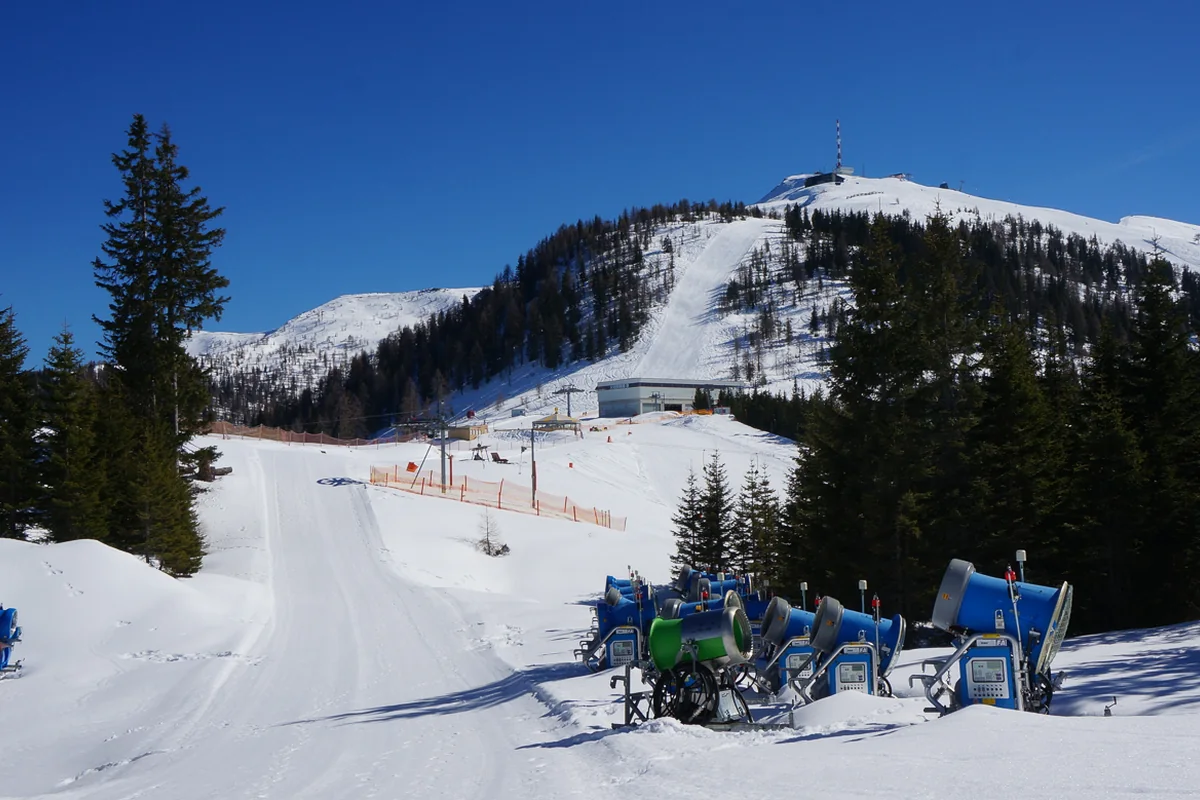 Verschneite Piste und Beschneiungsanlagen im Skizentrum Goldeck in Kärnten.
Photo: Naturpuur / Wikimedia Commons, CC BY 4.0
- Nassfeld, Bad Kleinkirchheim and Turracher Höhe differ in altitude, terrain and local atmosphere.
- Families, beginners, leisure skiers and experienced skiers need different facilities depending on the resort.
- Accommodation near a valley station, ski bus stop or beginner slope can significantly reduce daily travel.
- Altitude, slope orientation and weather all affect snow conditions.
- Compare ski passes, accommodation, travel, rental equipment and meals as part of an overall trip budget.
A ski holiday in Carinthia is a great choice when you want to combine days in the mountains, relaxing breaks and a manageable journey. However, the terrain, altitude and atmosphere vary considerably between the larger ski resorts. To help you decide, first think about your skiing style: do you want a wide range of options for different ability levels, short routes with children, or long runs and challenging slopes? For a broader comparison, see Skiing in Austria for more regions; Planning a ski holiday covers the practical steps, from choosing dates to booking accommodation.
Which Carinthian ski resort suits your trip?
Nassfeld is an obvious choice for visitors looking for a large, interconnected ski area and plenty of variety on the slopes. If you want to combine your trip with wellness, family-friendly areas or a more relaxed pace, compare Bad Kleinkirchheim more closely. Turracher Höhe, meanwhile, has a distinctive high-altitude atmosphere. What matters is not the name of the resort, but whether its slopes, lifts and practice areas suit your group.
For groups with mixed ability levels, it is worth checking how easily the blue, red and more challenging runs connect. Beginners benefit from clearly defined practice slopes, good ski schools and short distances. More advanced skiers are likely to focus on run length, options for different snow conditions and whether the resort offers new terrain to explore over several days. When preparing, see the advice on ski lessons and questions for beginners and ski holidays with children.
Assessing travel dates, weather and snow conditions realistically
A sunny winter day can make a holiday, but it does not replace checking the actual conditions at the resort. Altitude, slope orientation, snowmaking and the weather forecast all affect how the slopes feel. If your dates are flexible, compare several weeks before booking and take school holidays into account, along with your willingness to start early or schedule rest days. For choosing when to go, travel dates and the season provide a useful starting point; snow reliability on a ski holiday adds advice on planning for changing conditions.
Getting there and choosing accommodation without unnecessary travel
If you are driving, the location of your accommodation is especially important. An apartment with parking can be convenient, but a long journey to the valley station will be felt every morning. If you are travelling without a car, consider rail or bus connections, the ski bus stop and shops within walking distance. Arriving on a Saturday can mean longer travel times during busy periods; if possible, travelling earlier or later can take some pressure off your first day. Getting to and from your ski holiday brings together practical decisions about transport, luggage and overnight stops.
When choosing accommodation, don’t base your decision solely on the distance shown on a map. A short walk to the lift may be more valuable than a slightly larger place to stay outside the village. For families, somewhere to dry clothes, breakfast times and an easy return at lunchtime are often more important than one extra amenity. If you prefer self-catering, check nearby shops, the kitchen and delivery options; see also the advice on accommodation and meals.
Costs, equipment and daily routine
In addition to ski passes, costs usually include travel, accommodation, rental equipment, lessons, mountain meals and any extras. A clear budget helps prevent the group from having to discuss different expectations once you arrive. Comparing rental packages and lesson times is particularly worthwhile when travelling with children. The page Ski passes, costs and budgeting helps you put together your expenses; for clothing, helmets and rental questions, see ski equipment and clothing.
For relaxed days on the slopes, a realistic routine is enough: sort out equipment and meeting points on the first day, plan breaks before you get too tired, and save some energy for the journey back. If you’re travelling with children or beginners, a manageable day’s plan is usually better than trying to ski every run.
Stay safe on the slopes
Consideration for others, controlled speed and choosing an appropriate route matter more at any resort than trying to pack as much skiing as possible into the day. Poor visibility or slushy snow can quickly change what is required. A helmet, correctly adjusted bindings and regular breaks are all part of being prepared; slope safety explains the key rules and situations. If you haven’t done much exercise before your trip, health and preparation can help you better assess exertion and recovery.
