
Boudry between winegrowing heritage, museums and the Areuse Gorges
Accommodation in Boudry Region
The Château de Boudry is considered an ambassador for the Neuchâtel winegrowing region and houses an enothèque as well as the Musée de la Vigne et du Vin. Visitors can discover more than 2,000 years of winegrowing and winemaking history in the canton of Neuchâtel.
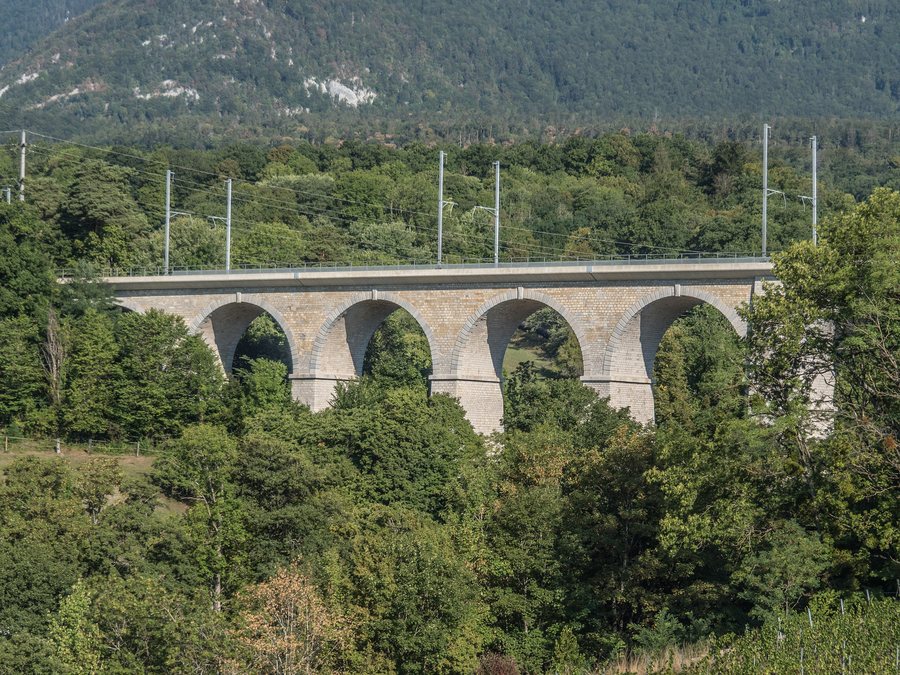 File:Boudry-Viadukt über die Areuse, Boudry NE 20220823-jag9889.jpg
Photo: Jag9889 via Wikimedia Commons, CC BY-SA 4.0
File:Boudry-Viadukt über die Areuse, Boudry NE 20220823-jag9889.jpg
Photo: Jag9889 via Wikimedia Commons, CC BY-SA 4.0
More local pages: Cortaillod, Bevaix, Montézillon, Gorgier and Boudry. Further destinations: Val-de-Ruz, Neuchâtel Region and Val-de-Travers.
History
The Château de Boudry dates back to the 13th century and has been demolished, extended and remodelled several times over the course of its history. A permanent exhibition uses prints, gouaches, watercolours, oil paintings and documents to illustrate the development of the winegrowing landscape of the Neuchâtel winegrowing region, as well as the economic importance of winegrowing to the country. The enothèque offers tastings of most of the region’s wines.
Townscapes
Auvernier is listed in the Swiss Inventory of Heritage Sites of National Importance, known as ISOS. The historic village features cobbled lanes, winegrowers’ houses, old fountains, the Château d’Auvernier and numerous traditional wine cellars. A guided tour through the winegrowers’ village and the surrounding vineyards includes the historic village with its winegrowers’ lanes, as well as a wine tasting in one of the village cellars.
The Caveau de Cortaillod et Bevaix is located in a village cellar just a few steps from the lake and offers wine tastings featuring wines from several producers in Cortaillod and Bevaix.
Museums
The Musée de l’Areuse presents birds and mammals from the region to the public. Its collection includes local prehistoric objects, including finds from the archaeological sites of Cortaillod and Auvernier, as well as documents on regional history and folklore. The museum also houses exceptional ethnographic collections from Gabon, Indiennes textiles, a medal collection and weapons.
The Musée du Tram displays six powered railcars and four trailers from an 89-year production period of railway equipment in Switzerland. From April to October, it offers guided tours by prior arrangement, as well as private rides on a historic tram by prior arrangement.
Nature
The Écomusée de la pêche et des poissons presents fishing on Lake Neuchâtel and in French-speaking Switzerland through an extensive collection of objects at a former fishing site. Labels and audio commentary complement the visit. The Écomusée has a permanent exhibition and outdoor educational panels that are accessible at any time, and is located in a protected and preserved natural area near the port of Bevaix.
The Pointe du Grain is a wooded pebble beach at the foot of the vineyards, with views of the Alps. The Colombier–Bevaix route runs between vineyard slopes and the lake’s blue waters along a straight, clearly visible path and offers a place to swim at the Pointe du Grain before arriving at the port of Bevaix.
Trails
The circular hike to the Rochers de Tablettes leads from Rochefort through the forest to the summit of the Tablettes at 1,291 metres and to the Rochers de Tablettes viewpoint. From there, the view extends across the Val de l’Areuse, Lake Neuchâtel and, in clear weather, as far as the Creux du Van basin.
The hiking route through the Gorges de l’Areuse follows the river through a landscape of stone bridges, footbridges, stairs, rocky gorges and impressive cliffs, leading as far as Boudry. From Neuchâtel, the gorges can be reached by train to Noiraigue or Champ-du-Moulin; the return journey is by tram from Boudry.
Via Cluny Stage 6 leads from Bevaix along the lakeshore via the Pointe de Cortaillod to Corcelles-Cormondrèche and then continues towards Boudry, following the Areuse for part of the way.
To the higher-level travel overview: Canton of Neuchâtel.

