
Tírvia between valleys, village character and history
Accommodation in Tírvia
Tírvia lies at the meeting point of three major valleys in Pallars Sobirà: the Vall de Cardós, the Vall Ferrera and the Coma de Burg. This geographical location gives the village a distinct landscape setting. For orientation, the three valley connections can be considered individually, without combining them into a single landscape designation.
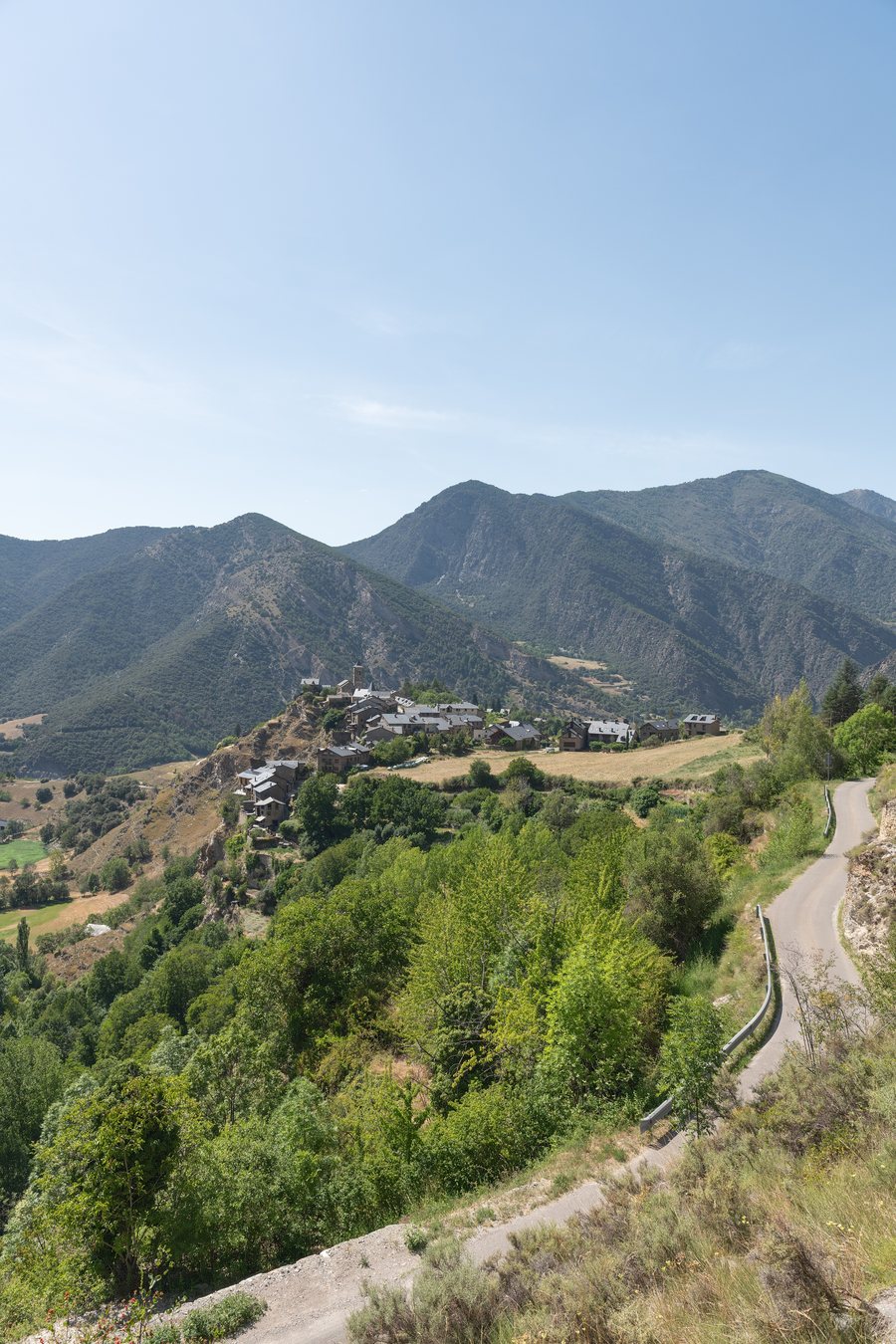 File:Tírvia - Tírvia, Spain - July 29, 2024 02.jpg
Photo: Giorgio Galeotti via Wikimedia Commons, CC BY-SA 4.0
File:Tírvia - Tírvia, Spain - July 29, 2024 02.jpg
Photo: Giorgio Galeotti via Wikimedia Commons, CC BY-SA 4.0
When comparing accommodation in Tírvia, you can review travel dates, room category and cancellation conditions side by side. These fields can be weighted differently when making your choice. The practical part of the decision thus sits alongside the local themes of landscape, history and culture.
For regional comparison, you can also refer to the destination pages Sort, Riu De Cerdanya, Rubió, Soriguera, Esterri De Aneu, Odèn, Rialp and Isil.
Landscape and village character
Tírvia is situated on an elevated viewpoint from which the surrounding natural landscape can be observed. The village character includes arcaded streets, an authentic main square and traditional house architecture. The bell tower of the Church of Mare de Déu de la Pietat rises above the rooftops of Tírvia.
For planning purposes, it is useful to consider the geographical setting and architectural details as separate aspects. The elevated location describes the views across the surrounding area, while the streets, square, houses and church tower define the structure of the village itself.
History
The first written mention of Tírvia dates from 819. In 1225, Guillem de Bellera, lord of Tírvia Castle, granted the population a charter of liberties. In 1272, Tírvia, the Vall Ferrera and the Coma de Burg were acquired by Count Roger Bernat III de Foix.
For a chronological overview, you can read these dates in sequence: the written mention comes first, the charter of liberties follows in the 13th century, and the acquisition of the area mentioned is recorded for 1272.
Culture
The “Estelas funerarias de Tírvia” are medieval funerary stelae dating from between the 12th and 14th centuries and are of great historical and artistic value. They are kept in the Pietat Chapel in Tírvia.
Tírvia Històrica is a cultural and literary festival centred on historical fiction. Thus, Tírvia’s cultural context includes both medieval funerary stelae and a festival with a literary focus.
Trails and information
The route from Alins to Tírvia follows the Noguera de Vallferrera through riverside forests and hay meadows, bringing to life the historical heritage of ironworking as well as the wrought-iron sculptures of Ainet de Besan and Araós. The route described therefore combines landscape features with traces of the region’s working history and specific works of art.
The summer visitor information network of the Parc Natural de l’Alt Pirineu also includes an information point in Tírvia.
For the wider travel overview: Lleida.

