
Tavascan in Winter: Cross-Country Ski Trails, Culture and Mountain Paths
Accommodation in Tavascan
In Tavascan, the Estació d'alta muntanya de Tavascan offers twelve kilometres of cross-country ski trails and snowshoe routes. This creates a clear focus on winter activities without overlooking the valley’s other paths, landscapes and historic sites.
Winter and Paths
The Estació d'alta muntanya de Tavascan also offers mountain bike and e-bike rides on its routes and paths. Mountain bike and e-bike rides in Tavascan follow rocky roads and trails with steep climbs and require off-road experience and physical fitness. For your planning, the activities can therefore be distinguished by season, terrain and personal ability.
The Porta del Cel begins and ends in Tavascan, covers 65 kilometres and 5,500 metres of ascent, and is completed in four or five days. Another route description concerns the route to Port de Tavascan: it is a linear trail from the Pont de la Bolle car park, follows the GRT-58, passes through Bordes de Graus and Noarre, and then reaches Port de Tavascan. The details about the route, distance and duration help you consider a single trail and a multi-day tour separately.
Nature and Recreation
The Riu de Tavascan carries clear water and provides a habitat for endangered species such as the Pyrenean desman and the otter. In the Puente de la Bolle recreation area in Tavascan, next to the Tavascan River, there are two picnic tables and an information board. Here, the landscape and time spent by the water appear as distinct perspectives alongside the sporting activities.
Culture and Water
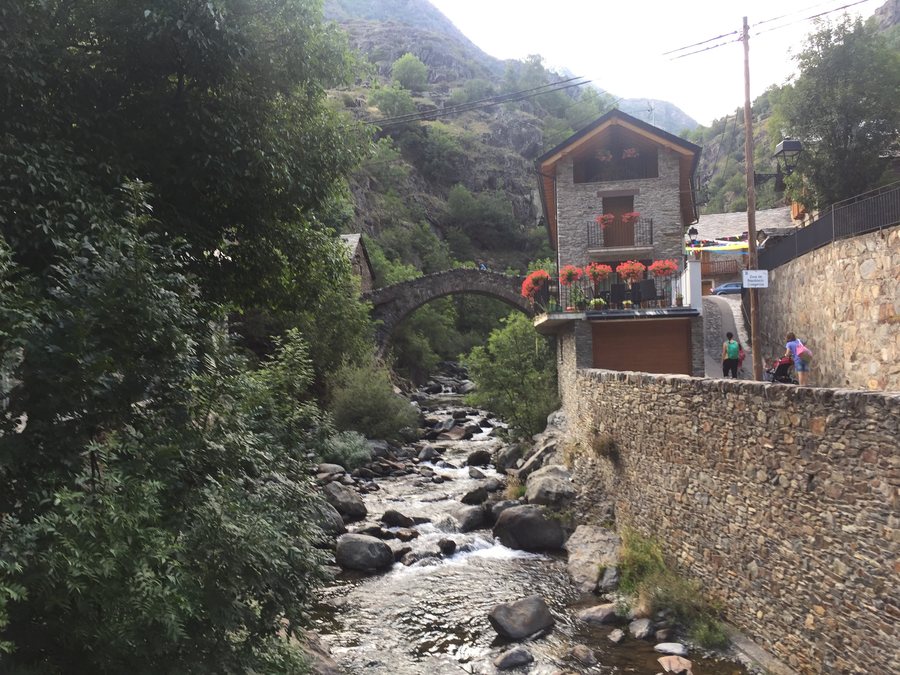
Pont Vell de Tavascan is a medieval stone bridge from the late Romanesque period of the 13th century, with a single arch. In the centre of Tavascan stands the parish church of Sant Bartomeu; the ruins of Sant Simó de Tavascan are next to this church. The Monument a l’Aiguadera beside the bridge highlights the importance of water as a source of life and energy in the area.
The history of the village is also connected with water and paths, while its individual references remain distinguishable. Castell de Tavascan was a 13th-century fortification strategically built to control the passage from the Cardós valleys to cross-border routes. Guided tours of the Tavascan hydroelectric complex provide an introduction to generating electricity from hydropower and to the infrastructure of this engineering structure.
Espai Aigua i Energia offers an immersive, interpretive experience about the use of hydropower, major engineering structures, and the ecological and cultural value of water. This places technical, ecological and historical perspectives in Tavascan alongside one another without reducing them to a single theme.
Main Festival
Tavascan’s Festa Major takes place on the first weekend of August and includes tournaments, dances, children’s games and a celebratory mass. The date and programme combine community celebration, a religious occasion and activities for different age groups.
Getting There
Tavascan is not connected to public transport and must be reached by private vehicle.
For the overarching travel overview: Lladorre.

