
Bossòst – Romanesque Architecture, Nature and Trails
Accommodation in Bossòst
In the historic centre of Bossòst stands the parish church of Our Lady of the Purification, also known as Glèisa dera Purificacion de Maria. This remarkable Romanesque building is classified as a cultural asset of national interest in the category of historic monument and is considered one of the finest examples of 12th-century Aranese Romanesque architecture.
 File:Bossòst, 25550, Lleida, Spain - panoramio - Fuchs Robert.jpg
Photo: Fuchs Robert via Wikimedia Commons, CC BY 3.0
File:Bossòst, 25550, Lleida, Spain - panoramio - Fuchs Robert.jpg
Photo: Fuchs Robert via Wikimedia Commons, CC BY 3.0
North of the town lies Bossòst Castle, above the suburb of Sant Ròc on the Casteràs rock. The ascent from the orchards to Bossòst Castle climbs approximately 400 metres in altitude. For historical orientation in Bossòst, the town centre with the church and the northern area around Sant Ròc with the castle can be considered separately.
Nature
The Montanhes de Les e Bossòst nature area is the northernmost natural area in Catalonia. It encompasses extensive Atlantic-influenced deciduous forests, including large-leaved oak forests at lower elevations and beech forests at medium elevations. The diverse fauna of the Montanhes de Les e Bossòst nature area includes brown bears and middle spotted woodpeckers.
Bossòst therefore brings together various natural features: the area combines Atlantic-influenced deciduous forests with the aforementioned forest communities of the lower and middle elevations, as well as diverse fauna including brown bears and middle spotted woodpeckers.
Things to Do
The Saubaga route starts at the tower of the Glèisa de Sta. Maria de Bossòst and leads to the St. Joan Crisòstom chapel. It passes through varied vegetation in the immediate surroundings of Bossòst, including hazel bushes, oaks, alders and maples; on the way to the Portilhon, it passes through beech and silver fir forests. The two buildings mentioned mark the beginning and end of the route.
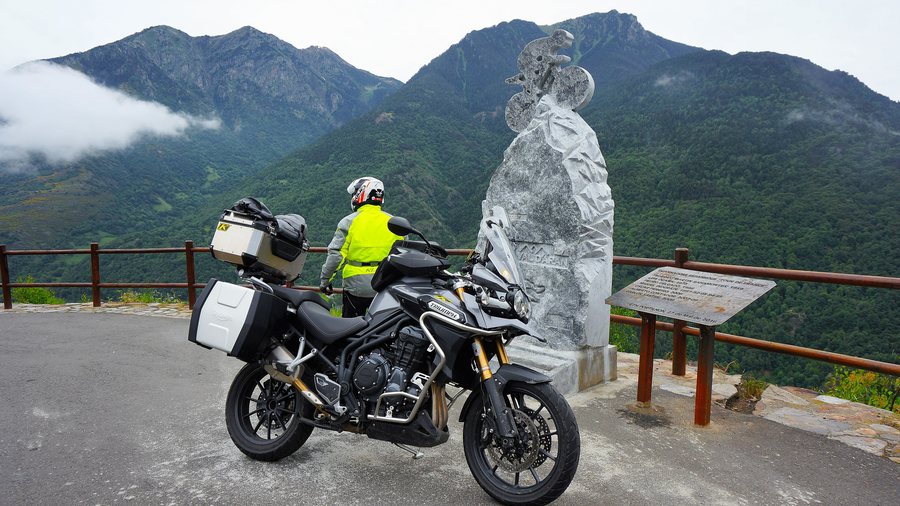
The winding road from Bossòst to the 1,293-metre-high Portilhon Pass on the French border passes through a dense silver fir forest and is suitable for cycling. Near Bossòst, the Garona River is particularly wide and rich in water along this section, offering suitable conditions for rafting and other adventure sports.
For planning purposes, the route, pass road and river can be considered different starting points: Saubaga represents a path between two chapels, the pass road is suited to cycling, and the Garona to rafting and other adventure sports. The differences between these options therefore lie primarily in their form: Saubaga is a connection between two religious buildings, the pass road is a winding section with an indicated elevation and a connection to the forest, and the Garona is a river section associated with rafting and other adventure sports.
Geographical Location
Bossòst can be reached from Bagnères-de-Luchon via the Portilhon Pass; the French D618A road continues as the N-141 to Bossòst. The travel description therefore mentions both the pass and the two road sections that follow one another along this connection.
Odèn, Les, La Guingueta D'àneu, La Vall De Boí, Llarvén, Os De Civís, Rialp, Guixers
For the higher-level travel overview: Lleida.

