
Studená – Accommodation, History and Geopark
Accommodation in Studená
In Studená, the landscape and geopark are complemented by local history, folk culture and buildings.
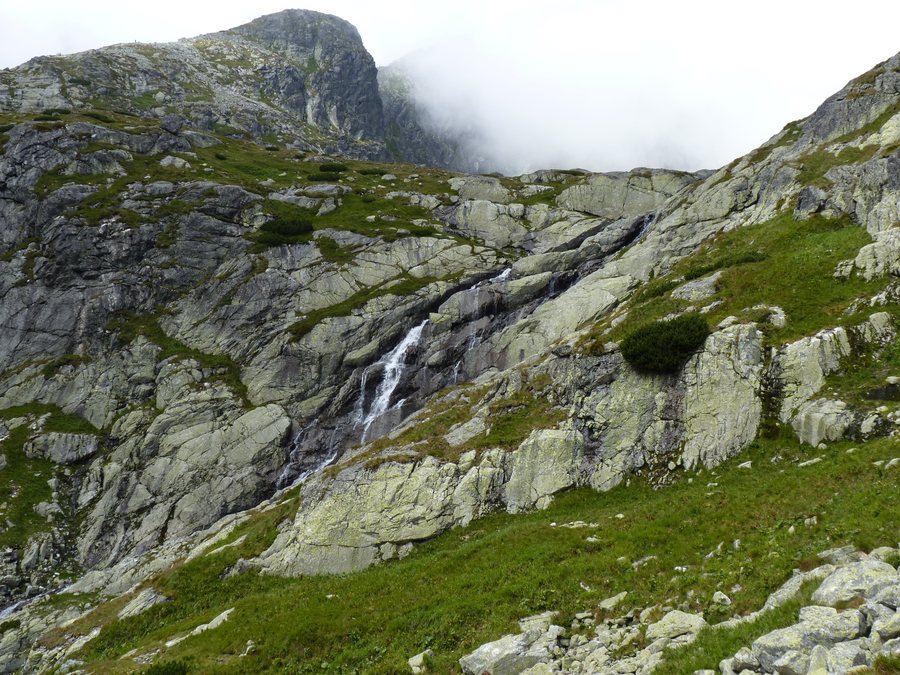 File:Malá Studená dolina, Vysoké Tatry (10).JPG
Photo: Michal Klajban via Wikimedia Commons, CC BY-SA 3.0
Nature
Studená is located in the southern part of the Cerová vrchovina and near the border with Hungary. The Gortva watercourse reaches Studená and turns northeast again within the municipality. The Gortva is 32.42 kilometres long. Studená is one of the Slovak municipalities in the Novohrad-Nógrád Geopark. The volcanic structures of the Novohrad-Nógrád Geopark can be used for educational purposes by the general public. Since 2016, the Novohrad-Nógrád Geopark has also been a national geopark of the Slovak Republic.
History
Studená was first mentioned in writing in 1304. After the Tatar invasion, Studená was established in the area of Nová Bašta. In the 15th century, Studená belonged to the estate of Somoskő Castle. From 1554 to 1593, Studená was occupied by the Ottomans. The name Studená was established in 1920. A total of 39 houses are recorded for 1828. In 1828, the inhabitants of Studená worked in agriculture.
Culture
The Folk Dwelling House in Studená contains an exhibition on folk culture and living. The Museum of Folk Dwellings in Studená presents local crafts and life in the surrounding region. A chapel in Studená was built in the 19th century. The bell tower of Studená, the Gemersko-Malohontská zvonica, has a bell dating from 1786.
When considering accommodation in Studená, first check the exact location and type of accommodation on the relevant offer page. Also compare the stated occupancy, included services and all price components. The booking and cancellation conditions are equally important, as is whether individual services are expressly included or charged separately. Use the specific information provided for each offer and compare several pages based on the same points. Before completing the booking, check that the desired period, number of people and selected occupancy match. When comparing several accommodation offers, a consistent order is helpful: first location and type, then occupancy and services, followed by price components and conditions. This keeps the view of the accommodation and price transparent, and ensures that the decision is based on the details stated for each offer. For a reliable comparison, you can also check how the address is provided on the offer page and whether the type of accommodation is clearly specified. Check the maximum occupancy and the stated occupancy separately if both details are provided. For services, it should be clear which are included in the price and which components appear as additional price items. Also read the deadlines and conditions for changes or cancellations in full. The information provided for each individual offer is decisive; different terms should not be hastily interpreted as referring to the same service. The stated period and number of people should also match the selected occupancy.
Other places: Klenovec, Gemerský Jablonec, Lehota Nad Rimavicou, Večelkov, Nová Bašta, Hnúšťa
To the higher-level travel overview: Rimavská Sobota District.

