
Čakanovce – Nature Monument, Geology and History
Accommodation in Čakanovce
Čakanovce is located in the western part of the Cerová vrchovina highlands, in the valley of a tributary of the Belina. The municipality combines a varied landscape with geological outcrops, an educational trail and historic evidence dating back to the Middle Ages. The Čakanovský profil, where natural history and the landscape are directly intertwined, is of particular importance.
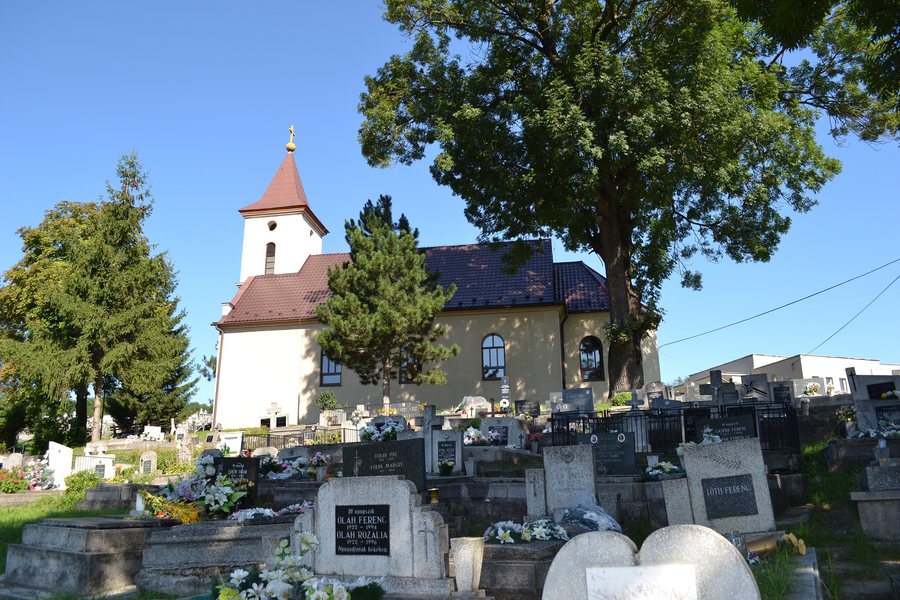 File:Čakanovce - Kostol sv. Alžbety (1).jpg
Photo: Ladislav Luppa via Wikimedia Commons, CC BY-SA 4.0
File:Čakanovce - Kostol sv. Alžbety (1).jpg
Photo: Ladislav Luppa via Wikimedia Commons, CC BY-SA 4.0
Nature
The Čakanovský profil Nature Monument has been protected since 1990 and covers 0.69 hectares. The outcrop shows sediments from a retreating sea of the Lower Miocene. Terrestrial lake and river sediments formed later, allowing different stages of geological development to be identified at this site. The upper part of the Čakanovský profil also contains a lignite seam that formed in a swamp environment.
The geological bedrock of the municipality is also varied. Its foundation consists of young Tertiary tuffaceous sandstones divided by erosion gullies. Eroded remnants of basalt and andesite emerge in places. Significant palaeontological finds, including marine shells, have been made at the Čakanovský profil. The geological formations and fossils thus point to different landscapes and habitats that existed at this site in the past.
The landscape within the municipality is largely deforested and extends from hilly terrain to mountainous areas. Surviving stands of oak and acacia are present, complementing the open landscape with wooded areas.
Trails and Outcrops
The Čakanovský profil includes a 1.3 km-long educational trail. From Čakanovce, the profile area can be reached via a field track. The first sections – the lower sand pit, the road cut and the gravel pit – are well exposed and therefore clearly visible. In contrast, the area around the Iboľa adit at the Čakanovský profil is heavily overgrown and difficult to access. Within the profile, well-exposed areas alternate with a section whose surroundings are characterised by dense vegetation and difficult access.
Culture and History
Čakanovce is home to the Roman Catholic Baroque Church of Saint Elizabeth, dating from 1778. A Neoclassical wayside chapel from the early 19th century is also located in the municipality. The history of the settlement has been documented in writing since 1439, when Čakanovce was mentioned under the name Chakanbaza.
Čakanovce fell into decline during the wars of the 17th century. At the beginning of the 18th century, the settlement was restored as a noble settlement. From 1554 to 1594, Čakanovce was occupied by the Turks and incorporated into the Sečany sanjak. These chronologically distinct stages give the settlement's history a clearly recognisable sequence from its medieval mention through the period of occupation, decline and later restoration.
An archaeological site with a bronze hoard is also recorded in the outskirts of the municipality of Čakanovce. Together with the Baroque church, the Neoclassical wayside chapel and the historic place names, this find complements the natural-history evidence of the Čakanovský profil with an archaeological dimension.
If you would like to visit further destination pages from Čakanovce, you can find Dobroč, Šiatorská Bukovinka, Píla and Kotmanová here.
For the higher-level travel overview: Lučenec District.

.jpg)