
Guarda: Winter Landscapes, Nature Trails and Historic Sites
Accommodation in Guarda
If you are considering Guarda for winter days combining nature and cultural activities, the Serra da Estrela is the clearest seasonal reference point: in its highest areas, frequent snowfall makes winter sports possible. At the same time, the region’s attractions range from river trails and landscapes shaped by the Ice Age to rock art, castles and museums. When choosing your accommodation, you can therefore weigh up your travel group’s interests without equating winter sports with the other excursions.
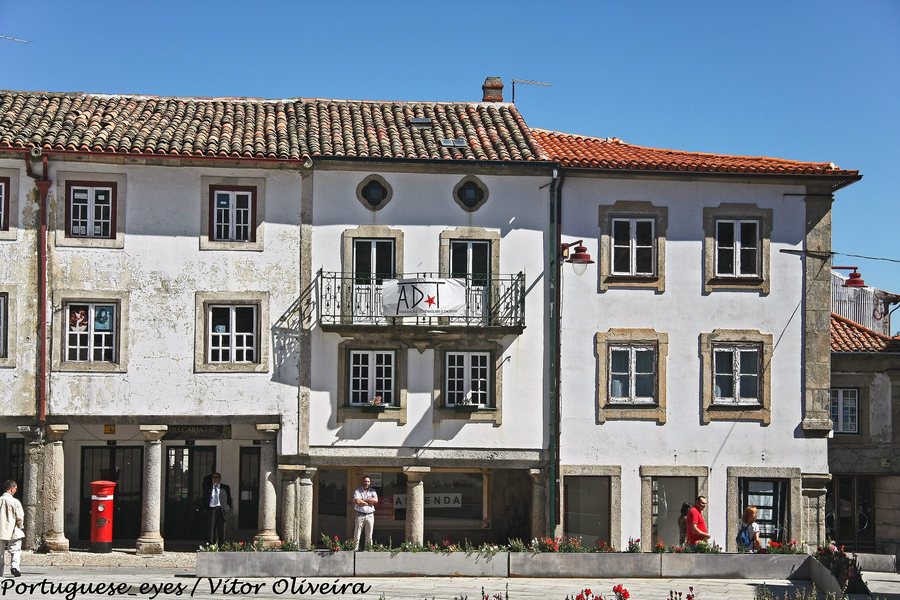 File:Guarda - Portugal (9111636866).jpg
Photo: Vitor Oliveira from Torres Vedras, PORTUGAL via Wikimedia Commons, CC BY-SA 2.0
File:Guarda - Portugal (9111636866).jpg
Photo: Vitor Oliveira from Torres Vedras, PORTUGAL via Wikimedia Commons, CC BY-SA 2.0
Landscape: The Serra da Estrela Natural Park includes valleys shaped by the Ice Age, covões and around 25 natural lagoons. Archaeology: The Côa Valley Archaeological Park covers around 200 km² in Vila Nova de Foz Côa, Figueira de Castelo Rodrigo, Pinhel and Mêda. Rock art: The prehistoric sites in the Côa Valley and Siega Verde lie on the banks of the Águeda and Côa rivers and document human settlement since the end of the Palaeolithic. Urban history: Guarda was founded in 1199 by D. Sancho I and elevated to a bishopric with a cathedral. Sortelha: The castle has been classified as a National Monument since 1910. Marialva: The citadel, Arrabalde and Devesa form three clearly distinct areas.
Winter landscapes and nature
The Serra da Estrela combines a striking high-mountain landscape with natural features that are interesting beyond purely winter-sports-related considerations. Valleys shaped by the Ice Age, covões and around 25 natural lagoons give the natural park a variety of landscape highlights. For your planning, this means that winter days can focus on snow sports in the highest areas, while the landscape can also be appreciated as an independent sightseeing and nature theme.
Trails along the Côa and Mondego
The PR1 “Meandros do Côa” route is a nature trail that takes hikers as close as possible to the Côa River. The river’s immediate course is therefore the main focus. The Passadiços do Mondego offer a different trail perspective: the approximately 12-kilometre route follows the Mondego and its tributaries and begins near the Barragem do Caldeirão dam. The Trilho da Calçada do Tintinolho hiking trail, in turn, connects the historic centre of Guarda with the agriculturally shaped Mondego Valley. It follows an old path paved with large stone slabs.
Routes for regional orientation
The roads themselves are also part of the region’s context. The Estrada Nacional 332, or EN 332 for short, runs entirely within the District of Guarda for almost 86 kilometres. A large part of its route lies in the border area and in the Douro Internacional Natural Park. The tourist route along the Estrada Nacional 221 connects Miranda do Douro and Guarda over a distance of approximately 184 kilometres.
Museums and traces of history
The Museu dos Descobrimentos, also known as the “À Descoberta do Novo Mundo (DNM)” Interpretation Centre, presents the Portuguese Discoveries, particularly the arrival in Brazil. The Museu da Guarda is also located in the surrounding area of the District of Guarda. The former bishop’s palace was converted into the Museu da Guarda; the seminary was one of the significant buildings constructed in the 16th century under Bishop D. Nuno de Noronha.
The historical range extends from the history of the city of Guarda to places with clearly visible fortifications. Sortelha is surrounded by ring-shaped walls and dominated by a castle from the 13th century situated above them. Castelo do Sabugal is a Gothic military complex with a doubly fortified citadel, a barbican and an irregular pentagonal outer ring of walls. Marialva is divided into the citadel, or village within the castle, the Arrabalde outside the walls and the Devesa to the south. The latter extends to the Ribeira de Marialva stream and occupies the site of an ancient Roman city.
Crafts, regional cuisine and bathing facilities
The Weaving Museum of Meios operates as a weaving workshop with functioning looms in a former Cobertores de Papa factory founded in 1954. In Sortelha, papas de milho doce are among the culinary specialities. Another excursion destination of a different kind is Praia Fluvial de Aldeia Viçosa. It has bathing facilities, including a bathing area accessible to people with reduced mobility. Culture, crafts, regional cuisine and time by the water can thus be considered independent additions to the winter landscapes.
For regional orientation, you can also find Seia Region and Manteigas.
For the overarching travel overview: Portugal.
More destinations
More places within the same destination:

.jpg)