
Castelo Branco between nature, craftsmanship and history
Accommodation in Castelo Branco
Castelo Branco combines a geological landscape with a strong craft tradition, museums and historic sites. During your stay, you can therefore combine nature experiences such as the Parque do Barrocal and the Rota da Gardunha with insights into the Bordado de Castelo Branco, gardens, exhibitions and regional culture.
Natural areas and trails around Castelo Branco
The Parque do Barrocal in the municipality of Castelo Branco covers approximately 40 hectares. It is integrated into the UNESCO Naturtejo Mundial Geopark and the cross-border Tejo|Tajo Internacional Biosphere Reserve. The park combines a geological landscape with biodiversity that changes with the seasons and is located close to the city centre.
For hiking enthusiasts, the PR1 – Rota da Gardunha trail starts at the entrance to Louriçal do Campo at an altitude of 470 metres. The Rota da Gardunha leads to the Ocreza Gorge. There, stone water channels provide access to remote natural pools with crystal-clear water, separated from one another by waterfalls. There are also 18 hidden watermills.
The Centro de Interpretação Ambiental offers another perspective on the landscape. There, 14 interactive exhibition elements present the Parque Natural do Tejo Internacional; a virtual journey along the Tejo is also possible. Praia Fluvial do Sesmo is surrounded by hills and valleys characteristic of the Pinhal Interior landscape. The present-day river bathing area was created on the Ribeira de Almaceda through the construction of a weir.
Crafts, gardens and urban history
The Jardim do Paço Episcopal is laid out in a rectangular shape. On the main plateau are five pools with characteristic water features. The garden also includes the Lago das Coroas, the Escadaria dos Reis and the Escadaria dos Apóstolos.
The Bordado de Castelo Branco has both artistic and economic significance; embroidery production is concentrated in the Distrito de Castelo Branco. At the same time, the Bordado de Castelo Branco is a lasting symbol of the city of Castelo Branco, and craftspeople continue to produce specialised embroidery. At the Centro de Interpretação do Bordado, the presentation covers everything from the sowing of flax and weaving, through silkworm breeding and the extraction of raw materials, to the development of embroidery, its techniques, historical context and symbolism.
The Centro de Interpretação do Bordado comprises a museum, a shop and the Oficina-Escola de Bordado de Castelo Branco. The Centro de Interpretação do Bordado is open to visitors from Tuesday to Sunday, 10:00–13:00 and 14:00–18:00.
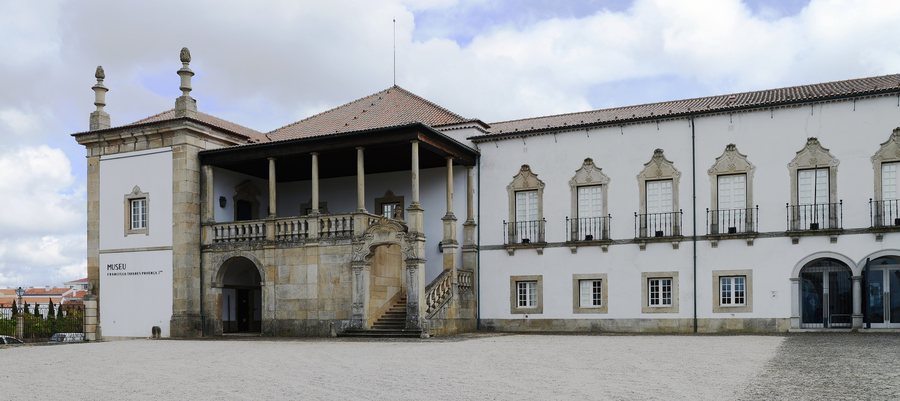
Other institutions also provide deeper insights into the city’s history. The Museu Francisco Tavares Proença Júnior in the municipality of Castelo Branco was founded in 1910 by the archaeologist whose name it bears. The Casa da Memória da Presença Judaica in the municipality of Castelo Branco commemorates the history of the Jewish people and the former Jewish community that lived in the city and contributed significantly to its commercial and economic development.
In Lousa, the Viola Beiroa has been used since the 17th century to accompany the Dança das Virgens and the Dança dos Homens.
Exhibitions, festivals and regional traditions
The Museu do Canteiro presents various temporary exhibitions on the subject of stone throughout the year. During the Christmas season, the Exposição de Presépios takes place there every year.
A traditional event in the Beira Baixa region includes cultural, musical, sporting, educational and gastronomic activities centred on olive oil, olives and their various products.
Getting there and regional orientation
Castelo Branco city centre can be reached via the A23. At Torres Novas, this connects to the A1.
You can also include Unhais Da Serra as another regional point of reference.
For the main travel overview: Portugal.
More destinations
More places within the same destination:

