
Nanno in Val di Non: Castel Nanno, Churches and Orchards
Accommodation in Nanno
Nanno in the heart of Val di Non
Nanno lies in the heart of Val di Non, between the gorges of the Noce and Tresenga mountain streams. In the Nanno area, there are walking routes through the valley and among the orchards.
Nanno is part of Quattro Ville, a group of four neighboring villages. Quattro Ville does not refer to a single attraction, but to a group of four villages. The Adamello-Brenta Nature Park is located near Nanno. In the Nanno area, the valley and the orchards are available as different landscape settings for walks.
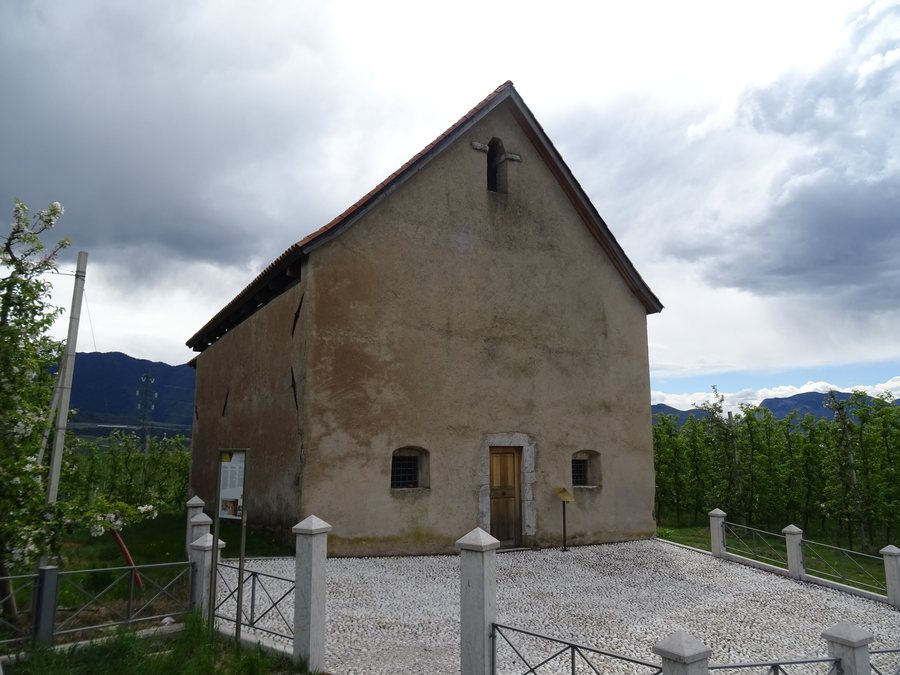 File:Nanno, chiesa dei Santi Fabiano e Sebastiano 01.jpg
Photo: Syrio via Wikimedia Commons, CC BY-SA 4.0
File:Nanno, chiesa dei Santi Fabiano e Sebastiano 01.jpg
Photo: Syrio via Wikimedia Commons, CC BY-SA 4.0
Walking routes, Quattro Ville and nature park
Archaeological traces in Nanno
The first inhabitants of Nanno can be traced back to the Neolithic period. Numerous archaeological finds have been discovered in the Castrum Anagnis area, which is identified with Nanno, including coins, fibulae and arrows. Fibulae are garment fasteners known in archaeology as clothing closures; coins and arrows represent further specific types of finds. These discoveries give you a way to encounter Nanno that reaches far back beyond the written history of the village.
Castel Nanno: Fortification and Renaissance
In the mid-16th century, the Madruzzo family transformed Castel Nanno from a fortification into a square Renaissance summer residence with a central keep and four corner turrets along the surrounding wall. A Renaissance summer residence was used for stays during the warm season. A keep is a fortified main tower. Castel Nanno is also associated with legends about witches and tragic love stories. The historic transformation and the traditional stories are different aspects of this building.
Churches and buildings in the village center
The Church of San Biagio in Nanno's village center was built in the 1950s. The Church of San Biagio contains a remarkable and controversial Way of the Cross that can be visited. Traditionally, a Way of the Cross consists of several stations depicting the Passion of Christ. The Church of San Biagio also has a historic bell tower. Palazzo de Giuliani is a Baroque-style building in the center of Nanno. The Church of San Fabiano and San Sebastiano was built in the 13th century as a votive offering connected with protecting the villagers from epidemics. A votive offering is a religious promise associated with a specific concern.
Traditional rural buildings and agriculture
Nanno's traditional rural buildings include houses, farmyards and stone arches, which are considered typical examples of traditional agricultural architecture. Many of the houses have since been renovated. Agriculture in Nanno developed from livestock farming and viticulture toward apple cultivation.
Visits and bus connections
In 2026, Castel Nanno was open for independent visits on Sundays from 10:00 a.m. to 5:00 p.m., from April 5 to November 1, 2026. Information about bus connections to and from Nanno is available through Trentino Trasporti. For planning purposes, Castel Nanno's visiting hours and the bus connections can be considered separately.
Other destinations: Breguzzo, Pergine Valsugana, Chiesa, Sarnonico, Selva Di Levico, Balbido-Rango, Molveno, Campestrin
To the higher-level travel overview: Trentino-South Tyrol.

