
Brenner between Pass History, Art and Mountain Landscape
Accommodation in Brenner
Brenner combines a historic Alpine pass with art, churches, mountain landscapes, and cycling and rail connections. When choosing accommodation in Brenner, you can plan your stay around different focal points: the history of the pass, contemporary art, routes through the landscape, or transport connections between Italy and Austria. In Brenner, culture, activity and landscape can thus be combined.
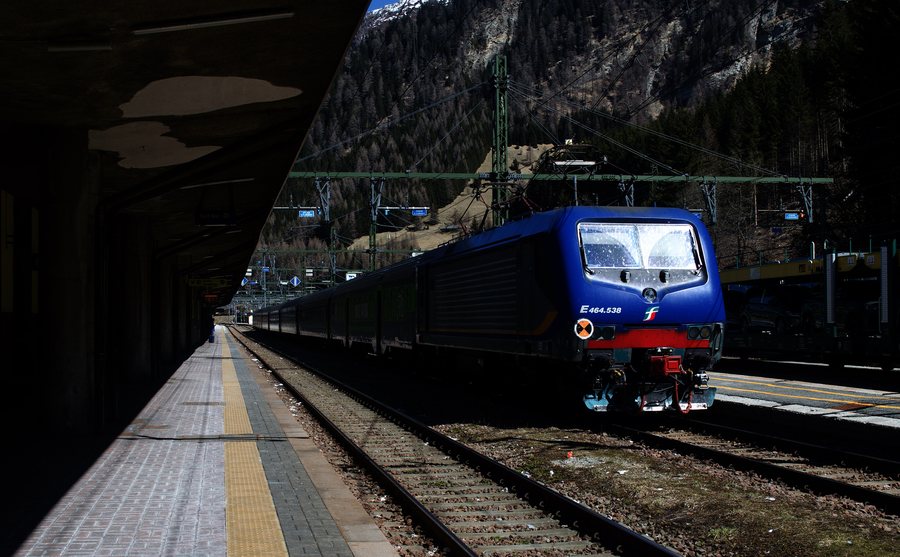 File:04.04.25 Brenner Brennero E464.538 (54450147450).jpg
Photo: Phil Richards from London, UK via Wikimedia Commons, CC BY-SA 2.0
File:04.04.25 Brenner Brennero E464.538 (54450147450).jpg
Photo: Phil Richards from London, UK via Wikimedia Commons, CC BY-SA 2.0
The Brenner Pass: The Brenner Pass lies at an altitude of 1,372 metres and has been crossed since the Bronze Age.
The Plessi Museum: The Plessi Museum is located at the Brenner Pass in the former customs buildings on the border between Italy and Austria. The buildings’ former function and their location on the border are an integral part of the character of the museum site.
Art by Fabrizio Plessi: The Plessi Museum displays videos, drawings and installations by Fabrizio Plessi. The large main hall also houses the monumental sculpture “L’anima della natura”.
Border history: After the First World War, Brenner became the political border between Austria and Italy in 1919.
Churches in the village: The ceiling paintings in St. Valentine’s Church date from 1787 and were created by Franz Unterberger. The new parish church of Maria am Wege was rebuilt according to plans by architect Luis Plattner between 1960 and 1962, replacing St. Valentine’s as the main church in Brenner.
Rail and bus: The Brenner Pass is crossed by the Brenner Railway, one of the most important railway connections between Central Europe and Italy. In addition, bus route 313 operates on the Brennero/Fleres–Colle Isarco–Vipiteno route; railway line 100 runs between Brennero, Bolzano and Verona.
Cycling and views: The Brenner–Bolzano cycling route begins in Brenner, follows the route of the former railway as far as Vipiteno and continues through the Isarco Valley to Bolzano. The “Wastenegg” 360° viewing platform in the Brennero, Vipiteno and surrounding area offers views of the surrounding peaks and the expansive mountain landscape.
History and Art at the Brenner Pass
What makes Brenner special is the combination of different layers of history. The pass has been crossed since the Bronze Age, while the political border established in 1919 marks a more recent historical development. At the Plessi Museum, this border location becomes tangible through the site and the former customs buildings.
The churches also set different accents. With the ceiling paintings by Franz Unterberger from 1787, St. Valentine’s preserves a specific work of older religious art. Maria am Wege, by contrast, represents a 20th-century church building and the changing role of the church in the village. Together, the two churches allow a comparison between historic furnishings, more recent architecture and the development of the village centre.
Cycling Route, Views and Activity
The Brenner–Bolzano cycling route gives the landscape a clear course: it begins in Brenner, follows the route of the former railway as far as Vipiteno and continues through the Isarco Valley to Bolzano. The former railway line connects the route with the transport history of the pass.
The “Wastenegg” viewing platform has a different focus. It is about views of the surrounding peaks and the expansive mountain landscape in the Brennero, Vipiteno and surrounding area. The Ladurns circular hike includes a short ascent to Wastenegg. This makes it possible to include the viewpoint and a manageable hiking section in the same plan, without equating the cycling route with the character of a walk or hike.
Transport Connections for Your Planning
The Brenner Railway, railway line 100 and bus route 313 provide different connections around Brenner. For planning your day, it makes sense to consider the individual routes separately: the Brenner Railway connects Central Europe and Italy, railway line 100 connects Brennero with Bolzano and Verona, and bus route 313 runs via Colle Isarco to Vipiteno and towards Brennero/Fleres.
Other Destinations in the Area
The area around Brenner also includes Mareit, Sterzing, Mauls, Ratschings, Franzensfeste, Pfitsch and Freienfeld.

.jpg)