
Romagnano: Churches, Mountains and Textile History
Accommodation in Romagnano
Park, Church and Textile History
Parco Reda was designed in 1938 by landscape architect Giuseppe Roda. Valle Mosso is considered the birthplace of the mechanized textile industry in the Biella wool district. After Napoleon's downfall, Pietro Sella installed the first machines in Valle Mosso in a disused former paper mill.
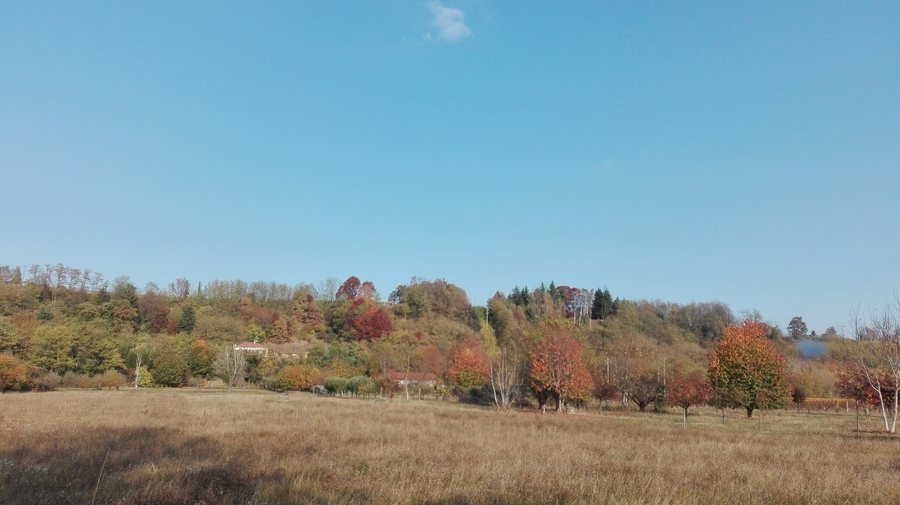 File:Colline novaresi - Romagnano Sesia, Italy.jpg
Photo: Luca Dal Bello via Wikimedia Commons, CC BY-SA 4.0
File:Colline novaresi - Romagnano Sesia, Italy.jpg
Photo: Luca Dal Bello via Wikimedia Commons, CC BY-SA 4.0
Sant'Eusebio and Historical Details
The parish church of Sant'Eusebio in Valle Mosso dates from the 17th century. The pulpit of the parish church of Sant'Eusebio in Valle Mosso was carved at the beginning of the 18th century by the Serra family from Tollegno. A renovation carried out in 1820 affected the choir of the parish church of Sant'Eusebio in Valle Mosso. Sacred art and architectural history therefore remain closely tied to the parish church of Sant'Eusebio in Valle Mosso.
Trails with Different Profiles
The Cammino di Oropa Orientale is a technically demanding trail with significant elevation differences and is recommended for experienced, well-trained mountain hikers. The Anello Valdilana is a circular route around Monte Rovella, a mountain in the immediate vicinity of Valle Mosso, passing through a forest firebreak lined with centuries-old chestnut trees. The Strada della Lana passes through Valle Mosso. The Strada della Lana is an approximately 50-kilometer route dedicated to the textile heritage between Biella and Borgosesia.
This provides various options for planning your day: a demanding mountain trail, a circular route around Monte Rovella and a route focused on textiles between two cities. The Cammino di Oropa Orientale and the Anello Valdilana offer different types of activity, while the Strada della Lana explores the history of the textile region.
Castles, Museums and Palaces in the Surrounding Area
Castello di Zumaglia is a castle in the vicinity of Valle Mosso. The Fondazione FILA Museum is a museum in the vicinity of Valle Mosso. Palace Gromo di Ternengo is a palace in the vicinity of Valle Mosso. Palazzo Ferrero is a palace in the vicinity of Valle Mosso. The types of sites therefore range from a castle and a museum to two palaces; each destination offers its own cultural character.
Mountains around Valle Mosso
Monte Rubello is a mountain in the immediate vicinity of Valle Mosso. Rocca dell'Argimonia is a mountain in the vicinity of Valle Mosso. Monte Terlo is a mountain in the vicinity of Valle Mosso. Together with Monte Rovella, these named mountains form distinct landscape destinations for visitors who want to include the mountain environment alongside cultural attractions.
Further destinations for exploring the region include Netro, Graglia, Muzzano, Campiglia Cervo, Biella, Solesio, Caprile and Sordevolo.
For the broader travel overview: Province of Biella.

