
Ascoli Piceno – Renaissance, Museums and Local Traditions
Accommodation in Ascoli Piceno
Ascoli Piceno: Squares, Museums and Roman Traces
A walk through Ascoli Piceno leads across historic squares with travertine, past Romanesque church façades, Renaissance architecture and museums. Piazza del Popolo acquired its regular present-day appearance in the early years of the 16th century through a Renaissance colonnade with arches of varying designs. A colonnade is a row supported by columns that gives the square its clear architectural structure. The Palazzo dei Capitani del Popolo was built between the 13th and 14th centuries by joining three small buildings together.
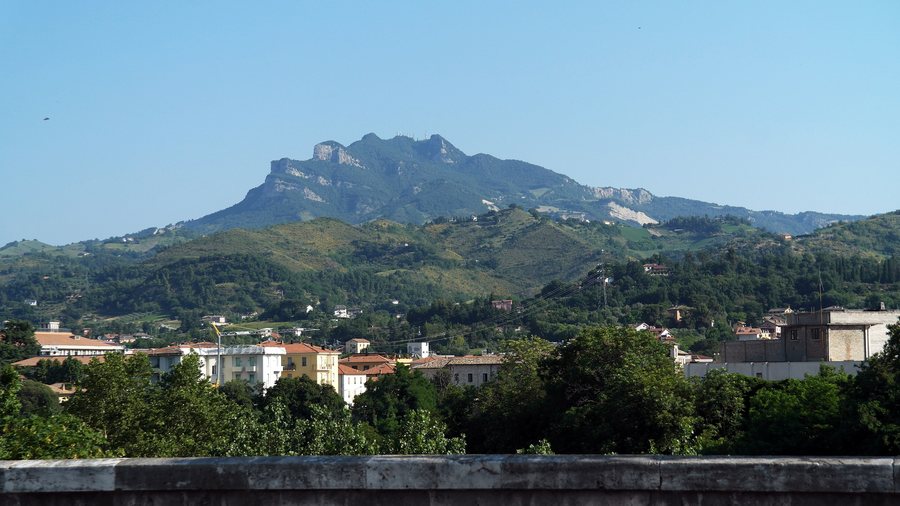 File:63100 Ascoli Piceno, Province of Ascoli Piceno, Italy - panoramio (1).jpg
Photo: trolvag via Wikimedia Commons, CC BY-SA 3.0
File:63100 Ascoli Piceno, Province of Ascoli Piceno, Italy - panoramio (1).jpg
Photo: trolvag via Wikimedia Commons, CC BY-SA 3.0
The Chiostro Maggiore di San Francesco features a 14th-century Gothic portico. Twenty round-arched arcades, Corinthian columns and an octagonal Gothic fountain define the complex. A portico is a covered colonnade, while arcades are formed by recurring arches. The Area Archeologica del Palazzo dei Capitani presents excavated remains along a suspended walkway with explanatory panels and finds from the site.
Museums and Fortifications
The Museo Archeologico Statale di Ascoli Piceno presents, through its collections, a history ranging from prehistory through the Picene culture to the Roman period. The museum is located in a traffic-restricted zone. The nearest paid parking facilities are Piazza della Viola and Porta Torricella.
The Museo dell’Alto Medioevo in Forte Malatesta displays Lombard grave goods from the necropolis of Castel Trosino, including the intact graves of a woman and a horseman. Forte Malatesta is a Renaissance fortress designed and/or signed by Antonio da Sangallo the Younger, and it was permanently reopened in November 2010.
The Teatro Romano di Ascoli Piceno dates from the 1st century BC and preserves remains of the cavea and orchestra. In an ancient theater, the cavea is the seating area, while the orchestra is the area between the seating area and the stage. Annunziata Park lies at the summit of the ancient Pelasgian Hill. The park offers panoramic views over the city and preserves the Fortezza Pia as well as Roman caves.
The Musei della Cartiera Papale are housed in a medieval complex with mills and a paper mill powered by the water of the Castellano River. The Musei della Cartiera Papale are currently closed to visitors due to adaptation works.
Local Specialties and Regular Events
Ravioli incaciati originate from Ascoli Piceno and are traditionally prepared for Carnival. Anisetta Meletti is an anise liqueur distilled from anise seeds and aromatic spices according to an original recipe from 1870; the tradition is preserved by the Meletti family. Alongside the historic buildings, these two local products with their own culinary heritage also represent Ascoli Piceno.
The Quintana di Ascoli Piceno includes a historic parade and a knightly tournament, which take place in July and August.
Further destinations in the vicinity of this selection of locations can be found via Folignano, Amandola, Lisciano and Arquata Del Tronto.
For the higher-level travel overview: Province of Ascoli Piceno.

.jpg)