
Griante on Lake Como: Trails, Villas and Churches
Accommodation in Griante
Griante on Lake Como combines several clearly distinct trails with villas, churches and viewpoints. When choosing your accommodation, you can therefore base your decision on your planned itinerary: the Greenway offers a longer route or individual sections, while the trails to Sasso San Martino and Via dei Castelli focus on different highlights.
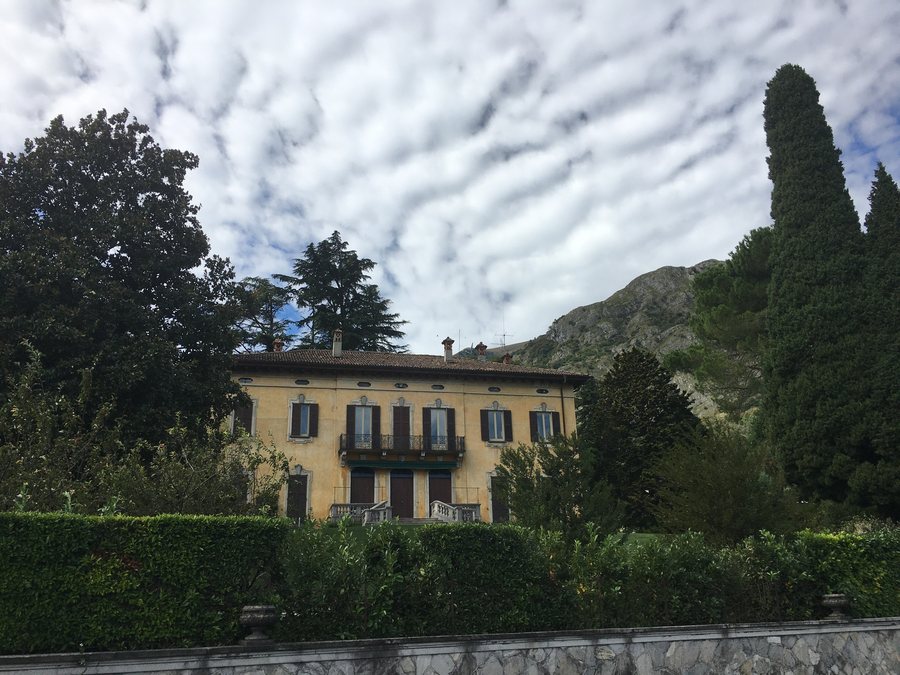 File:Villa il Giumello, villa in Cadenabbia, villages in Griante, Italy, 1935.jpg
Photo: Kresspahl via Wikimedia Commons, CC BY-SA 4.0
File:Villa il Giumello, villa in Cadenabbia, villages in Griante, Italy, 1935.jpg
Photo: Kresspahl via Wikimedia Commons, CC BY-SA 4.0
The approximately 10-kilometre-long Greenway del lago di Como runs through Griante. It can be completed on foot in about three and a half hours or covered in sections. In addition, a section of the historic Via Francigena Romana runs through Griante.
The Via dei Castelli takes about 40 minutes each way. There are free and paid parking spaces near the starting point. This easy walk through the hinterland is an alternative route to the Greenway del Lago di Como and passes various sites of old fortifications.
A hike from Griante leads to Sasso San Martino, which offers sweeping views across Lake Como. The area around Sasso San Martino formed part of the Cadorna Line, an important defence line from the First World War. Trenches, tunnels and armoured positions bear witness to this. For routes with a different destination, Cadenabbia has one of the most important ferry terminals, connecting the centre of Lake Como with Varenna and Bellagio.
Villas between Griante and Cadenabbia
Villa Margherita in Cadenabbia di Griante was built in 1853 on behalf of publisher Giulio Ricordi. In Griante, Villa Collina stands on the ruins of an old medieval tower and is surrounded by a park.
Villa Maresi is a historic lakeside residence between Griante and Cadenabbia. It was built between 1895 and 1905 on the ruins of an old manor house that belonged to a fortified complex, and is situated in a park at the foot of Sasso di San Martino. The building was designed in the English Gothic Revival style.
Churches and views
The Chiesa di San Martino already existed at the end of the 16th century under the name San Martino al Monte. Around the middle of the 17th century, it received its current name and title. The church stands at an altitude of 475 metres on a natural terrace with panoramic views of Lake Como and the mountains in the background.
The Chiesa dei Santi Nabore e Felice preserves a fragment of a 14th-century fresco. It depicts the Adoration of the Magi at the grotto in Bethlehem. The same church also contains an altarpiece of the Assumption of Mary, painted by Alessandro Maganza (1556–1632), a pupil of Titian.
The Chiesa Anglicana dell’Ascensione was the first Anglican church built on Italian territory. Its architecture features characteristics of 15th-century late Lombard Gothic: a single-nave layout, large transverse arches, a rose window on the façade, small arches beneath the eaves and pinnacles above the supporting pillars.
You can find further destinations under Menaggio, Civenna, Bellagio and Tremezzo.
For the higher-level travel overview: Como.

