
Discover Sulmona: Culture, Hiking Trails and Confetti
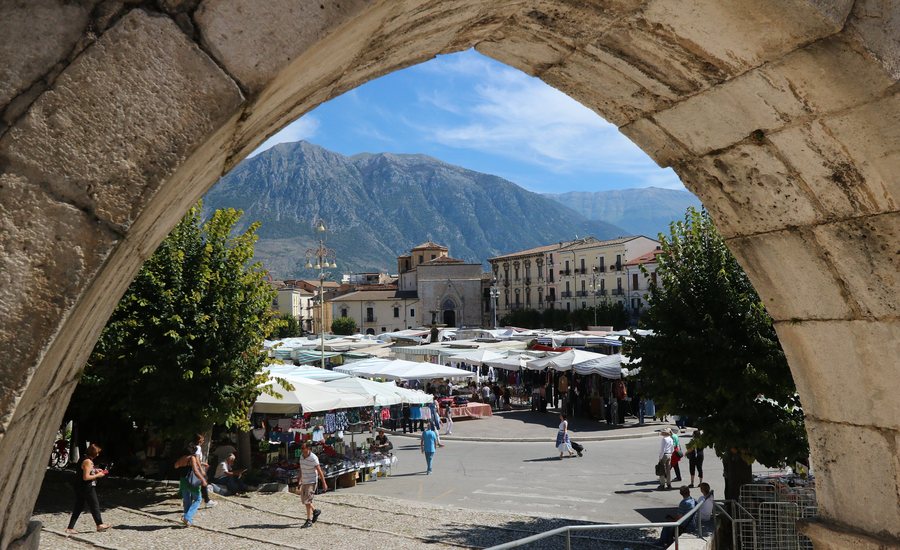
Sulmona combines medieval architectural heritage, museums, trails with historical significance and the distinctive tradition of Confetti di Sulmona.
Hydraulic Engineering and Sacred Architecture
The Acquedotto Medioevale of Sulmona was built in 1256 during the rule of Manfred of Swabia. Its function was closely linked to the water of the Gizio River: the aqueduct diverted it to irrigate the city gardens, power mills and workshops, and supply the city’s fountains. The structure therefore represents a historical connection between supply, craftsmanship and urban development.
The Complesso della Santissima Annunziata consists of a church and an adjoining palace. The ensemble brings together centuries of history with various artistic forms of expression. The church features Baroque forms that emerged from a reconstruction begun in 1710. Anyone wishing to view architecture in Sulmona not merely as an individual façade but as an interplay of different periods will find a particularly clear point of reference here.
Museums Between Art and Local Life
The Polo Culturale Civico Diocesano di Santa Chiara – Museo Diocesano di Arte Sacra houses works of art dating from the 12th to the 19th century. These include panel and canvas paintings, stonework, wooden sculptures, goldsmiths’ work, codices and textiles. The Polo Museale Civico della Santissima Annunziata – Museo del Costume Popolare Abruzzese e Molisano e della Transumanza offers a different approach to regional history. It presents local ethnography through prints, traditional costumes and everyday objects, mainly associated with sheep farming.
The Museo dell’Immagine e delle Tecniche Fotografiche includes a section on the history and local traditions of Sulmona from 1840 onwards. Historical photographs illustrate this development and add a photographic perspective to the view of the city. In Sulmona, works of art, religious objects, clothing, working tools and photographs thus stand alongside one another as different points of access.
Trails, Cliff Face and Historic Sites of Remembrance
The Eremo di Sant’Onofrio was founded in 1293 by Pietro Angelerio, later Pope Celestine V. The hermitage lies 600 metres above sea level on a steep cliff face overlooking the Conca Peligna. It can be reached via a footpath that takes approximately 20 minutes to walk. This provides a specific section of trail to include in your day’s itinerary, while the location also opens up a wide view across the landscape.
The Abbazia celestiniana di Santo Spirito a Morrone also leads to a place closely associated with Celestine V. It was founded around the middle of the 13th century at the foot of Monte Morrone on his initiative.
Confetti as Sulmona’s Distinctive Specialty
The Museo Pelino dell’Arte e della Tecnologia Confettiera displays historic patents from the Pelino factory, awards, sugar boxes from the 19th and 20th centuries, and artistic compositions made from Confetti. The museum also recreates an 18th-century confectionery workshop with original machines for the production and processing of Confetti.
The Confetto di Sulmona consists of the kernel of a whole peeled almond covered with several layers of sugar applied one over another. The tradition of making Confetti di Sulmona has ancient origins and can be traced back through the centuries. This regional speciality is particularly suited to travellers who would like to discover a local craft tradition alongside architecture and landscapes.
City History and Getting There
In the modern Giostra Cavalleresca, riders representing Sulmona’s city districts compete against one another. They face challenges involving speed and ring-jousting competitions. The event thus brings a sporting form of competition into the city’s historic context.
Sulmona can be reached by train from Rome and Pescara. When choosing accommodation, you can take this journey into account alongside the city’s various thematic highlights: museums and sacred architecture, the footpath to the Eremo di Sant’Onofrio, the multi-day Sentiero della Libertà or the Confetti tradition. This allows you to tailor your travel planning to the theme that matters most to you and your fellow travellers.
Check prices, availability and amenities for your travel dates directly on Booking.com.
View Accommodation and OffersAdvertisement · Affiliate link to Booking.comMore Destinations to Compare
If you would like to compare Sulmona with other destinations, you can also view Barrea, Ateleta, Celano, Roccaraso, Ovindoli, Pacentro, Opi and Pettorano Sul Gizio.
For the overarching travel overview: L’Aquila.

