
Wutha-Farnroda: Hörsel Mountains, Mills and Village History
Accommodation in Wutha-Farnroda
Wutha-Farnroda brings together landscapes, local history and a range of places to visit: the Hörselberg Museum in Schönau, traces of railway and milling history, and views of distinctive heights along hiking routes. Other attractions include Farnroda Palace Park and the Mosbach Forest Pool. To plan your stay, you can start by deciding whether exhibitions, historic traces or landscapes should take priority during your visit.
The Hörsel Mountains and Hiking Trails
Near Wutha-Farnroda, the Hörsel Mountains form a distinctive, long, cave-rich ridge of shell limestone. It includes the Kleiner Hörselberg at 426 m above sea level, the Mittelberg and the Großer Hörselberg at 484 m above sea level. The rock formations, caves and named peaks offer concrete reference points for understanding the landscape. The “Die schönen Unbekannten” circular hiking trail on the Rennsteig offers views of the Hörsel Mountains, Inselsberg, Drachenstein and Wartburg Castle. The municipality borders the Rennsteig in the area of Mosbach. The hiking trail thus provides a viewpoint, while the Rennsteig reference describes the municipal boundary near Mosbach.
A Museum in a Historic Ensemble
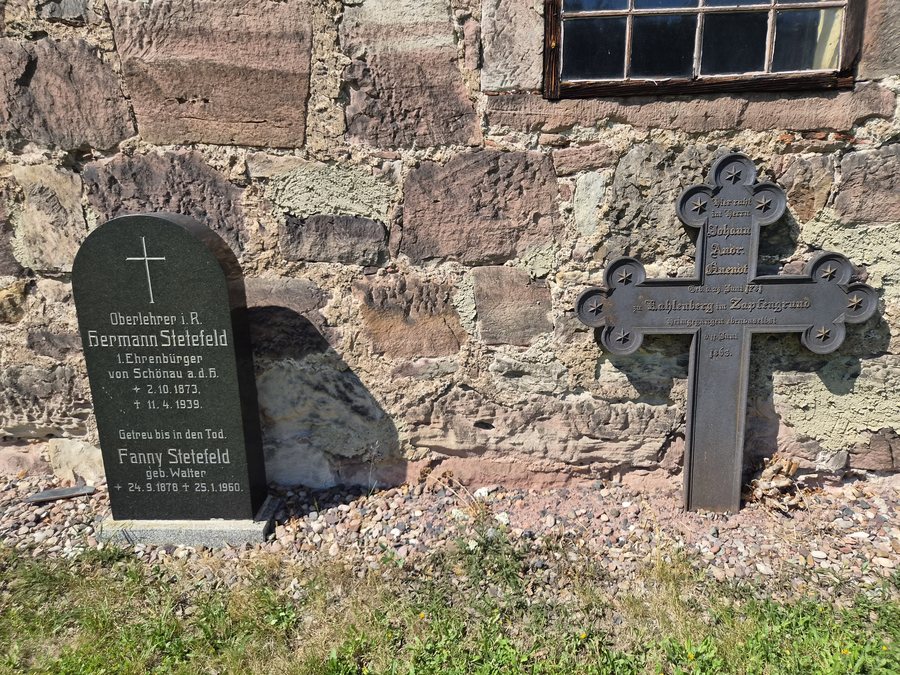
The Hörselberg Museum is located right at the foot of the Hörsel Mountains in Schönau. It is housed in a protected historic ensemble comprising a church, old schoolhouse, rectory with parsonage, stable, barn, washhouse and bakehouse. At the museum, unique fossil finds provide insights into the geology and formation of the Hörsel Mountains. Another exhibition is dedicated to the region’s baking traditions. On display are old baking machines, a variety of kitchen utensils and a “baker’s shop just like in Grandma’s day.” Nature and everyday culture come together in Schönau: you can explore the formation of the landscape and the history of baking as distinct themes during a museum visit.
Railway and Milling History
The open-air exhibition “Rühler Bimmel” in Wutha documents the former route of the Ruhla railway, including its stations, stops and industrial sidings. It includes an original section of track that survived the dismantling work after the line was discontinued. Here, the former railway route and a surviving original feature can be seen side by side. Another testament to local working life is the Hörsel Mill in Schönau: the old sawmill is right on the Hörsel River. Of the three mills in the town, it is the only one that is still operating. The railway and mill show different sides of the region’s industrial history.
Park, Church Tower and Places of Remembrance
The tower of the former 12th-century moated castle still stands in Farnroda Palace Park. The park is in the center of the village and includes a pond and the adjacent festival grounds; it offers space for relaxation and events. The bell tower of St. Lawrence Church in Farnroda is also a notable landmark: it stands separately, is well preserved and is considered unique in Germany. St. Lawrence Church was first mentioned in written records in the 13th century. The Hellwig Memorial commemorates an event near Eichrodt: on October 17, 1806, Lieutenant Friedrich Hellwig freed around 4,000 Prussian prisoners of war there. These places bring together architectural history, church tradition and a specific historical commemoration.
Getting There and Planning
Regional trains between Eisenach, Gotha and Erfurt stop in Wutha and Schönau. Check the latest timetable before traveling. The Mosbach Forest Pool is a modern outdoor swimming pool with stainless-steel pools and solar-heated water. If you are planning a day at the pool, check the current season dates and opening hours in advance.
Discover more destinations: Mosbach, Steinbach, Ruhla, Moorgrund, Bad Liebenstein, Barchfeld-Immelborn, Bad Salzungen, Witzelroda.
Back to the main travel overview: Wartburg.

