
Thuringia: Hotels and Accommodation
Accommodation in Thuringia
The Rennsteig is considered Thuringia’s best-known long-distance hiking trail and is approximately 168–169 kilometers long.
You want to find and book your hotel in Thuringia to suit your travel plans.
Landscape and Nature
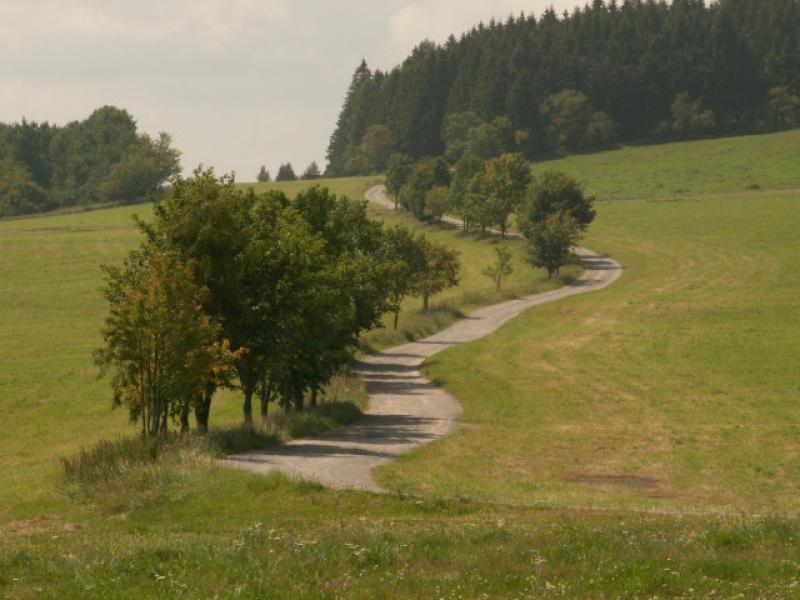
The Thuringian Forest is considered an important German upland region with extensive contiguous forest areas that are suitable for longer hikes. The Thuringian Forest is also considered Thuringia’s most important tourism region.
There are four nature parks in Thuringia: Thuringian Forest, Thuringian Slate Mountains/Upper Saale, Eichsfeld-Hainich-Werratal and Kyffhäuser. Part of the Hainich is designated as a national park, and Vessertal-Thuringian Forest is designated as a biosphere reserve.
Bienstädter Berg and Hoher Berg are located in the vicinity of Thuringia. Geiersberg and Ringelberg are located in the surrounding area of Thuringia.
Hiking and Cycling Routes
Thuringia has more than 6,000 kilometers of signposted hiking trails. Marked cycling routes and mountain biking trails are highlighted for the Thuringian Forest, the Rhön and the Schwarzatal.
Culture and History
The Thuringian Forest includes cultural and museum destinations such as Wilhelmsburg Castle, Bertholdsburg Castle with the Natural History Museum, and Heidecksburg. Thuringia also offers culture-oriented visits to Wartburg Castle as well as city explorations in Erfurt and Weimar.
Burg Gleichen, Molsdorf Castle, Seeberg Observatory (1787-1934) and Petersberg Citadel are located in the surrounding area of Thuringia.
Regional Classification
Thuringia is a German federal state situated between Saxony, Saxony-Anhalt, Lower Saxony, Hesse and Bavaria.
More regional pages: Saalfeld-Rudolstadt, Schmalkalden-Meiningen, Sonneberg District, Wartburg, Saale-Orla, Ilm District, Nordhausen, Gotha, Hildburghausen-Suhl
To the higher-level travel overview: Germany.
