
Lehesten: Slate History and Hiking Trails
Accommodation in Lehesten
The 60-hectare Lehesten Slate Park can be explored year-round on foot, by bicycle or on skis. Slate also shapes the character of the town: visitors encounter it in the history of mining, in the church interior and in the craft tradition. The “Historic Slate Mining in Lehesten” technical monument preserves 19th-century historic buildings at their original location. There are also hiking trails in the Thuringian Slate Mountains and the landscape around the former state quarry. Visitors can choose from several areas of interest: industrial heritage, slate craftsmanship and outdoor activities.
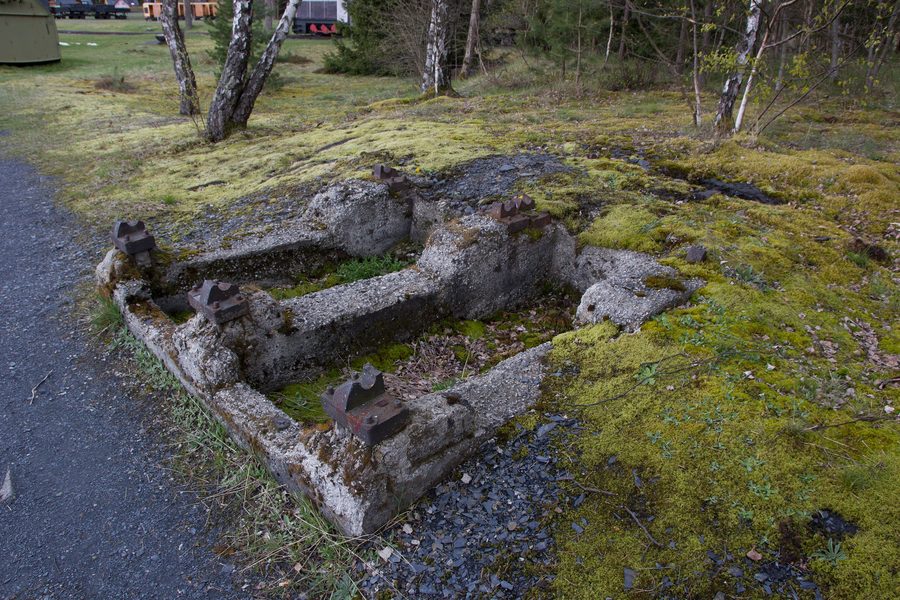 Der Schieferpark Lehesten macht die Geschichte des historischen Schieferbergbaus als technisches Denkmal nachvollziehbar.
Photo: Markus G. Klötzer via Wikimedia Commons, CC BY-SA 4.0
Slate mining at its original location
The technical monument includes the unique Göpel shaft system, the only one of its kind in Europe, and the striking double-splitting shed. The ensemble preserves the buildings of a slate extraction site at their original location and vividly illustrates the slate-making process and the traditions of Thuringian-Franconian slate mining. Expert-led tours explore the traditions and processing techniques. If you would like to cut your own slate souvenir, this can be arranged on request, with guidance at the slate-cutting shears. You do so at your own risk; work gloves and an apron are provided. Ask about this option before your trip.
The state quarry offers another glimpse into the history of mining: where slate was once extracted in an open pit, there is now a slate lake. The transformation from mining site to today’s landscape makes it a destination to explore in its own right, even without a guided tour. The 60-hectare Slate Park offers trails and can be explored on foot, by bicycle or on skis. These options apply to exploring the park; slate history remains the theme that connects its various sites.
Slate in the church and in local crafts
The altar, crucifix and the altar in the baptismal chapel at St. Aegidien Church in Lehesten are made of slate. Particularly large is what is believed to be the largest slate slab ever carved from a single piece: quarried in 1872 at the “Kießlich” slate quarry, it measures 308 centimeters high and 253 centimeters wide. Here, the dimensions give the material a different effect from that of the buildings in the mining ensemble: slate is not just a building material but also shapes the church interior.
The craft tradition includes Germany’s oldest roofing school. It reopened in 1992 after modernization and expansion and once again serves as a training center for the Thuringian roofing trade. The school complements the evidence of historic slate mining with training in roofing. Together with the buildings at their original location and the slatework at St. Aegidien, it offers a varied introduction to the region’s history of materials and crafts.
Hiking and places in the municipality
Lehesten is a starting point for hikes in the Thuringian Slate Mountains, including along the Slate Trail. The Rennsteig also passes through the Lehesten area; in Brennersgrün, the 168-kilometer high-altitude trail runs right through the village. These routes are in the area of the associated municipality and in Brennersgrün, not just in the settlement of Lehesten. This distinction is useful when planning a hike and choosing a particular place or section.
More attractions can be found in the associated municipality of Schmiedebach. The Slate Village Museum there displays around 2,000 exhibits on the history of the village and the region. Individual tours focusing on local history can be arranged by appointment; parking is available at the museum. The museum is a destination in its own right for discovering local and regional history. Arrange a tour in advance, as visits are by appointment.
In the wider Saalfeld-Rudolstadt destination, the district’s hiking landscape stretches from the Saale Valley to the Thuringian Forest. Quiet forests, sweeping views and cultural and historical sights along the trails provide additional options for travelers who want to explore the wider region beyond Lehesten. Lehesten itself has a clear thematic focus: slate mining, its uses and the landscape shaped by former mining.
Discover more destinations: Meura, Saalfelder Höhe, Cursdorf, Probstzella, Piesau, Gräfenthal, Meuselbach-Schwarzmühle, Oberweißbach/Thüringer Wald.
Back to the main travel overview: Saalfeld-Rudolstadt.

