
Gräfenthal: Slate Trail, Castle and Winter Stay
Accommodation in Gräfenthal
Gräfenthal in the Thuringian Slate Mountains offers marked trails, industrial and border history, and Wespenstein Castle. For a stay during the cooler months, the routes and planned museum visits are especially interesting. However, the verified local facts do not confirm a local ski area, slope, lift, or reliable snow conditions. Anyone choosing accommodation for an alpine ski holiday must check these requirements separately for a specifically named ski area. Based on the available evidence, Gräfenthal itself can be described as a starting point for hiking and culture.
Key facts
- The Gräfenthal GeoPath offers views of the Zopte Valley, the town, and the castle.
- The Slate Trail is a marked circular hiking route approximately 60 kilometres long, passing through several towns.
- Part of the Slate Trail follows the Green Belt, the former inner-German border.
- The Border and Local History Museum covers the division of Germany and almost 700 years of town and castle history.
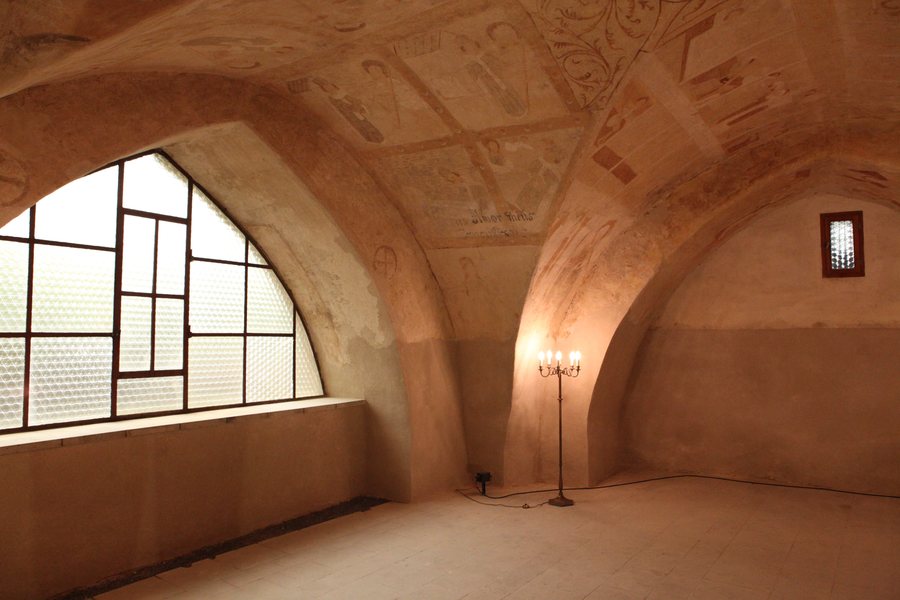
- Wespenstein Castle is a defining feature of the townscape; a museum was established there in 2003.
The Slate Trail and the Green Belt
The Gräfenthal GeoPath follows a circular route to viewpoints overlooking the Zopte Valley and Gräfenthal with Wespenstein Castle. The longer Slate Trail is a marked circular hiking route approximately 60 kilometres long, connecting Probstzella, Lehesten, Ludwigsstadt, and Gräfenthal. In places, it runs along the Green Belt. In the wider Gräfenthal area, trails along the Green Belt and Slate Trail follow the Kolonnenweg, the former patrol road used by East German border troops. This describes a regional route connection; it does not mean that every section lies directly in the town centre.
The railway viaduct above Gräfenthal town centre can be a starting point for a hike on the Slate Trail or a circular route. The trail markers and historic route make the trail interesting, but do not replace checking current trail conditions. Especially in frost, snow, or wet weather, consider the distance, surface, and available daylight for your chosen section. The name Slate Trail does not mean it is a groomed winter hiking trail or a cross-country ski trail.
The Museum and Wespenstein Castle
The Border and Local History Museum provides information about the decades-long division of Germany and almost 700 years of town and castle history. A permanent exhibition is devoted to the forced resettlements from the restricted zone established in 1952. For those wishing to experience border history along the trails, the museum offers a factual complement to the sites in the surrounding area. Wespenstein Castle, once the seat of the hereditary imperial marshals of Pappenheim, has been part of the townscape for centuries. In September 2003, the local history and historical society “Die Pappenheimer” established a museum in the castle for Heritage Day. Check opening hours and access before your visit.
The “Memorial Sites of Democracy in Gräfenthal” circular route has marked stops with QR codes linking to audio guides. One audio feature covers the train accident in Gräfenthal on 23 October 1946. This lets you combine local history with a walk, without suggesting that the entire route is accessible in all weather or always open.
Porcelain tradition and accommodation options
In the wider area, the Thuringian Porcelain Route passes through the Gräfenthal area. A historic porcelain manufactory in Lippelsdorf is documented as a technical exhibit; the verified information does not establish the exact municipality. The Historic Porcelain Manufactory of Wagner & Apel displays a 1937 steam engine, round kilns, and old working agitators. Here, too, check the actual visitor location and access before setting out. Gräfenthal outdoor swimming pool has extensive sunbathing areas, but it is not a winter attraction; the description does not confirm that it is currently open.
When looking for accommodation, it helps to distinguish between a location in Gräfenthal for trails and history and a location near verified ski facilities. The overview for Saalfeld-Rudolstadt provides the regional context. For a specific accommodation, check the address, how to get there, and your planned winter walk; prices, equipment, and lift access cannot be inferred from these local facts.

