
Gleima: Local History and Coat of Arms Symbolism
Accommodation in Gleima
You can get to know Gleima through its local history and the symbols on its coat of arms. These distinctive features give your search for accommodation a specific connection to the place. The wider destination of Remptendorf adds other topics: the nature park landscape, hiking trails, and buildings with a history of their own. When planning, you can decide whether to focus mainly on Gleima’s local character or also take broader natural and cultural connections into account.
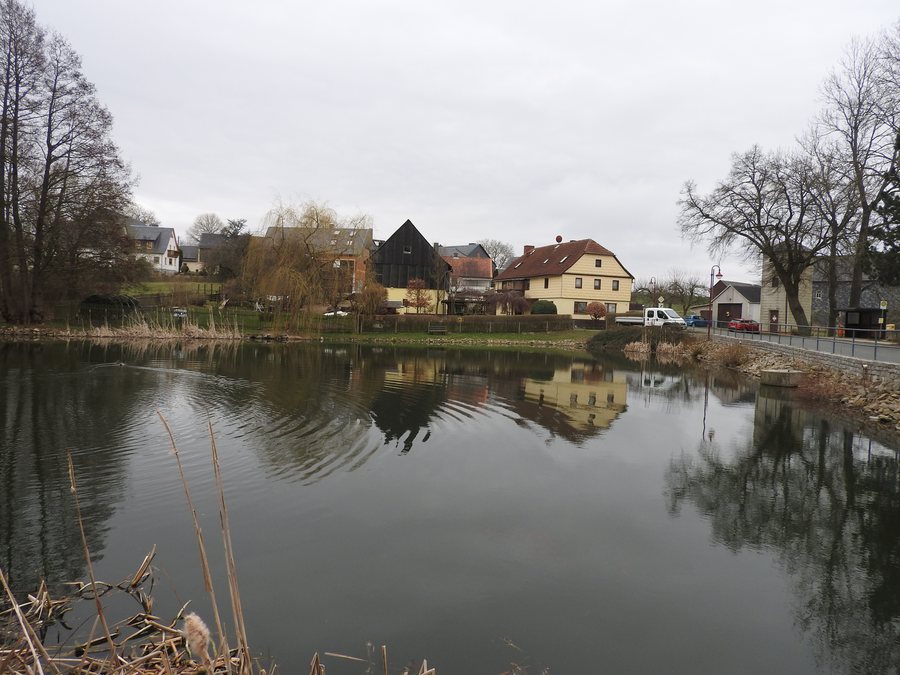
Gleima: Two Districts and a Historic Connecting Path
Gleima consists of two districts. In the past, they were connected only by a wooden plank path across the pond dam. This connection belongs to the history of the place; it does not describe a path in use today. This distinctive historical detail illustrates the settlement’s division into two parts and also explains why two stars on the coat of arms represent the two halves of the village.
As you learn about Gleima, you can read the former connection and the coat of arms as related clues: one tells of the historic relationship between the two districts, while the other brings them together in a single symbol.
Gleima’s Coat of Arms
The coat of arms depicts an inverted horseshoe. A star appears on each side, and a lime tree is shown inside the horseshoe. The horseshoe symbolizes good luck and is intended to bring together the two stars, which represent the halves of the village. The design thus combines several references in one motif: the two parts of the place, their shared symbol, and the horseshoe’s association with good luck.
The lime tree also has a traditional meaning. It was regarded as a symbol of justice; courts were often held beneath lime trees. In the coat of arms, it therefore points to a historical idea, not to a present-day activity or an accessible courthouse. Those interested in local symbols will find here not only the shape of the coat of arms, but also an interpretation of its individual elements.
Remptendorf as the Wider Landscape and Cultural Context
The wider destination of Remptendorf is a unified municipality covering an area of approximately 100 km², situated in the heart of the Thuringian Slate Mountains/Upper Saale Nature Park. The area figure is approximate. For orientation, this regional setting adds a landscape perspective to Gleima’s local history without attributing the nature park’s features to the individual districts.
In the forested area around Remptendorf, hiking trails lead to viewpoints with wide-ranging views over the mountains and valleys of the Thuringian Slate Mountains. Observant hikers may also discover boundary stones from times past. The landscape and historical traces offer different points of interest: the viewpoints draw attention to the mountains and valleys, while the boundary stones recall former markers.
Another structure in the wider destination is the Ziemestal Bridge. It officially belongs to the municipality of Remptendorf and is a single-track viaduct on the Triptis–Marxgrün railway line in Thuringia. Built entirely of steel, the bridge is 115 metres long and 32 metres high; it was constructed between 1893 and 1895. Climbing onto or entering the bridge and railway line without authorization is generally prohibited.
The fortified church in Gahma is another historical point of interest in the wider destination of Remptendorf. It probably dates from the 12th century and is a listed building. The date should be understood as probable. Together with the Ziemestal Bridge and the boundary stones, the church shows that Remptendorf encompasses not only landscapes, but also various traces of the past.
Local Connections as a Guide When Looking for Accommodation
If you are looking for hotels in Gleima, the local history and coat of arms symbolism can serve as a starting point for understanding the character of the destination. The regional context of Remptendorf adds hiking landscapes, boundary stones, and buildings to this perspective. The topics remain distinct: the former connection between the districts and the coat of arms relate to Gleima; the nature park, hiking trails, bridge, and fortified church belong to the wider destination of Remptendorf.
Discover more destinations: Burglemnitz.
Go to the wider travel overview: Remptendorf.

