
Darmstadt-Dieburg: Nature, Cycling Routes and Culture
Accommodation in Darmstadt-Dieburg
Darmstadt-Dieburg offers a variety of reasons to stay: protected natural areas, cycling and hiking trails, the fossil world of Messel Pit and historic sites. The landscape ranges from the Hessian Rhine Plain and the Untermain Plain through the Messel and Reinheim Hills to the Vorderer Odenwald and the Sandstone Odenwald. The themes you want to focus on during your stay are a good starting point for searching for hotels in Darmstadt-Dieburg.
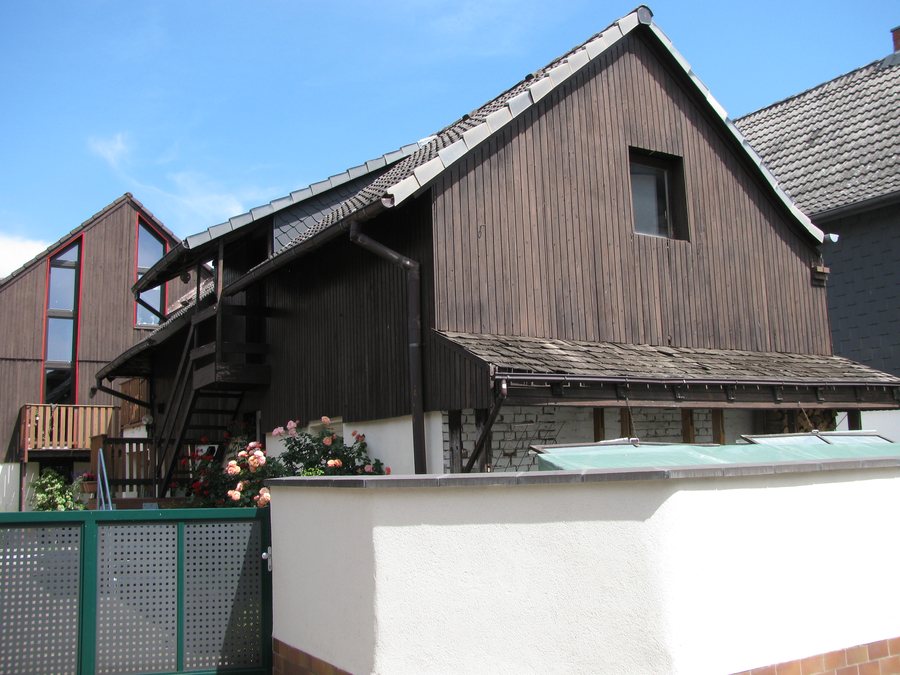 File:Holzhäusergasse 20, 1, Messel, Landkreis Darmstadt-Dieburg.jpg
Photo: GeorgDerReisende via Wikimedia Commons, CC BY-SA 4.0
Landscape and Protected Nature
In the district, the Bergstraße forms a striking transition between the Rhine Plain and the Odenwald. The district also includes several other natural areas.
The Reinheimer Teich nature reserve lies in the northwestern foothills of the Odenwald and is surrounded by meadows and fields. You can explore it on a circular trail and from numerous benches. The Pfungstädter Moor has a different character: it consists of three parts, covers around 103 hectares and can be explored on designated paths. Visiting both areas reveals clear differences in their landscapes and ways of exploring them—from the circular trail at Reinheimer Teich to the paths in the Pfungstädter Moor.
Cycling and Trails in the District
Darmstadt-Dieburg has an extensive network of well-marked trails for hiking, walking and Nordic walking.
There are also several options for cycling. Themed cycling routes follow the small rivers Modau and Gersprenz; there is also the Leisure Cycling Route and the Family Cycling Route. The Family Cycling Route runs from Erzhausen to Seeheim-Jugenheim and is about 40 kilometers long. Check the current conditions along the route before setting out.
Fossils and Historic Sites
The UNESCO World Heritage Site of Messel Pit is a fossil site. Its uniquely preserved and diverse fossils document the history of the Earth 47 million years ago. The visitor center explains the history and significance of Messel Pit as Germany’s first UNESCO Natural World Heritage Site. The fossil site and visitor center offer different ways to explore the district’s natural and cultural heritage.
The history of architecture can also be traced through specific sites. Darmstädter Schloss in Groß-Umstadt began as a former moated castle. In the late Middle Ages, it was expanded into a residence and was one of the seven former aristocratic estates in Groß-Umstadt. Tannenberg Castle Ruins lie east of Seeheim on a spur of the Odenwald about 200 meters high; from there, you can look out over the Bergstraße and the Rhine Valley.
Frankenstein Castle in the Odenwald is a popular destination for excursions and a starting point for hikes. From the castle, you can see the Rhine Plain and the city of Darmstadt.
Guided Tours and Local Culture
In Groß-Umstadt, seasonal group tours focus on the autumn fruit and wine harvest: from September to October, the town offers them with Rainer Bausch, including a wine tasting. Group tours of the Kleine Bergstraße are also available from January to December. The topics and periods differ. If you are planning a tour, check the current dates and booking arrangements.
The Gruberhof Museum hosts events throughout the year and features a varied exhibition on agriculture and crafts. At the Reinheim signal box museum, built in 1896 and used for many years to operate the Odenwaldbahn railway, the historic signal-box technology is demonstrated to visitors when it is open. Check the specific opening dates before visiting.
These highlights can help you tailor your search for hotels in Darmstadt-Dieburg to your plans.
Discover more destinations: Bergstraße, Main-Kinzig District, Limburg-Weilburg, Kassel Region, Gießen, Hochtaunus, Marburg-Biedenkopf, Vogelsberg.
Back to the main travel overview: Hesse.

