
Hebertsfelden: Churches, Local History Museum and Wayside Shrine Trail
Accommodation in Hebertsfelden
Hebertsfelden can be explored through specific local landmarks: the village fountain in the church square, St. Emmeram Parish Church, the Local History Museum in the old brickworks and the Wayside Shrine Trail. The themes range from architectural history and rural everyday culture to a hiking trail with a church in Rottenstuben right along the route. This gives you a choice of different focuses when planning your trip: architecture, collections or a hiking trail.
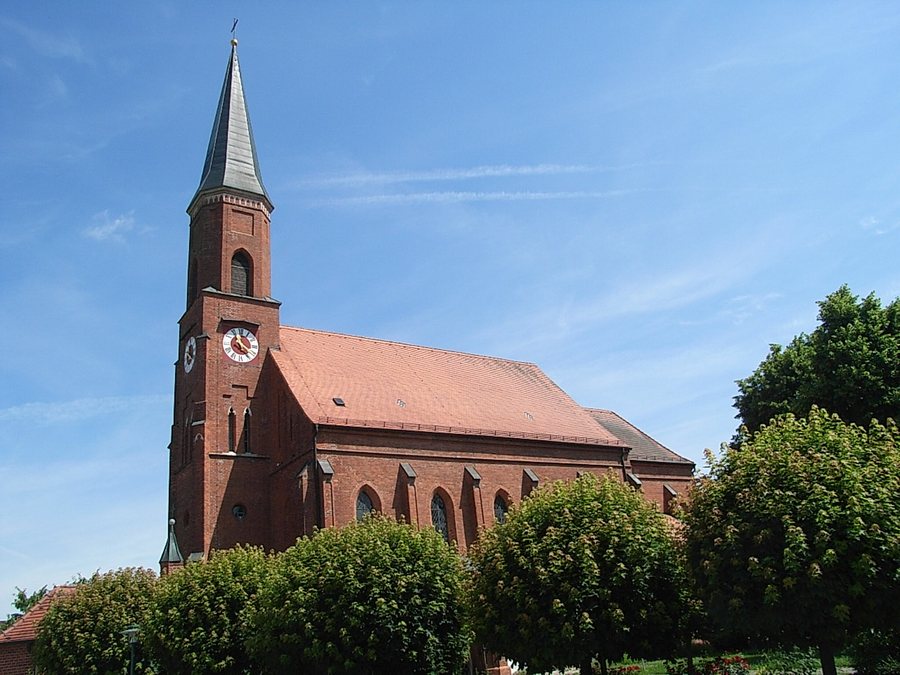
Village Fountain and Churches in Hebertsfelden
The village fountain in the church square features a rooster as a symbol of village life in former times. It was created by sculptor Karl Reidel from Kumhausen. St. Emmeram Parish Church is a Neo-Gothic exposed brick building, constructed between 1855 and 1858 to designs by Leonhard Schmidtner. The term “exposed brick building” draws attention to the brickwork; “Neo-Gothic” describes a design inspired by Gothic forms.
The cemetery chapel by the parish church is also Neo-Gothic, but dates from the late 19th century. Both buildings have furnishings. The chapel’s furnishings complement the precisely dated construction phase of the parish church and its broader placement in the late 19th century; the Neo-Gothic style links the two buildings.
St. James on the Wayside Shrine Trail
Nearby, in Rottenstuben, stands the branch church of St. James. This small, whitewashed brick building, with a recessed choir and a squat west tower, dates from the mid-15th century and has furnishings. As a pilgrimage church in Rottenstuben, St. James stands directly on Hebertsfelden Hiking Trail 1, the Wayside Shrine Trail. If you include this hiking trail in your plans, the church is a clearly identified landmark right along the route.
On May 1, a May festival featuring the traditional raising of the maypole is held in Rottenstuben. Check in advance whether the festival will take place in your intended travel year. This helps distinguish a possible event date from the permanent reference point provided by the church and hiking trail.
Local History Museum and Activity Park
The Local History Museum in the old brickworks is devoted to rural everyday culture and historical technology. Its extensive collection includes agricultural machinery and equipment, horse-drawn carts for various occasions, and old hand-operated fire engines. The objects represent different aspects of life and work in the past: agriculture, transport and firefighting. Visits are possible only by prior arrangement with the municipal administration, so please arrange your visit in advance.
The activity park by the sports ground was established in 2016/2017. Its aim is to combine play opportunities for children with encouraging people of all ages to enjoy being active. The park is another local landmark, with a stated purpose that encompasses both play and exercise.
Additional Destinations in the Wider Rottal-Inn Region
The wider Rottal-Inn destination offers additional cultural, thermal spa and nature experiences. The Rottal Terme has more than 30 thermal-water pools with temperatures ranging from 26 to 40°C, as well as 13 different saunas and steam baths. It also features a 105-metre-long thermal stream and health, prevention and wellness services. As the figures may change following renovations, check them again before your trip.
Theater an der Rott presents premieres every year in drama, musical theatre, concerts, dance, operetta and opera. It is the only theatre in Germany owned by a rural district. For Gothic architecture, the “Gothic Tours” showcase selected monuments through brochures, maps, a tour portal and a Gothic portal. The Gothic portal also offers audio guides that can be accessed on site, as well as an online museum with information, knowledge and learning resources.
There is also regional guidance for nature and route enthusiasts: the Inn Cycle Path runs through the Lower Inn European Nature Reserve and offers insights into the flora and fauna of the Rottal-Inn leisure region. This leisure region has a well-developed, extensive network of trails spanning several hundred kilometres for hikers and cyclists. The tour portal supports individual route planning with elevation profiles, information on trail surfaces and GPX downloads. The Rottaler Farm Tour complements these themes with rural life, everyday work, wildlife, farming culture, traditional crafts, handicraft techniques and regional culinary specialities.
Discover more destinations: Tann, Wurmannsquick.
Return to the overview of the wider destination: Rottal-Inn.

