
Zell in the Fichtelgebirge: Forests, Trails and Culture
Accommodation in Zell in the Fichtelgebirge
Zell in the Fichtelgebirge is a state-recognized health resort in the Fichtelgebirge Nature Park. When choosing a destination, you can weigh two distinct priorities: viewpoints and trails in the landscape, and architectural history and culture at the Upper Franconian Farm Museum in Kleinlosnitz. The Großer Waldstein defines the landscape setting; the museum offers a tangible insight into regional architectural history.
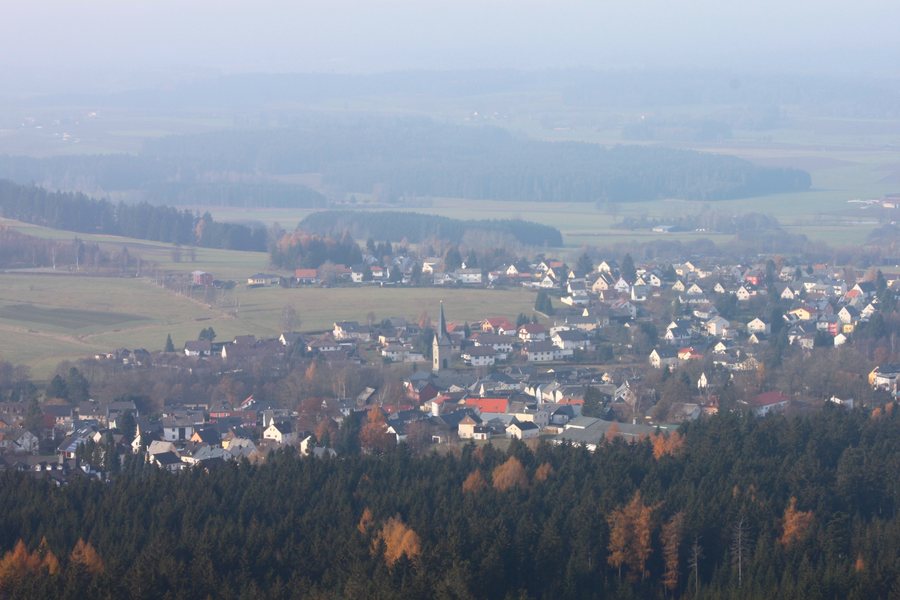
Nature and Views Around Zell
Zell lies at the foot of the 877 m-high Großer Waldstein. The extensive high forests of the Waldstein range and a low-mountain panorama frame the town. Nearby, the approximately 30 m-high Arnstein rock stands on the northern slope of the Waldstein ridge. An observation platform sits atop the rock tower; from there, views extend over Zell and toward the Franconian Forest. The Schüssel is the highest point of the Waldstein and offers far-reaching views across the surrounding countryside.
The trails also offer different experiences. The approximately 10 km-long Humboldt Trail starts at Zell’s market square, passes a former quarry and then climbs toward the summit of the Haidberg. The nature trail starts at the Walpenreuth hiking car park. Several stations focus on trees and local wildlife and plant life. The trail themes described therefore differ: the Humboldt Trail’s route length and climb toward the Haidberg help with orientation, while the nature trail’s stations focus on natural subjects.
For cyclists, the first two stages of the Saale Cycle Route run from Zell in the Fichtelgebirge to Blankenstein in Thuringia. The Reiterteich pond adds to the local leisure options: it is suitable for fishing and has benches for resting. These destinations appeal to different interests, from a cycling route and nature observation to spending time by the water.
Architectural History and Culture
At the Upper Franconian Farm Museum in Kleinlosnitz, the Dietelhof takes center stage: a thatched, four-sided farmstead dating from the late 18th century, with its original furnishings. It is considered one of Upper Franconia’s most valuable documents of rural architecture. The term “four-sided farmstead” refers to the layout of buildings around a courtyard; together with the thatched roof and original furnishings, it brings the building’s historic character to life. Old crafts are still practiced at the museum to help preserve the buildings.
The museum combines its historic buildings with an educational program: the museum discovery tour begins at the Schupfen. The information center of the Fichtelgebirge Nature Park is also located at the farm museum. Your visit can therefore focus on architectural history, traditional building preservation and an opportunity to explore the museum, while the information center adds a connection to the nature park.
Further historic destinations lie near the Großer Waldstein. The rocks of the Teufelstisch (“Devil’s Table”) stand in the shape of a table before the ascent to the castle ruins. The castle was occupied by the Sparneck knights in the 14th century and was called the “Red Castle” because of its red bricks; surviving sections of wall bear witness to its history. The historic bear trap, built around 1656 and considered unique in the world, is also located on the Großer Waldstein.
Every summer, the Zell amateur theater group holds the Park Festival in Zell Park. This recurring cultural event adds to the destinations in the landscape and at the museum. If you are considering Zell as a destination, you can choose between viewpoints and trails, architectural history and a summer festival, depending on which themes you want to shape your stay.
Discover more destinations: Lichtenberg, Selbitz, Helmbrechts, Naila, Bad Steben, Rehau, Schwarzenbach am Wald, Schwarzenbach an der Saale.
Go to the overview of destinations: Hof.

