
Hohenlohekreis: Limes, Monasteries and River Valleys
Accommodation in Hohenlohe
Hohenlohekreis combines Roman heritage with the history of monasteries and castles, historic townscapes and a landscape shaped by river valleys. The UNESCO World Heritage Site of the Limes runs in a straight line through the district; three Limes viewing platforms offer expansive views across the landscape. Cycling routes provide another way to explore the region. This gives you a choice of different travel-planning priorities: culture, outdoor activities and regional food and drink.
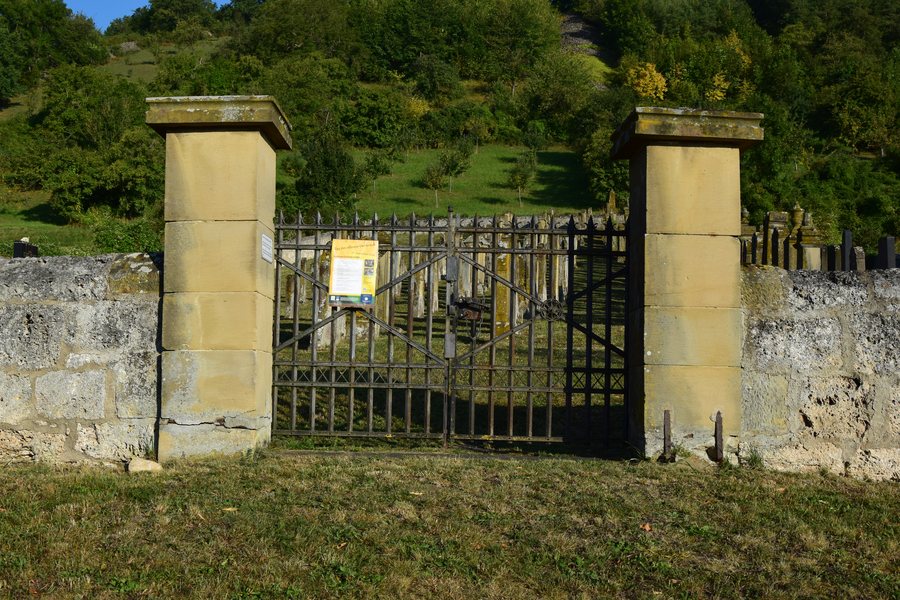 File:Hohenlohekreis Dörzbach Hohebach Jüdischer Friedhof1.jpg
Photo: MSeses via Wikimedia Commons, CC BY-SA 4.0
The Limes, Monasteries and Castle History
At the Limes, World Heritage meets sweeping views of the landscape: the historic frontier runs in a straight line through Hohenlohekreis. From the three Limes viewing platforms, you can enjoy expansive views across the landscape. Those interested in architectural history will also find a range of distinctive features—from the Baroque monastery church at Schöntal Monastery to the moated castle in Neuenstein.
The monastery church at Schöntal Monastery has an imposing Baroque double-tower façade. The tomb of the knight Götz von Berlichingen is located in the cloister. The monastery lies in the Jagst Valley in Hohenlohe, connecting a visit to a historic building with a specific landscape setting.
Neuenstein Castle is a Hohenstaufen moated castle that was expanded into a magnificent Renaissance residence in the 16th century. The permanent exhibition presents the inventories of seven Hohenlohe castles. Its focus therefore extends beyond the history of this single castle to include the collections of other Hohenlohe castles.
Historic Townscapes and River Valleys
Forchtenberg has a medieval townscape with an almost completely preserved town wall and numerous half-timbered houses. The town’s landscape is also clearly shaped by rivers: the Kocher Valley and the side valleys of the Kupfer, Sall and Wülfinger Bach define its character. In Hohenlohekreis, historic townscapes sit alongside a landscape shaped by several named valleys.
In Krautheim, the history of the Hohenstaufen castle is linked with that of the Order of St. John. The castle’s keep is 28 metres high; the climb is rewarded with views across the Jagst Valley. The Johanniter Museum in Krautheim documents the history of the Order of St. John, providing a distinct historical focus.
Cyclists will also find ways to get their bearings in the region: numerous cycling routes make it possible to explore Hohenlohekreis. The Hohenlohe hills are framed by the deeply incised river valleys of the Kocher, Jagst and Ohrn. One specific route runs through Krautheim: the Kocher-Jagst Cycle Path. The general choice of cycling routes and this named route offer different starting points for including cycling in your travel plans.
Events and Regional Delights
In Forchtenberg, the open-air cinema at the castle ruins attracts several thousand visitors each year. In Künzelsau, the Burgfestspiele Schloss Stetten have been held for more than 30 years as open-air performances in the moat of Schloss Stetten, usually at the end of July or in early August. The exact event dates may vary; check the latest dates before you travel.
The Hohenloher Weindorf takes place in the market square in Öhringen. Visitors can buy and sample wine and spirits directly from Hohenlohe winegrowers and distillers. The participating producers vary. If you are planning a tasting, bear in mind that the selection does not include the same winegrowers and distillers every time.
Discover more destinations: Neuenstein, Biberach, Karlsruhe, Breisgau-Hochschwarzwald, Reutlingen, Rottweil, Ortenaukreis, Calw.
See the main travel overview: Baden-Württemberg.

