
La Bollène-Vésubie: Hotels and Accommodation
Accommodation in La Bollène-Vésubie
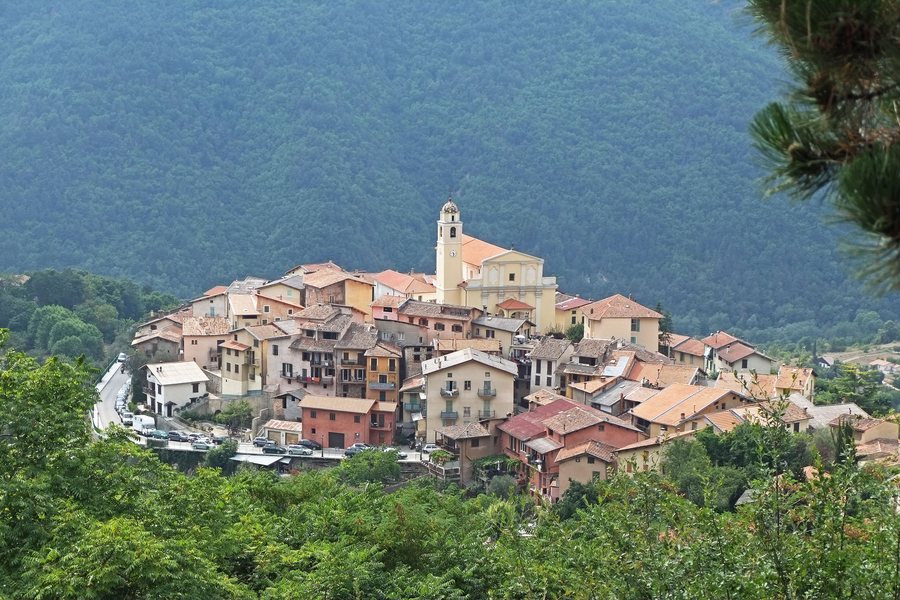 File:Vue du village de La Bollène-Vésubie depuis l’avenue Charles Romersa.JPG
Photo: Jpchevreau via Wikimedia Commons, CC BY-SA 4.0
File:Vue du village de La Bollène-Vésubie depuis l’avenue Charles Romersa.JPG
Photo: Jpchevreau via Wikimedia Commons, CC BY-SA 4.0
The Riou de la Bollène canyoning route begins at the Turini road at an elevation of 833 m. The descent, featuring abundant water, numerous jumps and large slides, is suitable only for experienced participants.
Anyone looking for a hotel in La Bollène-Vésubie should focus their accommodation search on this location.
At the Turini Camp d'Argent station, visitors ride down a prepared slope in a large inflatable tube during tubing. The Déval'Kart is also located there, an all-terrain karting activity specially designed for descents. A road cycling loop begins in the village of La Bollène-Vésubie and steadily climbs along a winding road to the Col de Turini.
Nature
The Crêtes-de-l'Arpiha trail is a family-friendly panoramic path through the forest tracks at the Col de Turini. The landscape is characterized by firs, spruces, Scots pines, beech trees and larches. The trail passes by the Vacherie de Mantégas, where local cheese specialties such as Tomme and Brousse are accompanied by regular tastings from July to September.
Les trois Marmites in the Vallée de La Vésubie is a river swimming spot with an emerald-green pool and a 15 m-long natural water slide.
Culture
The Musée d'entomologie du Dr Willy Hansen in La Bollène-Vésubie displays regional and exotic insect species and illustrates the diversity of the insect world. Admission is free, and visits must be reserved through the tourist information office in La Bollène-Vésubie.
The Église Saint-Laurent in La Bollène-Vésubie is a single-nave Baroque church that was completed in 1725 and consecrated in 1728. The church also houses a large-format 18th-century painting by Garsini, which was listed as a historic monument in 1908.
The Forteresse de l'Authion can be explored along a marked historical circular trail. Remains from the Second World War have been preserved there, including the ruins of barracks near Cabanes Vieilles.
The Moulin à grain in La Bollène-Vésubie is located opposite the village square and was formerly used to grind wheat, corn and other grains into flour or semolina. The Moulin à grain offers individual guided tours on request.
More local pages: Péone, Guillaumes, Roubion, Auron, Saint-Sauveur-Sur-Tinée, Valdeblore, Roure, Coursegoules.
For the higher-level travel overview: Alpes-Maritimes.

