
Lozère: Hotels and Accommodation
Accommodation in Lozère
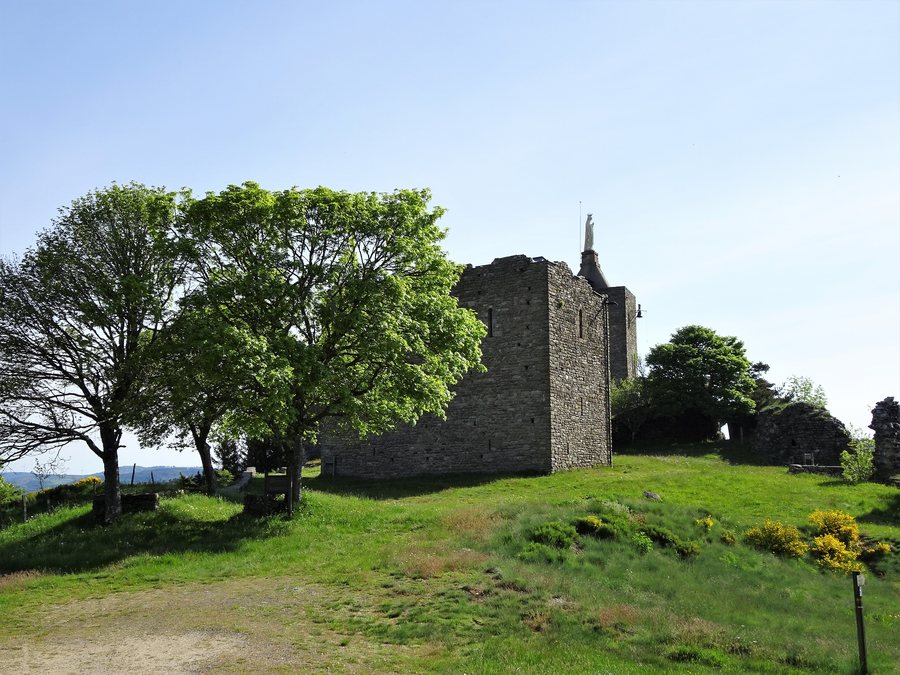
Mont Lozère is home to exceptional granite boulder fields; at the same time, Mont Lozère lies within Cévennes National Park. For outdoor activities, Lozère has three nature areas: Aubrac, Mont Lozère and Mont Aigoual.
If you would like to book a hotel in Lozère, this is a separate step in planning your trip.
Nature and Landscape
Red deer, roe deer and wild boar live on Mont Lozère. There are also reintroduced capercaillies and several species of birds of prey.
The Gorges de la Jonte extend for more than 20 kilometres between the Causse Noir and the Causse Méjean. The Tarn rises on Mont Lozère and then flows for 53 kilometres through the Gorges du Tarn, whose cliffs reach heights of up to 600 metres.
Paths and Activities
Lozère has more than 7,000 kilometres of cycle routes, trails and paths. The five-kilometre voie verte de la Garde Guérin is a cycle route leading to remarkable sites along accessible, safe infrastructure.
The hiking network comprises more than 4,500 kilometres, including 1,950 kilometres of Grande Randonnée trails and 2,373 kilometres of Promenade et Randonnée trails.
At Aven Armand, visitors can take a guided cave tour with access by funicular railway, as well as explore the natural shaft. White-water activities in Lozère include canoeing, kayaking, rafting, canyoning and other options.
Seasonal tourist shuttles have been established by the Lozère département and the Occitanie region to make it possible to explore Lozère without a car.
Culture and History
The collections of the Musée du Gévaudan range from the earliest traces of life to the present day. They cover archaeology, fine arts, natural sciences and ethnology.
The Mausoleum of Lanuéjols is a remarkably well-preserved Gallo-Roman relic in Lozère. Nearly 200 monuments are known on the Cham des Bondons, including 70 standing menhirs; this makes it France’s second-largest concentration of menhirs.
The World Heritage landscape of the Causses and the Cévennes preserves a living Mediterranean agropastoral tradition. It is reflected in farms, fields, water management, drailles and communally used grazing land.
The “Golden Triangle Gallo-Roman Heritage” route is a cultural circuit of just under 150 kilometres through Lozère. Javols, Lanuéjols and Banassac are connected with Lozère’s Gallo-Roman heritage and form the “Golden Triangle”.
Lozère’s cultural heritage includes religious buildings, archaeological sites, castles, historic town centres, structures and architecture.
Regional Products
Agricultural production in Lozère includes meat, milk, cheese, aromatic plants, honey and chestnuts. Traditional products and recipes are promoted through Label Rouge, organic certification, AOC, AOP and the shared “De Lozère” quality label.
In La Garde-Guérin, Comptoir Régordane combines local crafts, regional products and restaurant services. The range of regional products includes chestnut and honey products, preserves, pâtés, herbal teas, trout from Villefort, meat and cheese.
An interactive catalogue from the département enables users to search for producers in Lozère by municipality, type of production and official product quality labels. The catalogue also highlights producers who sell their products to the general public.
Supplementary location pages: Le Bleymard, Mas-d'Orcières.
For the higher-level travel overview: Languedoc-Roussillon.
More Destinations
More places within the same destination:

