
Abfaltersbach: Churches, Aigner Badl and the Pustertaler Höhenstraße
Accommodation in Abfaltersbach
With historic religious buildings, Aigner Badl and the Pustertaler Höhenstraße, Abfaltersbach offers three different reasons to visit. Churches and chapels represent architectural history and art, the bathhouse a long tradition of Tyrolean farm baths, and the road a clearly defined panoramic route. You can choose the focus of your trip from culture, bathing history and a scenic drive.
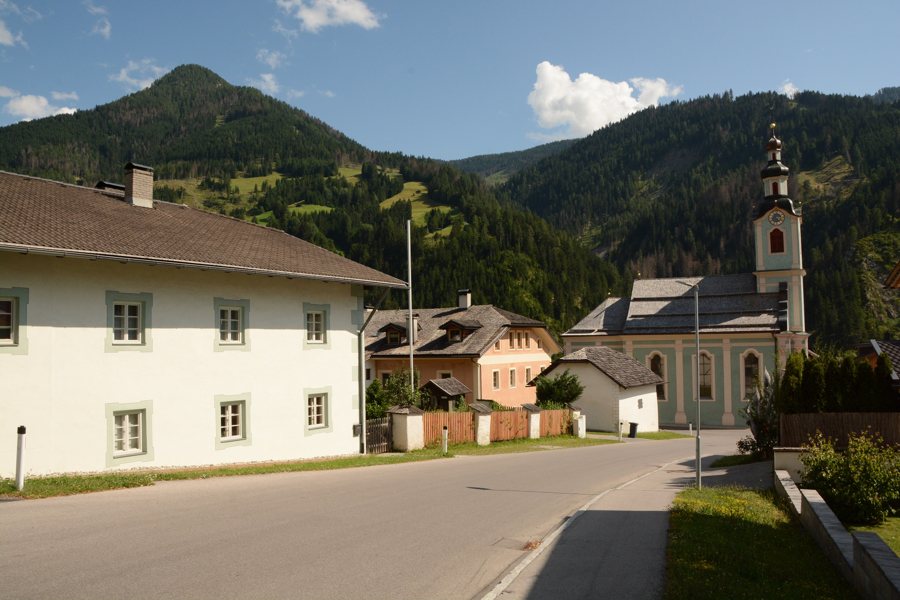
Churches and Art History
The parish church of St. Andrew underwent extensive Baroque renovation between 1765 and 1775. Josef Anton Zoller’s work also dates to this period: from 1768 to 1770, he created one of his finest works in the church. The two dates are easy to place in context: Zoller’s period of work falls within the timeframe of the Baroque renovation. This gives you both a longer phase and a more narrowly defined artistic period in the architectural history of the 18th century. The church is therefore associated with a specific artist and a precise chronology.
The branch church of the Visitation of Mary was consecrated in 1783. During its renovation in 2001, a Baroque “perpetual light lamp” dating from 1699 was rediscovered. The three dates mark different events: 1699 dates the lamp, 1783 the consecration, and 2001 its rediscovery during the renovation. The object is therefore older than the church’s consecration; its rediscovery belongs to a much later chapter. This timeline distinguishes the history of the object from the church’s consecration.
Chapels and Their Distinctive Features
The Gothic cemetery chapel was built around 1440 and houses a high-quality Gothic fresco. Its approximate date places the building in the 15th century; the fresco adds an explicitly Gothic work of art to its architectural significance. The Totenrast Chapel emphasizes a different form: it is an open wayside chapel resembling a wayside shrine, with appealing architecture and a new Madonna image. The chapels differ in type and in their featured artworks: the fresco in the cemetery chapel, and the open structure and Madonna image in the Totenrast Chapel.
Aigner Badl and the Panoramic Road
Aigner Badl offers a different focus from the churches. It is located in Abfaltersbach on the south bank of the Drau and is a historic Tyrolean farm bath that has been in operation since 1772. Guests can enjoy a soothing sulfur bath there. The year 1772 falls within the timeframe of the Baroque renovation of St. Andrew’s, but for the bath it marks the beginning of its operating history. This makes it possible to place two different local stories from the same era side by side: the transformation of a church and the operating history of the farm bath.
The Pustertaler Höhenstraße adds a panoramic drive to the cultural and bathing themes: it runs for just under 30 kilometers from Abfaltersbach to Leisach. Its direction and approximate length give the drive a clear framework. Unlike the culture-related attractions tied to specific places, the road can be defined by its route between two named locations. If a panoramic drive is part of your itinerary, it offers a distinct focus alongside the churches and bath.
You can shape your itinerary around the aspects of Abfaltersbach that interest you most before looking for a hotel or other accommodation.
Discover more destinations: Hopfgarten In Defereggen, Gaimberg, Lienz, Virgen, Innervillgraten, Prägraten Am Großvenediger, Schlaiten, Niedermauern.
Go to the main travel overview: Lienz District.

