
Discover Lower Austria: Culture, Nature and History
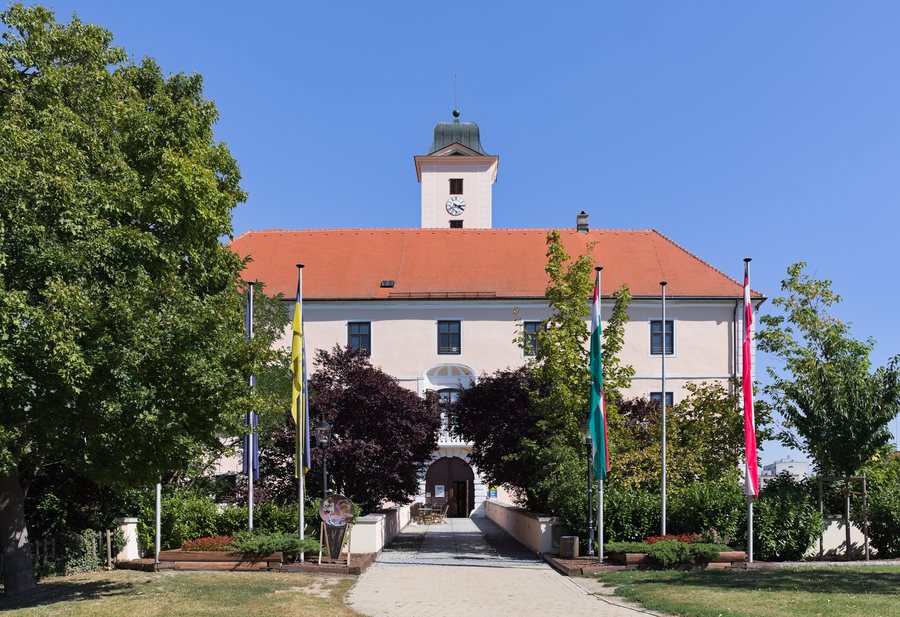 File:Vösendorf castle in Vösendorf, Lower Austria, Austria-west facade PNr°1227.jpg
Photo: D-Kuru via Wikimedia Commons, CC BY-SA 4.0
File:Vösendorf castle in Vösendorf, Lower Austria, Austria-west facade PNr°1227.jpg
Photo: D-Kuru via Wikimedia Commons, CC BY-SA 4.0
Lower Austria combines culture, nature and history. Castles, museums, Roman sites, river landscapes and trails open up a variety of themes for a journey.
Cultural history between railways, castles and Roman times
The Semmering Railway was built between 1848 and 1854 over 41 kilometres in the high mountains and is still in operation today. The railway hiking trail begins directly at Semmering railway station and follows the UNESCO World Heritage route with panoramic views.
The Wachau preserves material evidence of its historical development over more than two millennia. At the same time, this cultural landscape combines water, natural and near-natural areas, vineyards, forests and settlements along the free-flowing Danube.
In eastern Lower Austria, the grounds of Hof Palace extend over more than 70 hectares. The ensemble comprises the two-storey palace, the garden and the estate; its significance is rooted in art and cultural history.
Schallaburg Castle also takes visitors through several eras. Its history began around 1,000 years ago with the construction of a fortified residential castle. The defensive complex still rises in front of the Renaissance castle built later. Nearly 500 years ago, Schallaburg was transformed along Italian lines into the most magnificent Renaissance castle north of the Alps. Since its restoration 50 years ago, it has established itself as one of Austria’s largest exhibition centres. The programme covers topics ranging from the 1970s and Byzantium to the Danube.
Grafenegg Castle is a landmark characterised by a towering tower, grandiose façades, elegant staircases, atmospheric arcades and a chapel with a 15th-century altar. At the Roman city of Carnuntum, a fully functioning Roman city quarter has been reconstructed at its original site. Experiences there include guided tours through the Roman houses with tastings of Roman food and drinks, gladiator shows and the interactive “Caesar Trophy” activity.
River floodplains, gorges and trails in nature
Donau-Auen National Park preserves the last large river floodplain landscape in Central Europe across more than 9,600 hectares. In Lower Austria, it extends as far as the Austrian state border with Slovakia near Bratislava. Donau-Auen National Park can be experienced on marked hiking trails on foot, by bicycle or from the water.
Around Ötscher, Ötscher-Tormäuer Nature Park combines gentle alpine meadows, deep gorges, waterfalls and caves in primeval natural surroundings. Ötscher-Tormäuer Nature Park is accessible by public transport on the Mariazell Railway.
Museums, urban history and wine
The Museum of Lower Austria presents changing special exhibitions every year at the House of History and the House of Nature. These are complemented by guided tours and interactive programmes related to the exhibitions. Tulln City Museum combines the Roman Museum, documentation on the imperial convent for women and the Virtulleum.
In the Weinviertel, wein.gut.schauen combines a tour of a winery with a visit to the wine cellar or vineyard and a wine tasting.
Regional orientation
Regions and places in Lower Austria: Bruck An Der Leitha, Krems-Land, Zwettl, Gmünd, Melk, Tulln, Mödling, Scheibbs, Wien-Umgebung, Waidhofen an der Ybbs Region, Baden, Neunkirchen, Amstetten, Lilienfeld, Wiener Neustadt and Sankt Pölten.
More about the travel destination: Austria.
Check prices, availability and amenities for your travel dates directly on Booking.com.
View accommodations and offersAdvertisement · Partner link to Booking.com
