
Gmünd: Nature, Culture and Active Days
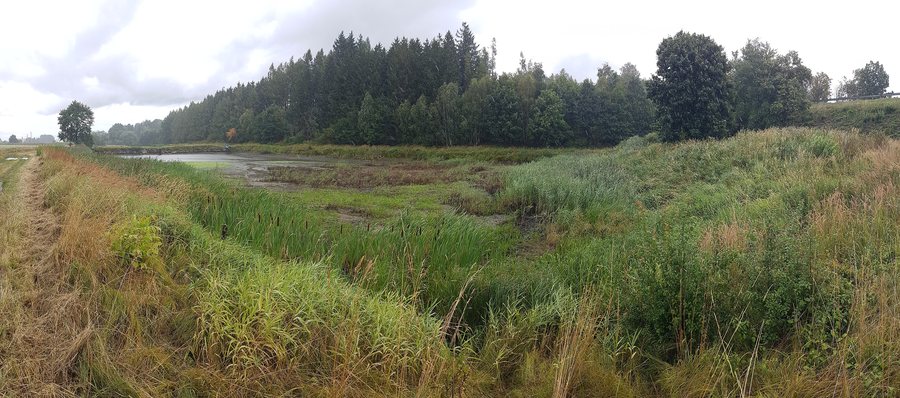 File:Kleiner Teich 1,5 km SO von Gmünd sl12.jpg
Photo: Stefan.lefnaer via Wikimedia Commons, CC BY-SA 4.0
File:Kleiner Teich 1,5 km SO von Gmünd sl12.jpg
Photo: Stefan.lefnaer via Wikimedia Commons, CC BY-SA 4.0
In Gmünd and the Gmünd District, you can observe nature in the moorland, enjoy walks and hikes, go on cycling tours, visit historic buildings and music events, and relax in saunas and baths.
Nature among granite, forests and moorland
Blockheide Nature Park features bizarre granite formations, quiet forests, gentle meadows, heathland, hidden forest ponds and natural stream valleys. The nature park also provides a habitat for rare species such as the marsh grasshopper and bell heather.
In the Gmünd District, Hochmoor Schrems Nature Park covers around 300 hectares. Of these, 119 hectares are protected and form part of the “Waldviertel Ponds, Moors and Rivers” Ramsar site. Along the High Moor Hiking Trail, visitors can observe moor frogs, dragonflies, sundew and bladderwort.
Hochmoor Schrems Nature Park is also home to UnterWasserReich, featuring an interactive indoor exhibition and a naturally designed water garden dedicated to the world of the Waldviertel’s ponds and moors. UnterWasserReich is accessible, available in English, German and Czech, and suitable as a programme for bad weather.
The themed trails in Blockheide Nature Park include playgrounds, the 15th meridian, a former water reservoir serving as an information centre and a 30-metre-high observation tower.
Hiking and cycling with different focuses
In Sankt Martin, a network of more than 70 kilometres of signposted hiking trails runs through the wooded landscape. The local potato-growing tradition is also part of the townscape: more than 30 speciality varieties are grown organically, marketed and refined into culinary specialities in regional restaurants.
The Nebelstein Adventure Hiking Trail is designed as a certified circular hiking trail. It has three starting points and six adventure stations.
For longer cycling tours, the Iron Curtain Trail – EuroVelo 13 is a prominent reference point: it starts in Gmünd and ends in Bratislava. The trail is well signposted along its entire route. In addition, bicycles can be transported free of charge on the Waldviertel Railway, allowing train journeys to be combined with cycling tours and individual cycling stages.
Culture and history in the Gmünd District
The Höhenberg Observatory in the Gmünd District is housed in a six-metre-high brick tower. It is equipped with largely historic telescopes. A short planet hiking trail leads to Höhenberg Observatory.
Historic buildings also provide a variety of highlights. Ehrendorf Castle has almost 600 years of history and was first mentioned in a document in 1427. In Kirchberg am Walde, the Gmünd District is home to a castle with a medieval core and Baroque-early Classical design. Rauenstein Fortress contains wall elements dating from the 13th century and was formerly a defensive structure.
The Schrammel.Klang.Festival offers musical experiences and takes place at Lake Herrensee in Litschau. The programme includes matinees, the Schrammel.Pfad, evening concerts and music workshops.
Wellness, golf and alternatives for a day trip
Sole Felsen Sauna comprises various saunas, a steam grotto, a rock hammam and an extensive sauna garden on Asang Pond. Sole Felsen Bad offers warm pools, some of which are enriched with Bad Ischl healing brine, as well as bubbling attractions, massage jets and a current channel.
In the Gmünd District, Haugschlag Golf Club has two 18-hole championship courses. The landscape there is characterised by water, large granite boulders and heathland. Taster golf sessions as well as beginner and introductory courses are available for those getting started.
Other places include Weitra, Sankt Martin, Moorbad Harbach and Sankt Wolfgang.
For the overarching travel overview: Lower Austria.
Check prices, availability and amenities for your travel dates directly on Booking.com.
View accommodation and offersAdvertisement · Affiliate link to Booking.comMore destinations
More places within the same destination:

