
Lilienfeld: Winter Trails, Muckenkogel and Monastery Culture
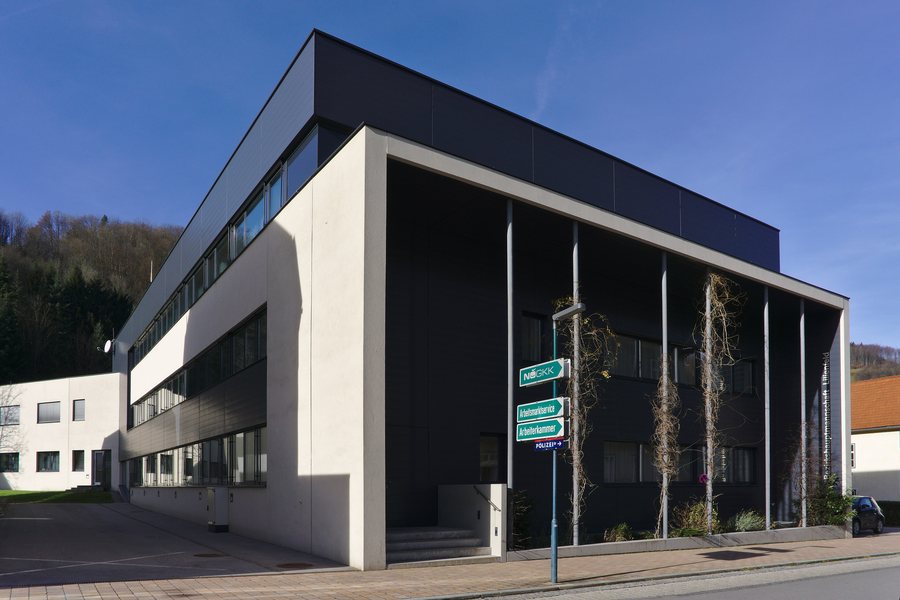 File:Bezirkshauptmannschaft Lilienfeld.jpg
Photo: Simon Legner ( User:simon04 ) via Wikimedia Commons, CC BY-SA 4.0
File:Bezirkshauptmannschaft Lilienfeld.jpg
Photo: Simon Legner ( User:simon04 ) via Wikimedia Commons, CC BY-SA 4.0
At Muckenkogel, Lilienfeld combines the history of winter sports, ski tours and mountain trails with a diverse cultural landscape. During your stay, you will find both specific trails and viewpoints as well as historic destinations, activities for children, and a family and pilgrimage cycle path. Muckenkogel can be reached on foot, by bicycle or by the rustic single-chairlift; at the same time, it is popular with ski tourers. This does not imply current operating hours or the availability of specific pistes and lifts, but the documented mountain and winter themes provide clear guidance when choosing your stay.
Winter Sports and Trails on Muckenkogel
Muckenkogel is closely associated with the history of alpine skiing: on 19 March 1905, Mathias Zdarsky organised the first slalom in the history of alpine skiing there. The Lilienfeld Museum also traces the success story of a pioneer regarded as the founder of alpine skiing technique, using notable winter sports equipment from earlier times. Those wishing to combine different interests within a travel group will find not only ski touring opportunities on the mountain, but also marked hiking trails with varying levels of difficulty.
The Mathias Zdarsky Inventor Trail is particularly suitable for beginners. Another specific option is the 2.5-hour circular trail: it leads from the mountain station via Muckenkogel and Hinteralm and back via Klosteralm. The Waterfall Trail runs from the valley station of the Lilienfeld chairlift to Lilienfelderhütte on the Gschwendt. It is listed as taking around 1.5 hours to walk and covering approximately 1.5 kilometres. The Pater Exinger Trail leads from the junction of Friedhofsgasse and Höhenstraße to the Still Valley; it takes 40 to 50 minutes to walk and is approximately 2 kilometres long.
Mountain Landscape, Forest and Views
The landscape around Lilienfeld is strongly shaped by forests. Three quarters of Lilienfeld District are covered by forest, which is why the district is considered the “green lung” of Lower Austria. The flora also adds its own distinctive touch: even botanists regard the peaks around Lilienfeld as orchid mountains. The Orchid Route runs halfway up along the steep mountain massif and complements the existing mountain trails with a natural history theme.
There are several different viewpoints to choose from. At 1,313 metres, Hinteralm is the highest point in Lilienfeld. From there, the view extends north across the Danube Valley and far into the Alps to the south. The observation tower on the 587-metre-high Parapluie stands on a rocky outcrop and offers a magnificent view of Lilienfeld Abbey and Spitzbrand. In Lilienfeld Abbey Park, winding paths lead through a park landscape with exotic trees, streams and small ponds. The so-called “Chineser” is a pagoda-like observation tower at the highest point of the park.
Abbey, Museum and Via Sacra
Lilienfeld Cistercian Abbey was founded in 1202 by the Babenberg Duke Leopold VI the Glorious. A particularly significant historical trace can be found on the seal of the document with which Duke Frederick II the Warlike confirmed the founding of Lilienfeld Abbey: it shows the Bindenschild, the coat of arms of Austria, for the first time.
The Lilienfeld Museum focuses on the history of the district. This includes silver and coal mining, the pilgrimage road to Mariazell, as well as industrial and natural history. The exhibits include minerals and fossils, among other objects. Since the beginning of the pilgrimage tradition, Lilienfeld has been regarded as an important stopover on the Via Sacra. At Klosteralm, a traditional alpine pasture mass for the seasonal descent of the livestock is held every year on the Feast of the Nativity of Mary. The Nostalgia Ski Race is also held annually in March, starting at the hut.
Family Attractions and Days Without Skis
In addition to the mountain destinations, Lilienfeld offers specific opportunities for spending time together away from winter sports. Lilienfeld Outdoor Pool features a heated pool, a splash area for toddlers, a play stream and a spacious sunbathing lawn surrounded by relaxing natural scenery. In the scriptorium of Lilienfeld Abbey, children can try medieval writing with a quill and ink. These destinations focus on different experiences than Muckenkogel, hiking trails or ski tours and can therefore be enjoyed independently of individual sporting interests.
Accommodation and Getting Around
Lilienfelderhütte is located at an altitude of 956 metres and serves hearty regional cuisine featuring specialities from the surrounding farms. It also offers cosy dormitory-style accommodation. For cyclists, the section of the Traisental Cycle Path running via Wilhelmsburg to Lilienfeld follows paved riverside paths and quiet side roads, with no significant climbs. The cycle path is designated as a family and pilgrimage cycle path and runs from Traismauer via St. Pölten, Lilienfeld and St. Aegyd am Neuwalde to Mariazell.
Further places for orientation in the region: Oberried, Wienerbruck, Mitterbach Am Erlaufsee, Erlaufboden, Annaberg Bei Mariazell, Kaumberg, Ramsau Bei Hainfeld and Türnitz.
To the higher-level travel overview: Lower Austria.
Check prices, availability and amenities for your travel dates directly on Booking.com.
View Accommodation and OffersAdvertisement · Affiliate link to Booking.com
