
Energy at ski resorts: lifts, snowmaking and sustainable planning
A ski resort needs energy to operate cable cars, make artificial snow, groom pistes, run buildings and serve guests. The amount required and the solutions that make sense depend on the terrain, type of facilities, operating hours and weather. For travellers, it is therefore important to look beyond whether a resort promotes its use of renewable electricity. Travel to the resort, occupancy, accommodation and current operating conditions are all part of the bigger picture.
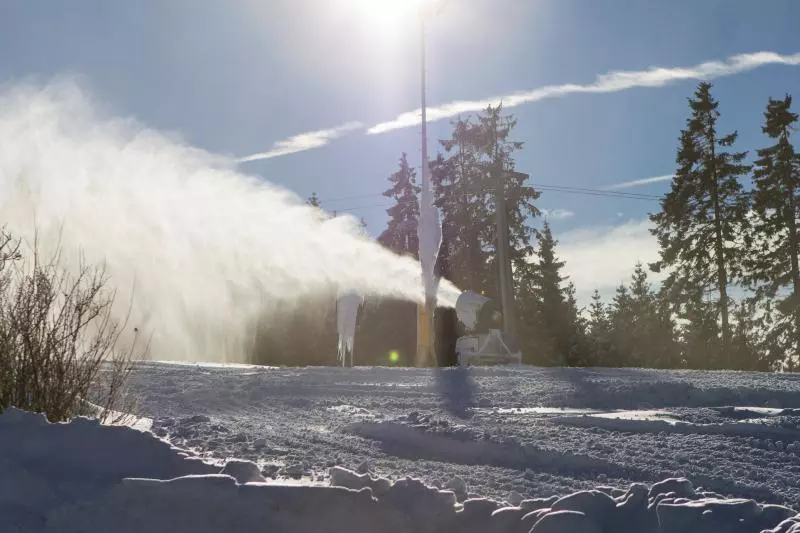 Schneekanone erzeugt technischen Schnee auf einer verschneiten Skipiste.
Photo: Dago Wiedamann
Schneekanone erzeugt technischen Schnee auf einer verschneiten Skipiste.
Photo: Dago Wiedamann
Where energy is used in a ski resort
Cable cars and lifts safely carry people uphill. Surface lifts, gondolas and detachable lifts differ in power, length and transport capacity. Snowmaking also requires pumps, compressed air and control systems. Grooming machines use fuel or energy for daily piste preparation. At valley and mountain stations, there is also demand for lighting, ticket offices, workshops, restaurants, heating and cooling.
On its page about the sustainability of cable cars, the German Cable Car Association gives examples such as generating electricity on site, using waste heat and using HVO fuels. These examples describe measures taken by the association and its member companies. They do not prove that every ski resort uses the same systems. For specific claims, check the latest information from the operator of the resort you plan to visit.
Efficiency over blanket claims
Energy can be saved by operating facilities according to demand, using efficient motors and pumps, and preventing breakdowns through maintenance. Effective controls can adjust lift capacity, lighting and snowmaking periods to match demand. Accurate measurements help distribute snow precisely during piste grooming, so not every section needs to be worked on as often. These technical approaches are useful, but on their own they say nothing about the overall climate impact of a holiday.
How guests travel and use the resort matters too. A well-used lift can have a lower impact per person than many individual journeys. Short distances between accommodation, lifts and the village centre make it easier to get around locally without a car. Public transport to the resort and regional shuttle services can affect the energy footprint of the entire stay. Anyone planning a more sustainable trip should therefore consider the journey to the resort, local transport and length of stay together.
Snowmaking and energy demand
Technical snowmaking combines water, cold air, pumps and pipes. Suitable production windows depend on temperature, humidity and wind. Modern monitoring and control systems can make better use of the time available, but they cannot replace a lack of cold weather. In a warm winter, there is greater pressure to produce enough snow for key pistes during short cold spells. Water availability, permits and decisions about which areas to secure first are also factors.
Guests should not mistake current statements about snowmaking for a guarantee that pistes will be open. Warm weather, rain or heavy use can change piste conditions. Information about technical snow and its limitations is available in Snowmaking at ski resorts. For choosing when to travel, see also Travel dates and the season, as well as the operator’s latest snow and lift status.
What travellers can compare
Before booking, it is worth checking the resort’s official sustainability information. If a specific measure is described, it should be clear whether it applies to a lift, snowmaking, buildings or the entire infrastructure. Terms such as “climate-friendly” or “sustainable” are difficult to compare without further explanation. More useful information includes verifiable details about energy sources, public transport, shuttles, building technology and water management.
For a short stay, a resort that is easy to reach by public transport may be a better choice than a distant destination accessible only by car. It is also worth considering rest days and alternatives when planning a trip. The tips in Planning a ski holiday can help you strike a realistic balance between transport, accommodation and days on the slopes.
FAQ
Do ski lifts use a lot of energy?
Energy demand depends on factors including the type of lift, vertical rise, capacity, operating hours and occupancy. A blanket statement about all lifts is therefore unreliable.
Does renewable electricity mean a carbon-neutral holiday?
No. Travel to the resort, buildings, piste groomers, snowmaking and the rest of the stay also affect the overall footprint.
What specific information should operators provide?
Useful information includes clear details about energy sources, individual measures, public transport, shuttles and the facilities concerned. General marketing terms are not enough to make a comparison.
