
Choosing Ski Trousers: Dry, Warm and Free to Move
Ski trousers should stay comfortable while skiing and sitting on the lift, keep out snow and wind, and allow freedom of movement. Bend your knees, sit down and check the waistband, knees and cuffs in every position. Try them with the underwear and boots you will use. The ski equipment overview helps you check the rest of your clothing.
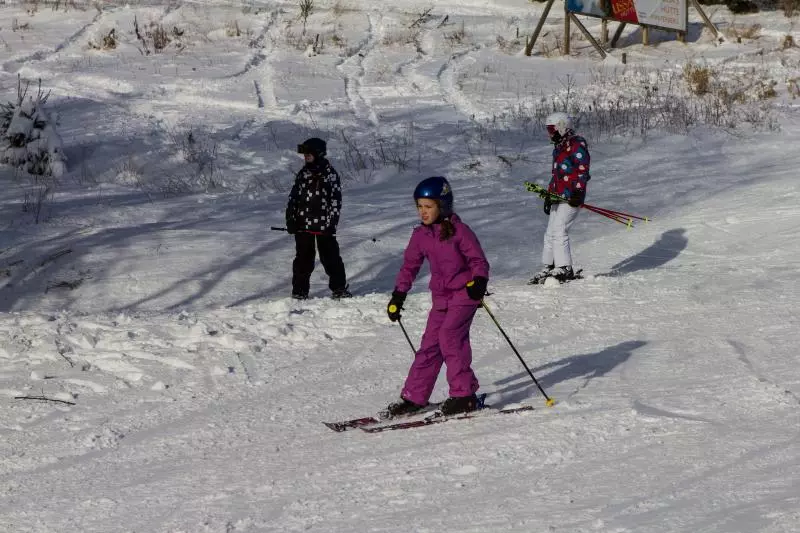 Kinder fahren in farbiger Skikleidung auf einer verschneiten, übersichtlichen Piste.
Photo: Dago Wiedamann | MaxTD Imagebank
Kinder fahren in farbiger Skikleidung auf einer verschneiten, übersichtlichen Piste.
Photo: Dago Wiedamann | MaxTD Imagebank
Quick facts
- Ski trousers should not pull at the waistband or knees.
- Weather and moisture protection should match the season and time on the slopes.
- Cuffs and snow gaiters should work with boots.
- Several thin layers are more flexible than one thick layer.
- Reinforcements can help when sitting, kneeling or contacting edges.
- Children need freedom without a loose, dragging fit.
Fit in the skiing position
Try the trousers with your holiday socks and layers. Crouch, climb steps and sit. The waistband should hold without cutting in, and the knees should not pull down. Bib trousers distribute pressure differently, so check them with your jacket and straps.
Tight trousers restrict movement; loose trousers may slip, flap or interfere with bindings. This matters especially for children. Combine them with a ski jacket and check both together.
Snow, wind and moisture
A weatherproof outer layer and suitable base layers balance cold on lifts with warmth while skiing. Check zips, seams, waistband and snow gaiters. Water-repellent material is not automatically enough for every long period in snow. Resort conditions and the travel season help you plan.
Layers and details
A functional base layer is usually worn underneath; add a suitable layer in cold weather. Cotton becomes damp quickly. Too many layers make trousers stiff. Check that boots still close comfortably. Pockets should not press when sitting, ventilation should be protected from snow and leg reinforcements must not catch on skis. Match cuffs with your gloves and jacket sleeves.
Care and checks
Dry trousers fully and follow the care label. Strong heaters, unsuitable detergents and compression can damage coatings. Check seams, zips, fasteners and cuffs before departure. For children, check waist and length again.
Good clothing supports comfort but does not replace safe skiing. In poor visibility or fatigue, reduce speed and follow slope safety guidance. Beginners and families often benefit more from easy-to-use clothing than from highly technical features. Plan a way to dry trousers over several days.
FAQ about ski trousers
How should ski trousers fit?
They should allow movement when crouching and sitting, hold at the waist and not interfere with boots or bindings.
Which base layer is suitable?
A functional base layer transports moisture better than cotton; add a suitable mid-layer in cold weather.
Do I need a snow gaiter?
It can help in snow and when sitting often. Compatibility with boots and trousers is decisive.
