
Zermatt Ski Area
The Zermatt ski area combines a car-free resort with a high-alpine winter sports region on the Matterhorn. When planning your trip, it’s not just the views and the name of the resort that matter: your ability level, accommodation, access to the lifts, the weather and daily operating status all determine how well your ski day goes. Zermatt can be an appealing destination for families, beginners and experienced skiers, but getting around and the high altitude require realistic planning.
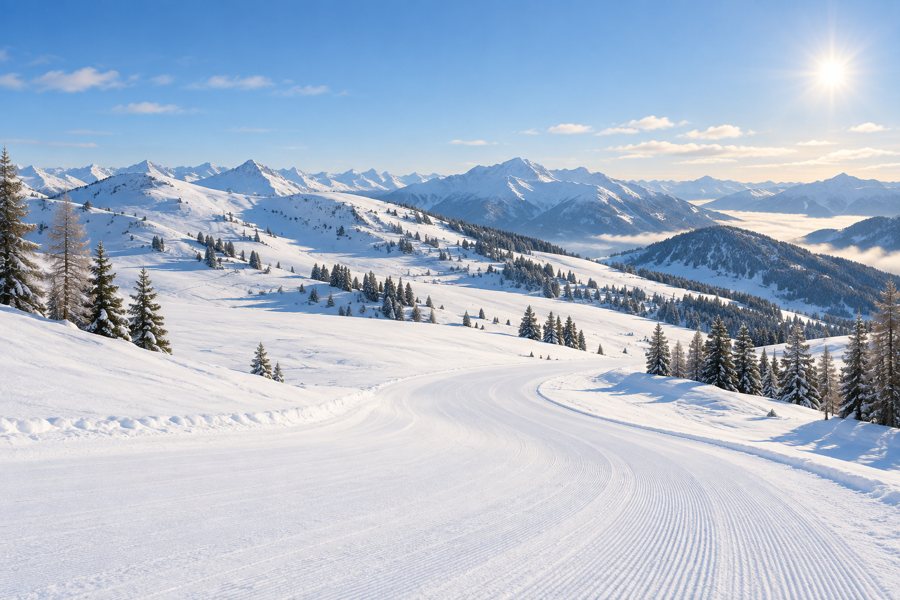 KI-generierte, nicht-dokumentarische Illustration; keine faktische Ansicht von Zermatt.
Photo: AI-generated illustration
Key facts
- Zermatt is located at around 1,620 metres; mountain lifts from the village provide access to the high-alpine ski area.
- The Zermatt ski pass covers up to 200 kilometres of pistes in the Sunnegga–Rothorn, Gornergrat and Schwarzsee–Matterhorn Glacier Paradise sectors.
- The international ski pass adds 160 kilometres in Breuil-Cervinia and Valtournenche in Italy, bringing the total to as much as 360 kilometres. See the official ski pass options for details.
- Matterhorn Glacier Paradise is on the Klein Matterhorn at 3,883 metres, home to Europe’s highest mountain station.
- The ski pass includes Wolli’s Beginners Park on Sunnegga and the snowpark at the Furggsattel glacier lift, subject to the opening of each area.
- The Matterhorn is called Cervino in Italian and Cervin in French.
When choosing accommodation, also consider the location of the ski school, rental shop and lift access. A place with a great view isn’t automatically practical if it means a long transfer to the lifts in the morning. Conversely, a central location can make evenings easier, even if your preferred lift access isn’t right outside the door.
Altitude, weather and daily planning
For a longer trip, it’s a good idea to leave at least one day flexible. That way, if the weather changes, the group can choose a more accessible sector or take a break.
Combining your journey with your accommodation
Compare other Swiss destinations
Valais. Another winter sports destination in the region is Verbier and the 4 Vallées. Explore other options for skiing in Graubünden, skiing in the Bernese Oberland, skiing in eastern Switzerland, skiing in Ticino and skiing in the Jura. These regions are all part of Switzerland’s varied skiing offering.
