
Skiing in the Jura
Skiing in the Jura combines manageable winter destinations with a journey through the landscape between the Jura ridge and the Three Lakes region. Choosing where to go involves more than just snow and pistes: elevation, travel, accommodation and the ability levels of your group all matter. Conditions can vary considerably between locations and ski areas. For an introduction, see the overview of skiing in Switzerland; regional comparisons with Graubünden and Valais show how different a winter trip can be.
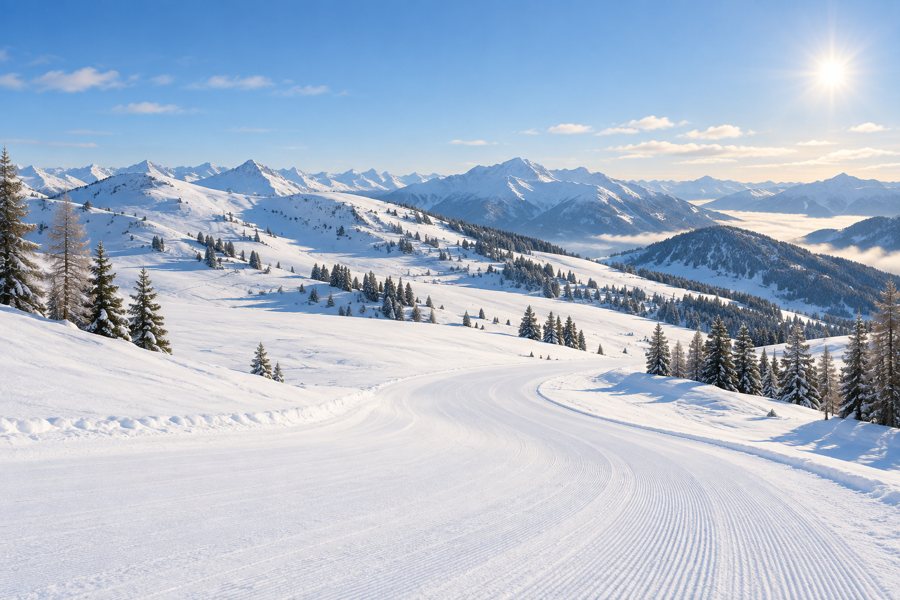 KI-generierte, nicht-dokumentarische Winter-Skilandschaft; keine faktische Ansicht des Jura.
Photo: AI-generated illustration by OpenAI for Max-TD
Which Jura destinations suit your trip?
The Jura has small and medium-sized ski areas at different elevations, each with its own character. Some are suited to a short day of skiing, while others are better combined with several nights’ accommodation and winter walks. Key considerations include the distance from your accommodation, access to the ski area, available practice areas and current opening status. A well-known name is not automatically the best choice for every group. Check the route from the car park or railway station, your return options in the afternoon and the amenities in town.
If you are comparing the Jura with other regions of Switzerland, the information on skiing in the Bernese Oberland offers further points to consider about travel, elevation and accommodation. For a trip with several stops, ski resorts in Italy or ski resorts in Austria may also be interesting alternatives.
Ability levels, families and mixed groups
Beginners need a clearly laid-out practice area, accessible instruction, equipment hire and an easy route between their accommodation and the lift. Families should also plan for breaks, toilets, meals and a straightforward return journey with tired children. For mixed-ability groups, it helps if everyone can find suitable options from the same starting point. This keeps the day flexible without requiring everyone to travel long distances all the time.
More advanced skiers tend to focus on the terrain, vertical drops, lift connections and the last route back. Check these details for the area you have in mind. In changeable weather, it is useful to have a plan B: a shorter day of skiing, an activity in the valley or a change of location, if road and transport conditions allow. The guide Winter sports terminology explains key terms relating to equipment and disciplines.
Snow, weather and opening status
In the Jura, sunny slopes, forest sections and higher-elevation areas can have different conditions on the same day. So check snow, wind, visibility, open lifts and pistes, webcams and access roads for the specific day of your trip. A general description of the region is not a snow report. Lessons, equipment hire, parking and bus services may also vary depending on the season or weather. The official overview of ski areas in the Jura and Three Lakes region provides current destinations and operator information to help with your planning.
Allow extra time for travelling, collecting equipment and the return journey. In snowfall, wind or poor visibility, a short practice slope may be the better choice. If you are staying for several days, choose destinations according to the weather and your ability level, and check each provider’s information separately.
Accommodation, travel and budget
Your accommodation determines how long it takes to reach the lift in the morning, how you get back if the weather changes and what you can do in the evening. Compare distances, parking or public transport links, equipment storage and places to shop. Families often benefit from short journeys, while couples and groups may give more weight to restaurants, museums or a lively town centre. If you are travelling by car, include winter equipment and possible restrictions on minor roads in your plans. For train or bus journeys, make sure you have a way to cover the final leg to your accommodation.
Don’t budget for accommodation alone. Total costs include travel, accommodation, lift passes, equipment hire, lessons, food, parking and local transfers. Before booking, compare the map, opening times and return route. A cheaper room may be less convenient if it means long daily transfers. For a comparison with Germany’s low mountain ranges, see skiing in Germany; skiing in Sweden presents another kind of winter trip.
Frequently asked questions
Who is skiing in the Jura suitable for?
Travellers who want to choose a specific destination based on their ability level, accommodation, travel, facilities and current operating status.
Are all the places mentioned part of one ski area?
No. Locations and ski areas may have separate operators, access points, opening hours and services.
What should I check before a day of skiing?
Check snow, weather, visibility, open lifts and pistes, road access, parking, lessons and equipment hire.
How should families plan their accommodation?
First choose the area you want to visit, then compare distance, return journey, meals, equipment and places to take breaks.
What helps when the weather is changeable?
A flexible daily plan with a shorter route, an activity in the valley or an alternative destination means that a single closure won’t determine your entire holiday.
