
Verbier and the 4 Vallées ski area
Verbier and the 4 Vallées is one of Switzerland’s best-known winter sports destinations. The area links six villages and offers a total of 410 kilometres of ski and freeride routes. Its size is an advantage when planning a trip, but it also calls for clear choices about accommodation, access and daily routes. If you are planning just one day of skiing, do not try to cover every area. For longer stays, however, it is worth combining different sectors according to the weather, your ability and the kind of day you want. Our overview of skiing in Switzerland provides a broader regional perspective.
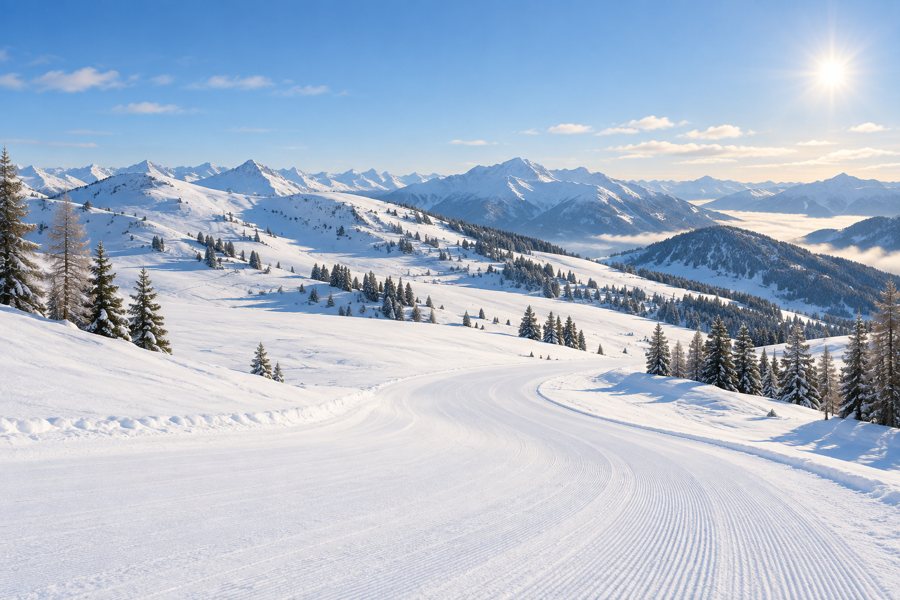 KI-generierte, nicht-dokumentarische Illustration; keine faktische Ansicht von Verbier oder 4 Vallées.
Photo: AI-generated illustration
Key facts
- The ski area includes Verbier, Bruson, La Tzoumaz, Nendaz, Veysonnaz and Thyon.
- The ski area offers 410 kilometres of ski and freeride routes.
- Mont Fort reaches 3,330 metres and offers a 360-degree panorama.
- The view takes in the Matterhorn (Cervin/Cervino), Dent Blanche, Grand Combin and Mont Blanc.
- The villages are connected, but differ in location and access.
Location, villages and access
The ski area includes Verbier, Bruson, La Tzoumaz, Nendaz, Veysonnaz and Thyon. Access points differ in practical ways: from Le Châble, a gondola takes you to Verbier and onward to the Médran lifts. In Nendaz, the Tracouet gondola serves the local sector; in winter, a bus also connects Haute-Nendaz with Siviez, providing access to the wider ski area. From Veysonnaz, a gondola goes to Thyon, from where the connection towards Siviez continues. Choose your base according to the sector you want to ski and how you will get to your accommodation; before changing sectors, check operating hours and the last connection.
A convenient access point depends on more than the name of the village. If you are staying in the Valais region, our overview of skiing in Valais can help you compare the different destinations.
Slopes, altitude and planning your day
Mont Fort reaches 3,330 metres; from its viewing platform, the panorama takes in the Matterhorn, Dent Blanche, Grand Combin and Mont Blanc, among other peaks. Altitude, weather and open connections can therefore have a significant effect on your day. Advanced skiers can make the most of the size of the ski area, but should keep their return to their chosen base in mind. Beginners and those returning to skiing are better off choosing a manageable sector, keeping journeys short and setting a fixed meeting point.
- Choose your starting point based on ability, accommodation and the return journey.
- For groups, agree on a fixed meeting point and time.
- Have a shorter alternative ready in case conditions change.
- Compare lift-pass options, lessons and rental equipment directly with the provider before buying.
Families, beginners and mixed-ability groups
Whether Verbier and the 4 Vallées is right for a family depends above all on its specific needs. A quiet practice area, convenient lesson times, suitable equipment rentals and an easy way back can make the day more enjoyable. For mixed-ability groups, it is useful to agree on a meeting point so that everyone does not have to ski the same route. To compare other destinations in Valais, take a look at the pages on the Aletsch Arena ski area and the Crans-Montana ski area.
Accommodation, travel and alternatives
If you are skiing for several days, staying close to a suitable access point can save time. If travelling by car, factor in parking, winter equipment and current road conditions. When travelling by public transport, check the timetable, connections and the final leg to your accommodation. Other options in Valais include the Val d’Anniviers ski area and the Leukerbad ski area. For general preparation, see our guide to planning a ski holiday.
Compare other Swiss ski regions
Verbier and the 4 Vallées is just one possible destination for a ski holiday in Switzerland. Depending on your group, snow conditions and preferred way of travelling, the Jungfrau Ski Region and other regions may also be suitable alternatives. Compare more than just the total kilometres of routes: consider altitude, access, accommodation, lessons and how you will get back in the evening.
