
If you are looking for a hotel for your stay in Ruschein, this overview provides a direct starting point for your accommodation search.
Geographical setting
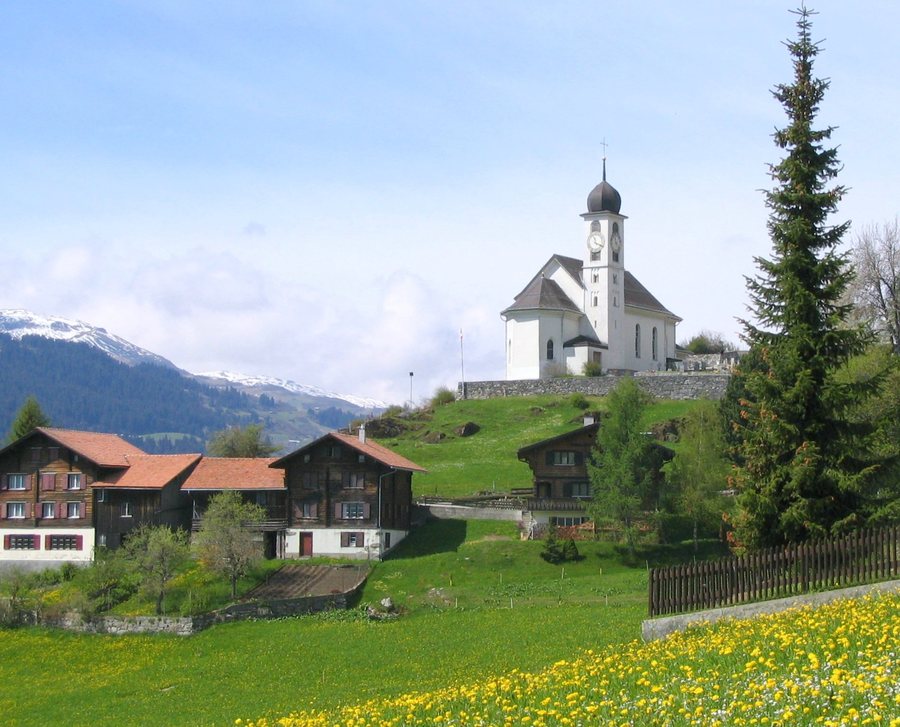
Ruschein lies north of Ilanz on a terrace. The municipal area extends to elevations of 1,900 metres.
Culture and history
The history of Ruschein dates back to the year 765. Historically, the village was shaped by agriculture, with forestry, meadows, pastures and alpine land defining its character.
In pre-Christian times, the church hill was a cult and sacrificial site. Excavations also uncovered remains of a first small church from the 7th century.
Nature
The surrounding area of Ruschein includes Cauma, the northern summit of Piz Riein, La Cauma and Lägerbiel.
The wider area around Ruschein is mountainous and includes alpine pasture areas such as Alp da Ruschein, Plaun Grond, Alp Dado and Tarschinas.
Hiking
In the immediate and wider surroundings of Ruschein, a steep path leads from Alp da Ruschein via Fuorcla da Sagognin into the Vorab alpine region. It is not a local visitor route.
Regional surroundings
The wider regional surroundings of Ruschein include Paspels Castle, Rietberg Castle and the Chur Animal and Leisure Park.

