
Marianka: Slovakia’s Oldest Pilgrimage Site
Accommodation in Marianka
Marianka is situated in a wooded area of the Little Carpathians. The village is Slovakia’s oldest pilgrimage site. In the Marian Valley, there are buildings, paths, and landscapes associated with the long-standing Marian tradition.
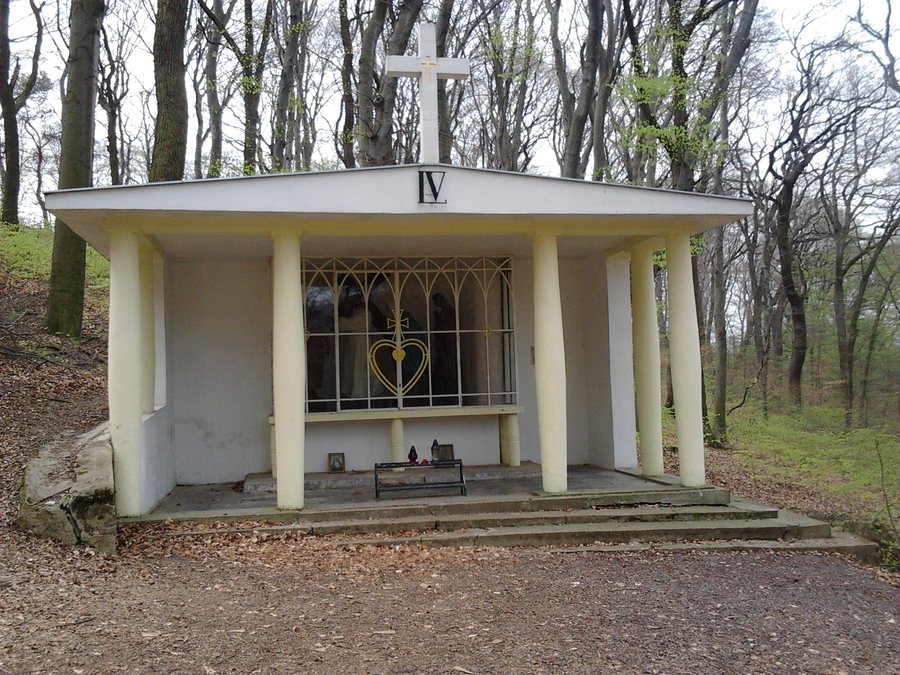 File:900 33 Marianka, Slovakia - panoramio (3).jpg
Photo: Peter Bútora via Wikimedia Commons, CC BY-SA 3.0
File:900 33 Marianka, Slovakia - panoramio (3).jpg
Photo: Peter Bútora via Wikimedia Commons, CC BY-SA 3.0
Pilgrimage
Marianka was the first Marian pilgrimage site in the former Kingdom of Hungary. The most important annual event is the Marian pilgrimage on the Feast of the Nativity of the Blessed Virgin Mary on 8 September. The religious character of the village is defined by the Church of the Nativity of the Blessed Virgin Mary and the Chapel of the Miraculous Spring. The church is originally Gothic and preserves its Gothic construction. The rotunda chapel of the Holy Spring was built in 1696 over a miraculous spring.
The Marian Way was established at the beginning of the 18th century between the church and the Chapel of the Miraculous Spring. Six accompanying chapels were built along this path. They are dedicated to events from the life of the Virgin Mary and her feast days. The Stations of the Cross are also part of the sacred character of the village: they consist of 14 stations, including 13 chapels, and feature fifty life-size statues.
Culture
Most of the architectural monuments in the Marian Valley date from the Baroque period. A separate historical feature is the mini-exhibition on slate mining in Marianka. It is located in the Marian Valley next to the third Marian chapel and is considered the smallest mining exhibition in Slovakia. Photographic and documentary materials, together with expert explanations, provide information about the history of slate extraction and processing.
The ensemble also includes a preserved slate mine with three extraction chambers, which is not open to the public. The Lourdes Grotto in Marianka was built in the first half of the 20th century.
Landscape
The pilgrimage site is located in the wooded surroundings of the Little Carpathians. The eastern part of Marianka’s heritage zone belongs to the Malé Karpaty Protected Landscape Area. The Stations of the Cross in particular leads through a wooded landscape on a slope above the Lourdes Grotto. It lies on the left bank of the Mariánsky potok, formerly known as Kláštorný potok.
Marianka is also connected to cultural routes of wider regional significance: the Bratislava–Hodonín section of the European Cultural Route of Saints Cyril and Methodius passes through the village. The combination of pilgrimage sites, protected landscapes, and routes of cultural and historical importance shapes Marianka’s spatial context.
Trails
For hikers, the signposted circular trail “Na Pajštún” begins at the SAD bus stop above the monastery complex in Marianka. From there, the route leads via Borinka, Pajštún, Pod Kozliskom, Dračí hrádok, Svätý vrch, and Klčovanice back to Marianka. Another walking route runs from Marianka to Rača via Malý Slavín, Pánova lúka, and Malá Baňa; it is approximately 10 km long.
Marianka is also connected to several cycling routes. The cycling circuit from Devínska Nová Ves via Devínske jazero, Stupava, Marianka, and Záhorská Bystrica is 30 km long and has an elevation gain of 300 m. The cycling route to Marianka follows the yellow “C” cycling tourism sign or cycle route 8008. It leads along a field track to Marianka’s main square. The “Devínske jazero – Stupava – Marianka” cycle route ends in Marianka; its final section also runs along a field track.
To the main travel overview: Malatzka.

.jpg)