
Mysłakowice: Castle History, Tyrolean Houses and Hiking Destinations
Accommodation in Mysłakowice
Mysłakowice can be explored through its castle and park complex, Tyrolean houses and several named hiking destinations. This gives you concrete points of reference when searching for accommodation: architectural history, architectural details and trails with different points of reference. This way, you can get an idea in advance of which topics are of particular interest to you during your stay.
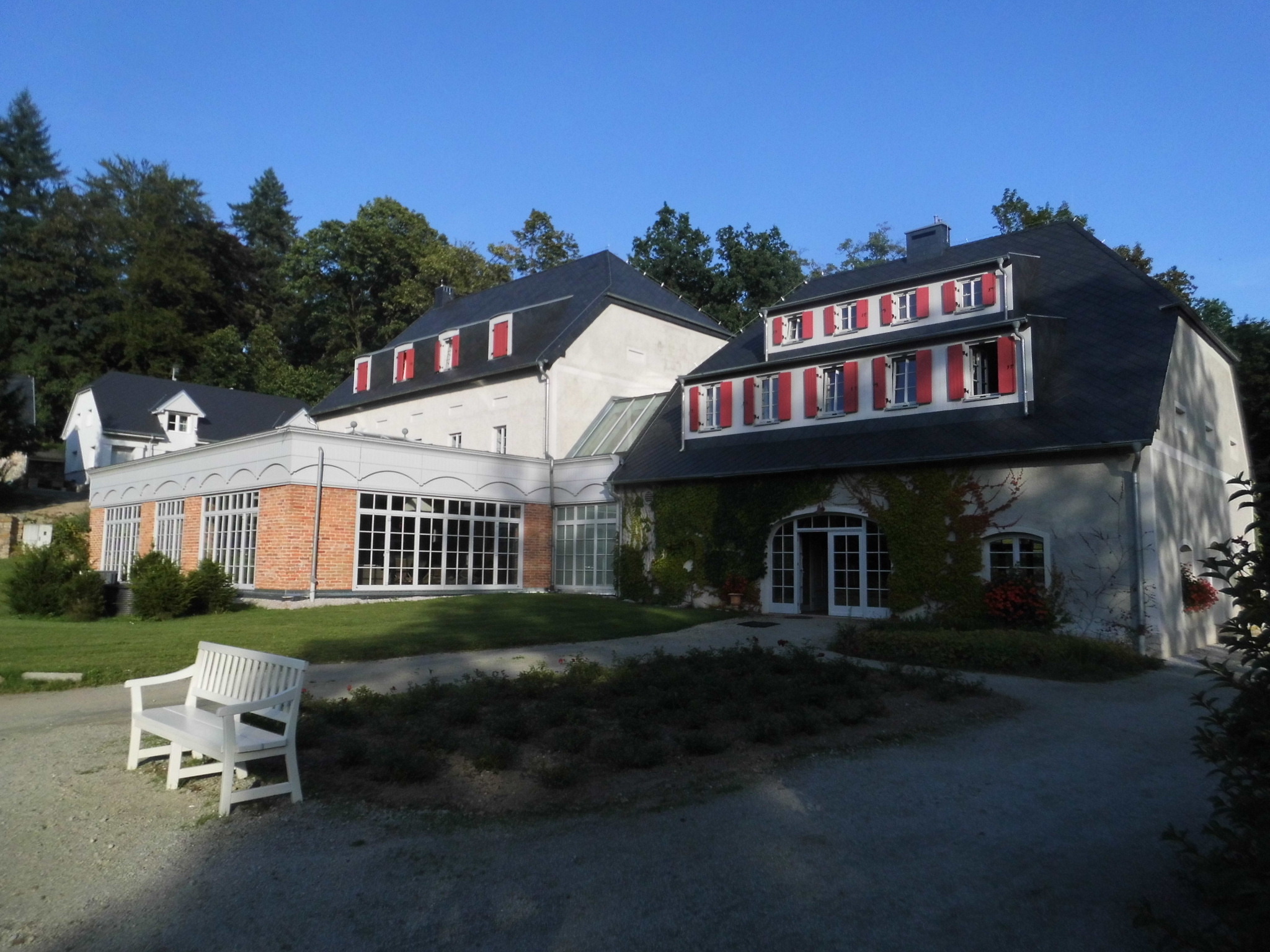 Mysłakowice
Photo: Bernd Herman, neandertours.com
Castle, Park and Tyrolean Houses
The castle and park complex of Mysłakowice, as part of the castles and landscape parks of the Jelenia Góra Valley, has the status of a Pomnik Historii, a historical monument. The castle’s history can be traced through two distinct milestones: in 1821, it passed into the ownership of the Prussian King Frederick William III, who designated it as his summer residence. The castle later acquired its Neo-Gothic architectural design, between 1842 and 1844. The transfer of ownership and the architectural design thus represent different periods in the castle’s history.
Another perspective on the architecture is offered by the Tyrolean houses in Mysłakowice, whose balconies are richly decorated. While the castle’s historical use and Neo-Gothic design provide points of reference, the balconies are the distinctive feature of these houses. There is also a monument in the park area to Johann Fleidl, a leader from the Zillertal. The castle complex, houses and monument thus offer different points of reference for a walk through the area’s architectural history and commemorations.
Distinguishing Hiking Trails by Their Points of Reference
The green-marked “Droga Królewska” leads from the castle in Mysłakowice to the castle in Karpniki. Another hiking trail in Mysłakowice, marked in black, connects the red and green hiking trails and leads from the railway station to the castle. The descriptions therefore differ both in their stated endpoints and in the trails’ purposes: the Droga Królewska connects two castles, while the black-marked trail is described as connecting the two trails marked in other colors, as well as the railway station and the castle. When choosing a route, take note of these different points of reference. Markings and trail conditions may change; check them before setting out.
Rock Formation and Stone Altana
Sowi Kamień is a small, weathered rock with aplite veins on the southeastern slope of Mrowiec, a little below the summit. Its location on the slope and its geological feature characterize this natural destination. The Kamienna Altana on Krzyżowa Góra is different: it lies just below the summit and consists of a granite slab resting on three granite pillars. A stone cross was erected above the Altana in 1874. To distinguish the two destinations, you can use the named mountains and their features as points of reference: a weathered rock with aplite veins on Mrowiec, and a granite structure on Krzyżowa Góra.
Local Cultural Destinations
The jaws of a Greenland whale are housed at the Gminny Ośrodek Kultury. During several past editions of Dni Kościoła, residents and tourists were also able to visit parts of the Sacred Heart Church that are not normally accessible during regular visits. This opportunity to visit was tied to the respective events. If you would like to plan your stay around such an event, check the current event dates. Together with the Fleidl monument in the park area, these cultural destinations complement the architectural history with a local memorial and special opportunities to visit.
Discover more destinations: Staniszów, Karpacz, Marczyce, Szklarska Poręba, Zachełmie, Przesieka, Kowary, Milków.
For the broader travel overview: Jeleniogórski.
