
Nendeln: Brickworks, Roman Traces and Fen
Accommodation in Nendeln
If you are looking for accommodation in Nendeln, the village can be understood through its building and craft history and the protected Schwabbrünna-Äscher fen. Its story ranges from Roman foundations and a historic brickworks to a ceramics workshop; two hiking trails also differ in their routes and endpoints. This may help you decide whether you want your stay to focus more on cultural history, the landscape or a hike.
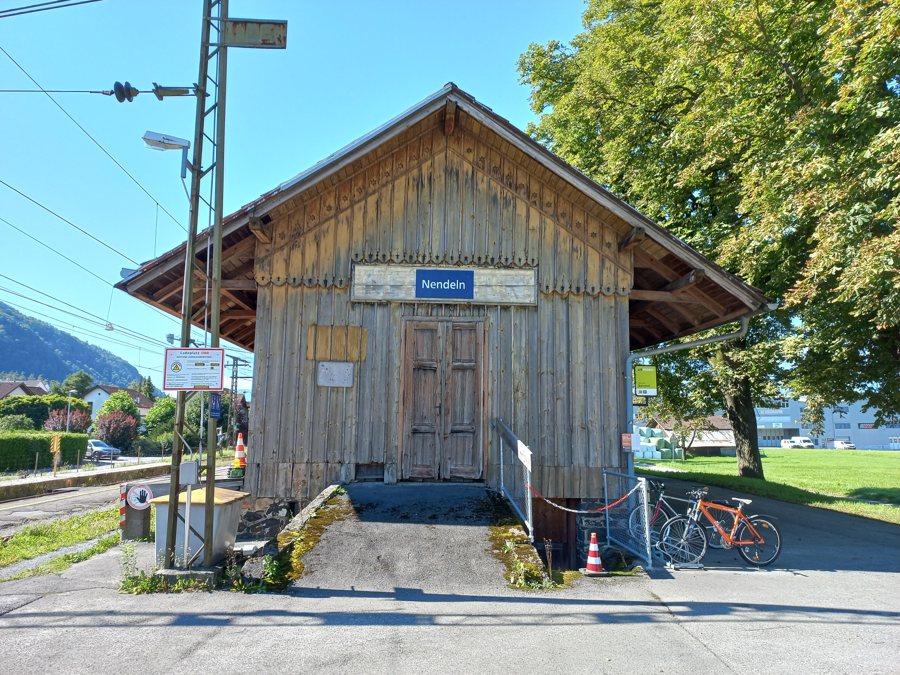
Brickworks and ceramics
The former main building of the brickworks has been preserved in the residential building at “Churer Strasse 63” in Nendeln; a historic ring kiln is located beneath the house. Around 1881, a Hoffmann ring kiln was installed in Nendeln, enabling a significantly higher output of bricks. The village’s history thus centres on a surviving building feature and a specific technological change in brick production.
Another connection with craftsmanship is the keramik werkstatt schaedler in Nendeln, part of the municipality of Eschen. It is Liechtenstein’s oldest arts and crafts business. Since 1836, it has produced stoneware tableware in small batches, exclusive art ceramics and tiled stoves. Together with the brickworks, the workshop represents two different forms of production: brickmaking with a ring kiln on the one hand, and stoneware, art ceramics and tiled stoves on the other. The workshop’s long tradition provides a distinct point of reference in the village’s history.
Roman traces and historic buildings
The foundations of a Roman estate are visible in a field in Nendeln. The estate was probably built between the late 1st and early 2nd centuries AD. This dating indicates a likely period of construction, not a specific year. This archaeological site can therefore be distinguished chronologically from the much more recent historic buildings in Nendeln.
The protected “Hagenhaus” was built in 1837. The complex includes a semi-detached house, a barn with a stable, a washhouse and a small shooting lodge. These different components show the Hagenhaus as an ensemble of several types of buildings, rather than focusing only on a single residential building.
The history of the chapel also spans several building phases. The older Chapel of St Sebastian and St Roch was built in 1639 and demolished during the expansion of today’s Churer Strasse. The new Chapel of St Sebastian and St Roch was built in 1935. The road expansion is thus part of the history of the older chapel; the construction in 1935 marks a later building phase. Both dates help distinguish the buildings without conflating the older chapel with the new one.
Fen and hiking trails
The protected “Schwabbrünna-Äscher” fen is in Nendeln and is Liechtenstein’s second-largest fen. As a landscape feature, it adds a distinct natural focus to the historic buildings and craft tradition. The protected area and the surviving buildings therefore give the village different points of interest, which you can weigh up when deciding what you want from your stay.
The hiking trails also differ in their routes. The circular “Through the Nendeln and Mauren Marshes” trail starts and ends in Nendeln. Stage 4 of the Liechtenstein Trail runs from Nendeln via Eschen and Bendern-Gamprin to Ruggell. The endpoint is especially important for planning: the circular trail returns to Nendeln, while the stage ends in Ruggell. You can then decide whether to include a loop returning to Nendeln or a hike with a different destination in your trip.
For the wider travel overview: Municipality of Eschen.

